On Passeig de les Germanies, Casa de la Marquesa brings together a 19th-century bourgeois mansion, a romantic garden and much of Gandia’s cultural life.
Contents
Its official name is Casa de Cultura Marqués de González de Quirós, although almost everyone in the city knows it as Casa de la Marquesa. This historic building offers a glimpse into bourgeois Gandia and remains vibrant thanks to exhibitions, talks, concerts and other cultural activities.
From family mansion to public space
The history of the house is closely linked to the Valliers, a family of merchants and industrialists from the French Alps who settled in Gandia in the late 18th century. The brothers Juan Bautista and Luis Vallier Lapeyre commissioned the mansion, designed to express the status the family had achieved.
Marriage later connected the Valliers with the Trénors, another prominent family in Valencian society. For several generations, the residence was therefore associated with a business and aristocratic network that reflects Gandia’s economic transformation during the 19th and 20th centuries.
Among their descendants was Luis Vallier y García Alessón, Marquis of González de Quirós and a senator from 1884 to 1920. The property remained linked to the Vallier and Trénor families until their heirs donated it to Caja de Ahorros de Valencia in 1980 for cultural use.
During Spain’s transition to democracy, local demands for a public cultural centre reinforced the change in the building’s use. A restoration agreement signed in 1997 by Ajuntament de Gandia and Fundación Cultural Bancaja paved the way for its new chapter, officially inaugurated on 19 May 2000.
Architecture with the appearance of a fortress
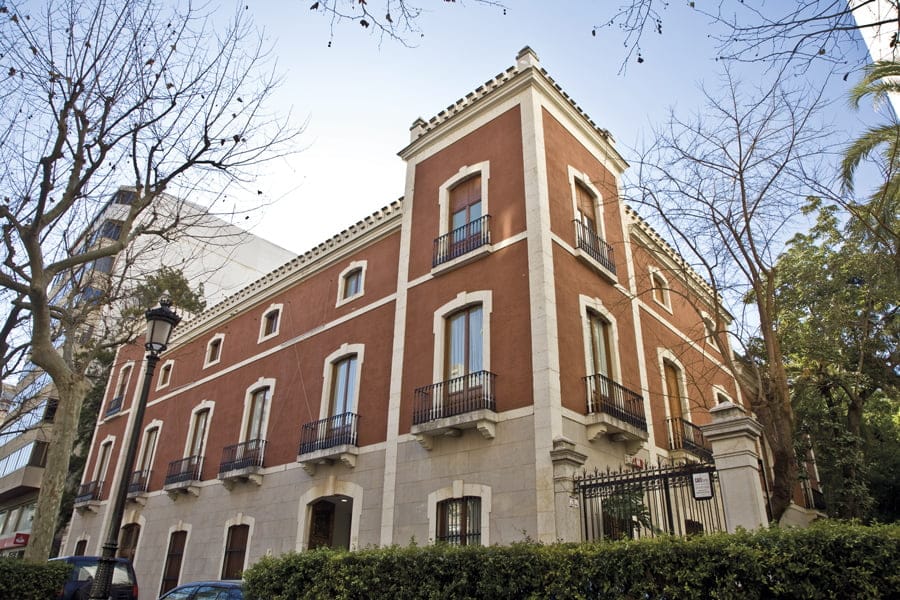
The symmetrical façade stands out for its two side sections, which resemble crenellated towers. Ceramic balustrades, heraldic motifs, balconies and ornate ironwork form part of an eclectic style inspired by defensive and palatial architecture, although the building never had a military purpose.
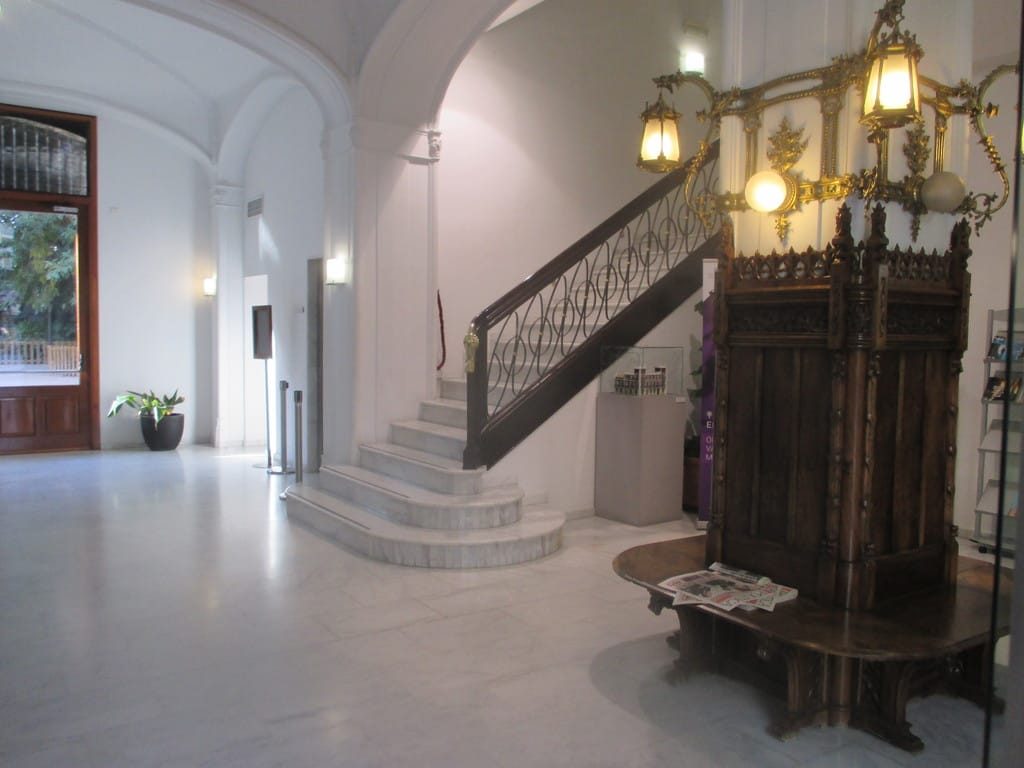
The interior is arranged over three levels. The ground floor contained carriage entrances and service areas; the main floor held the formal reception rooms, while the second floor was used by staff and for storage. Today, these spaces contain exhibition rooms, offices and classrooms. One of the most notable surviving features is the white marble staircase, accompanied by a wrought-iron balustrade with gilded details.
The romantic garden, a retreat in the city centre
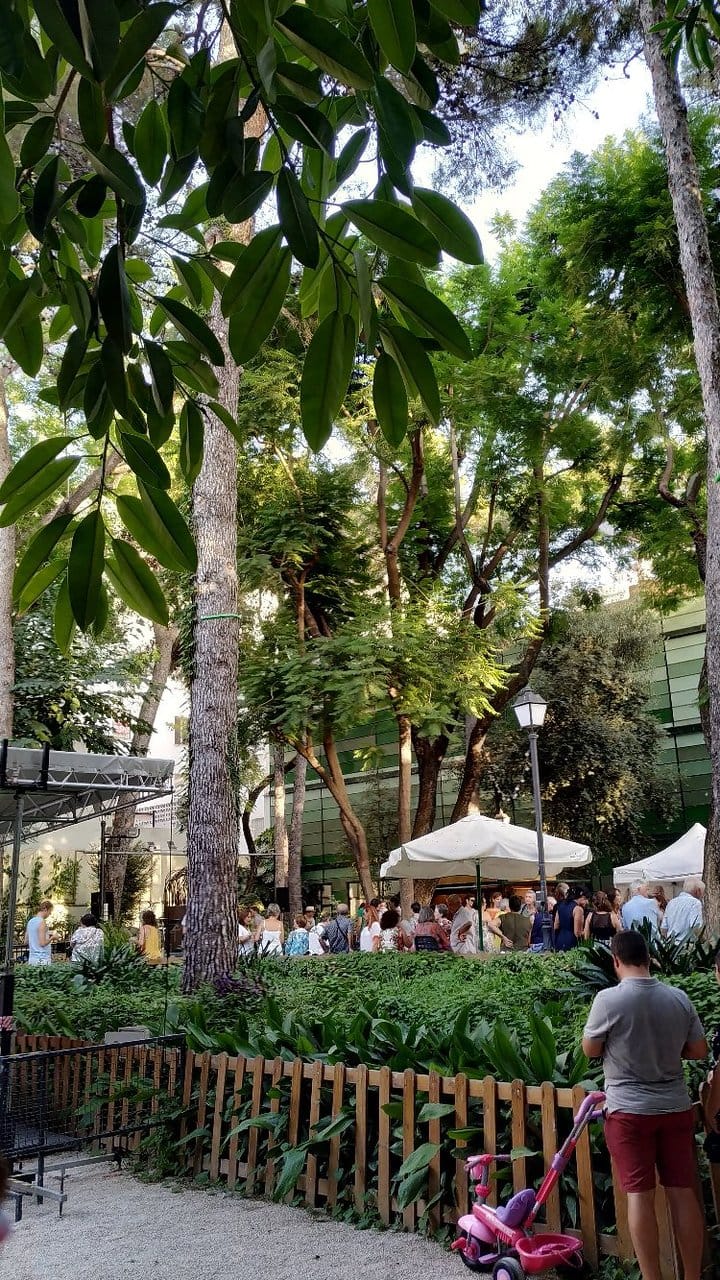
Behind the façade lies one of the property’s most appealing corners: a romantic garden combining Mediterranean plants with exotic species. A large ficus, palm trees, stone pine, bamboo, cypresses, eucalyptus and cedars create a shaded space removed from the pace of the city.
The café terrace and open-air stage also make it a venue for concerts and summer cinema during the warmer months.
Twenty-five years of cultural activity
In 2025, Casa de la Marquesa marked its first 25 years as a cultural centre. During that period, it welcomed more than 1.8 million people and hosted around 6,400 events, 250 exhibitions and more than 1,200 concerts. These figures illustrate its importance within central Gandia’s cultural network, alongside Palau Ducal dels Borja, Teatre Serrano and Museu Arqueològic de Gandia.
Practical visitor information
- Address: Passeig de les Germanies, 13, Gandia.
- Admission: general admission to the exhibition rooms and displays is free.
- Usual opening hours: Monday to Saturday, 10:30 am–2:00 pm and 5:30 pm–8:00 pm; Sundays, 6:00 pm–8:00 pm.
- Contact: +34 96 295 95 35.
Opening hours may vary depending on the exhibition or programme. Before visiting, it is worth checking the official Visit Gandia website. Casa de la Marquesa is easy to include in a walk through the city centre and helps visitors understand how Gandia has opened its heritage to cultural life.