
The Route of the Monasteries of Valencia links five historic sites between Gandia and Alzira. From Gandia, it allows you to organise cultural day trips by car or plan a multi-day trek along the GR-236, through orchards, valleys and mountain paths.
Contents
How to organise visits from Gandia
For an initial day trip, we suggest Cotalba and Valldigna in one day, provided opening times align: they combine monastic architecture with ties to Gandia’s history. If Llutxent is of interest, it can be paired with Cotalba on a separate excursion inland. Set aside a different day for La Murta and its natural surroundings; Aigües Vives can be added as an exterior stop if conditions allow.
These are suggestions for choosing visits, subject to bookings and opening access. Journeys by car follow different roads from the GR footpaths. Those who prefer to stay close by can combine Cotalba with visits around the centre of Gandia.
Sant Jeroni de Cotalba: the cloister and the ducal imprint
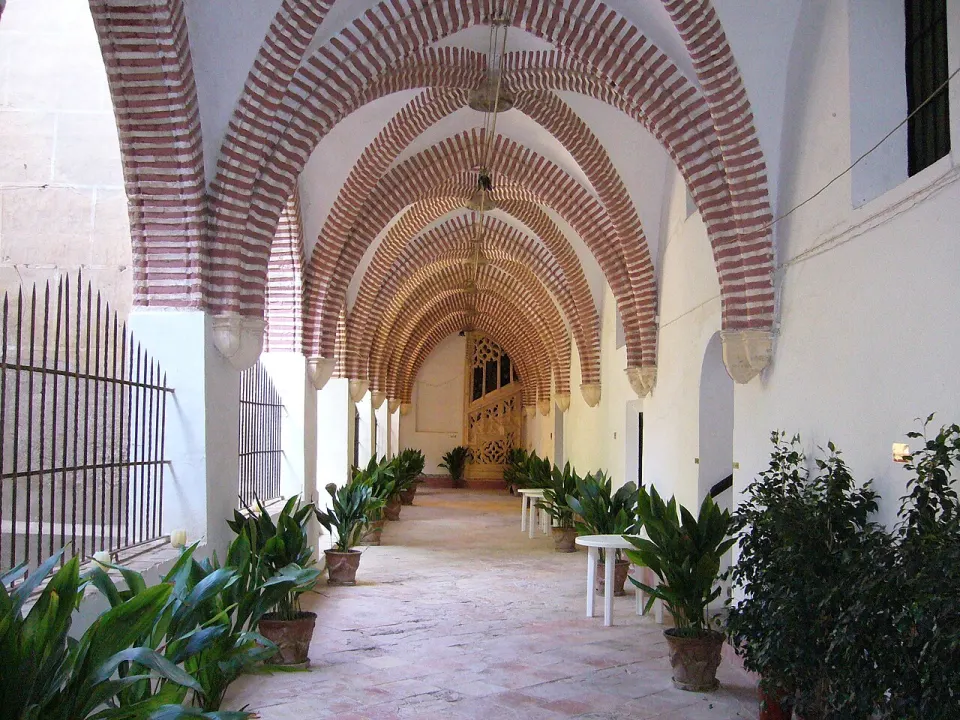
In Alfauir, around eight kilometres from Gandia, the Monastery of Sant Jeroni de Cotalba was founded in 1388 by Alfons el Vell. The lower cloister, with its brick arches, showcases the uniqueness of the complex before you explore the rooms of the Hieronymite community.
Patronage by María Enríquez de Luna reinforced ties with the Borgia court. To organise your visit, check visit options and bookings on the monastery’s website. It is advisable to select an available visit first and adjust the remaining stops afterwards.
Corpus Christi de Llutxent: Dominican heritage
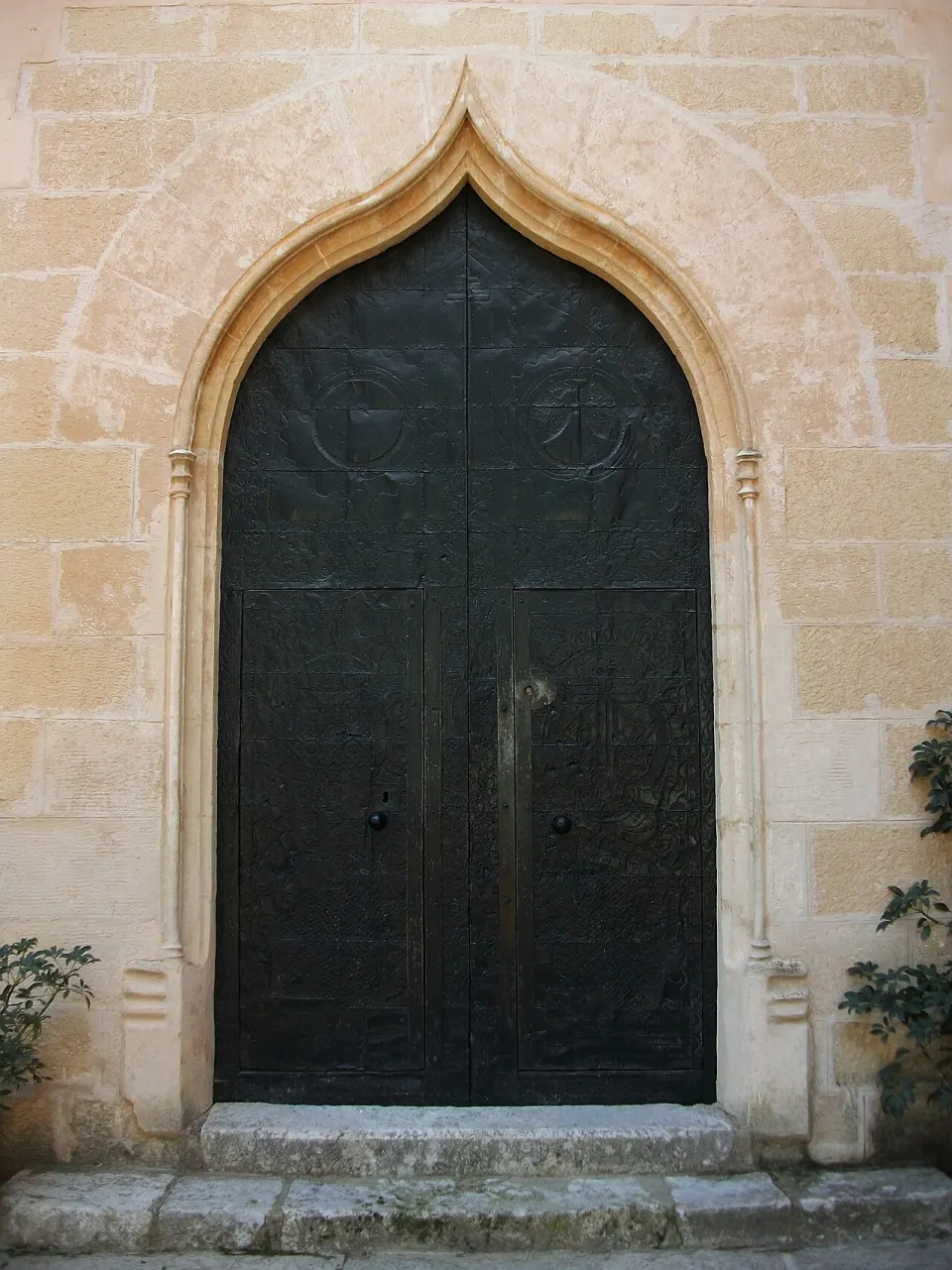
The Corpus Christi complex stands outside the town centre of Llutxent. Its history is tied to the tradition of the Miracle dels Corporals and the Dominican community established in the 15th century. The portal, cloister and refectory help visitors understand the religious and educational role of the convent.
It is a good choice for exploring the heritage of the inland Vall d’Albaida area. Access to the interior requires booking an appointment: check contact details and conditions on the official tourism page before travelling. Any walk around the surrounding area should be adapted to the available time and footwear.
Santa Maria de la Valldigna: the Cistercian abbey
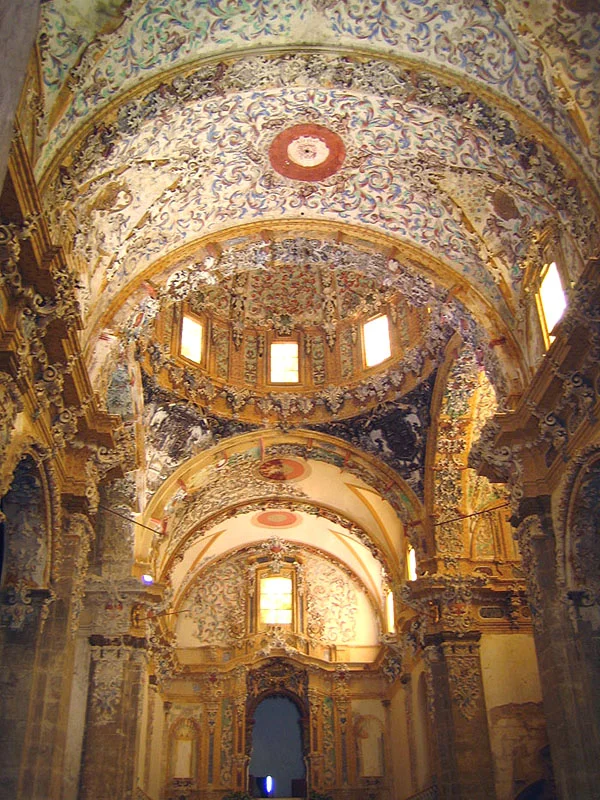
In Simat de la Valldigna, Santa Maria de la Valldigna was founded by Jaume II in 1298. The site allows visitors to explore the layout of a Cistercian abbey and observe the transformations that culminated in the Baroque church, with its decorated vaults.
Its history connects with the Borgias through Rodrigo de Borja, the future Alexander VI, and his son Cesare, who held the abbacy. Dedicate time both to the church and to the preserved areas of the monastery. Check opening times and activities on Turisme Simat; the cultural visit works best with time to spare for a walk around the village.
Aigües Vives: a stop with access to confirm
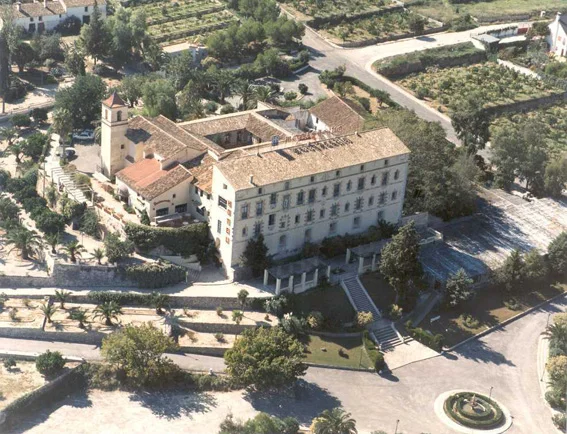
The convent of Santa Maria d’Aigües Vives, within the municipality of Carcaixent and next to La Barraca d’Aigües Vives, brings an Augustinian presence to the route. The façade and bell tower can be seen across the valley’s agricultural landscape.
This is a privately owned property: an interior visit must not be assumed to be available. Before including it in your plan, check with Carcaixent Tourism via the Valencia Tourism route information. To view the exterior, respect the property boundaries and use only permitted access points.
La Murta and the Pas del Pobre
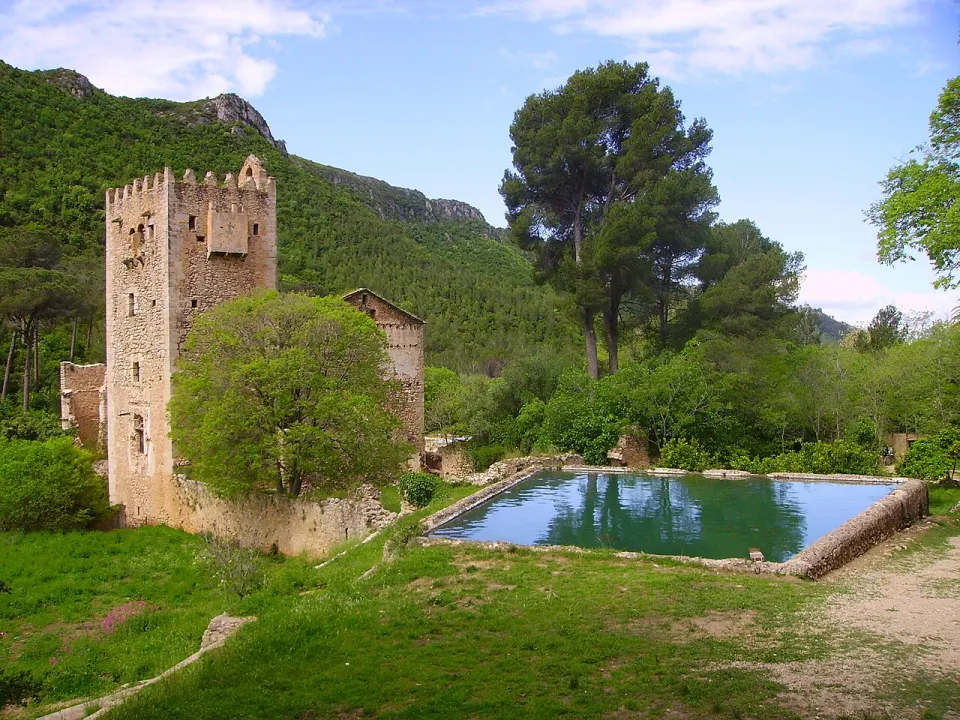
In Alzira, the remains of the Hieronymite monastery of Santa Maria de la Murta form part of a protected valley. The tower, ruins and pond offer a visit where architecture and landscape share equal prominence.
The Pas del Pobre connects the Aigües Vives side with the valley of La Murta across mountain terrain. A distinction should be made between visiting the monastery and hiking over the pass. Check municipal access and booking arrangements: visitor capacity limits apply, and closures may occur due to weather or fire risk.
The route on foot: distances and stages of the GR-236
The FEMECV trail sheet records 77.3 km between Gandia and Alzira stations, divided into four stages:
| Stage | Distance |
|---|---|
| Gandia–Almiserà | 19.1 km |
| Almiserà–Pinet | 17.5 km |
| Pinet–La Barraca d’Aigües Vives | 22 km |
| La Barraca d’Aigües Vives–Alzira | 18.7 km |
Before setting off, check the description and federation GPS track, trail conditions, the weather forecast and water points. Wear hiking boots, carry enough water and take backup navigation aids; avoid the hottest times of day. Arrange accommodation and your return journey according to your chosen stage. For cycling or horse riding, check the specific itinerary for each mode.
If you wish to collect route stamps, check in advance the availability of credential booklets and stamping points at Tourist Info.