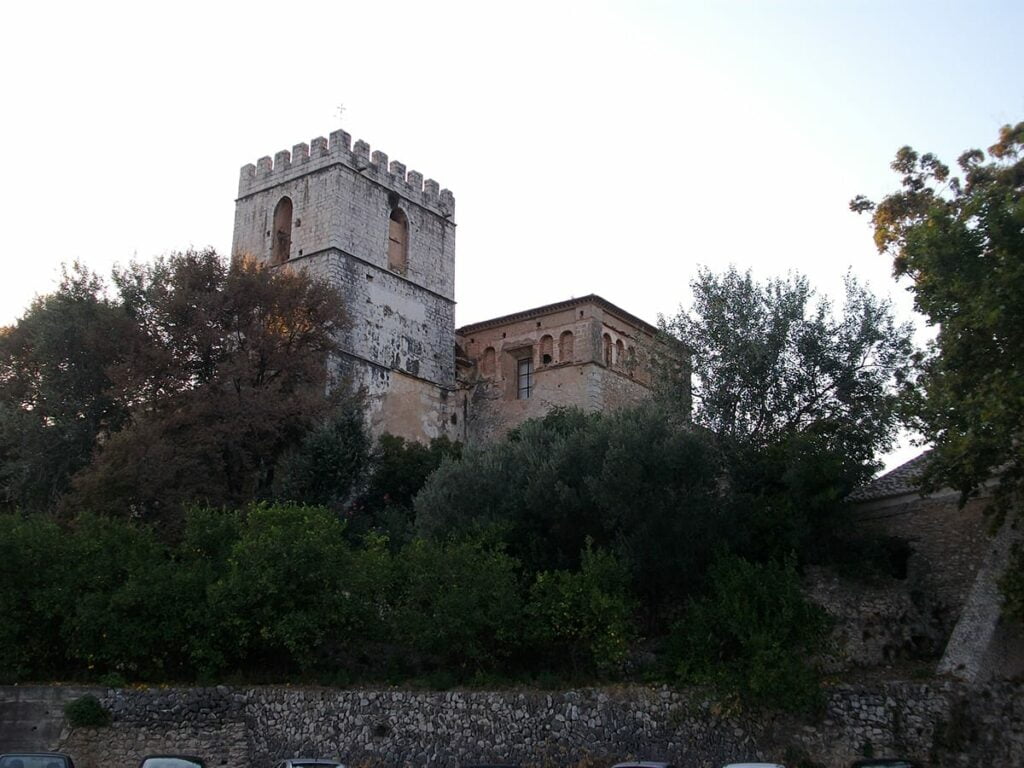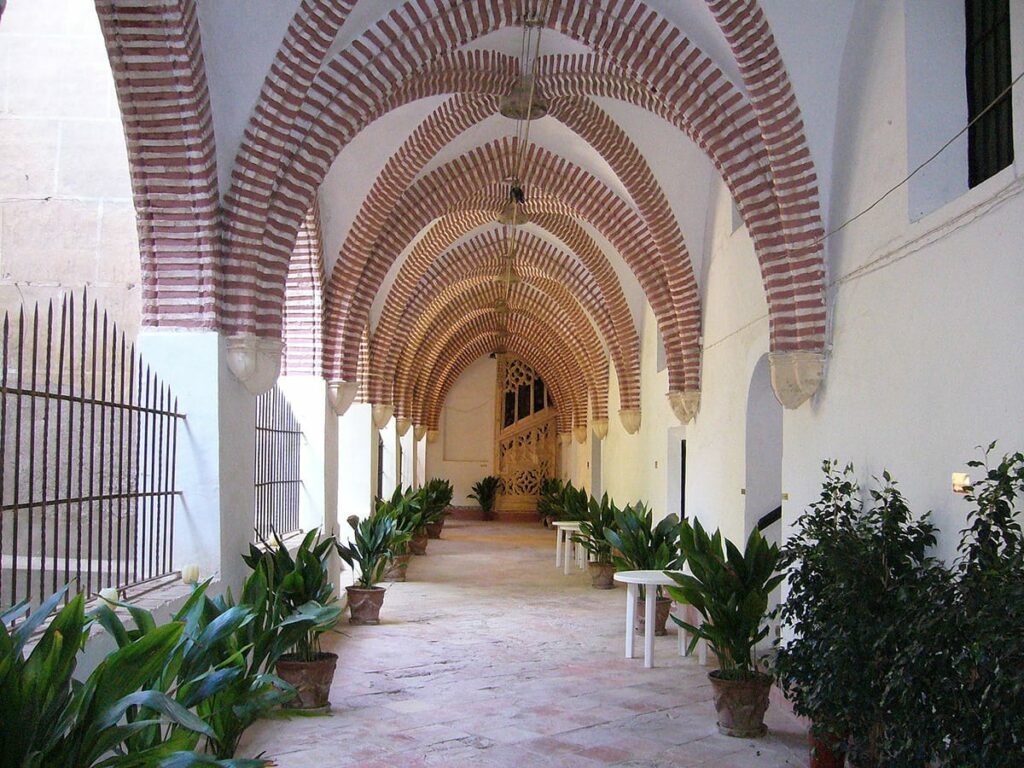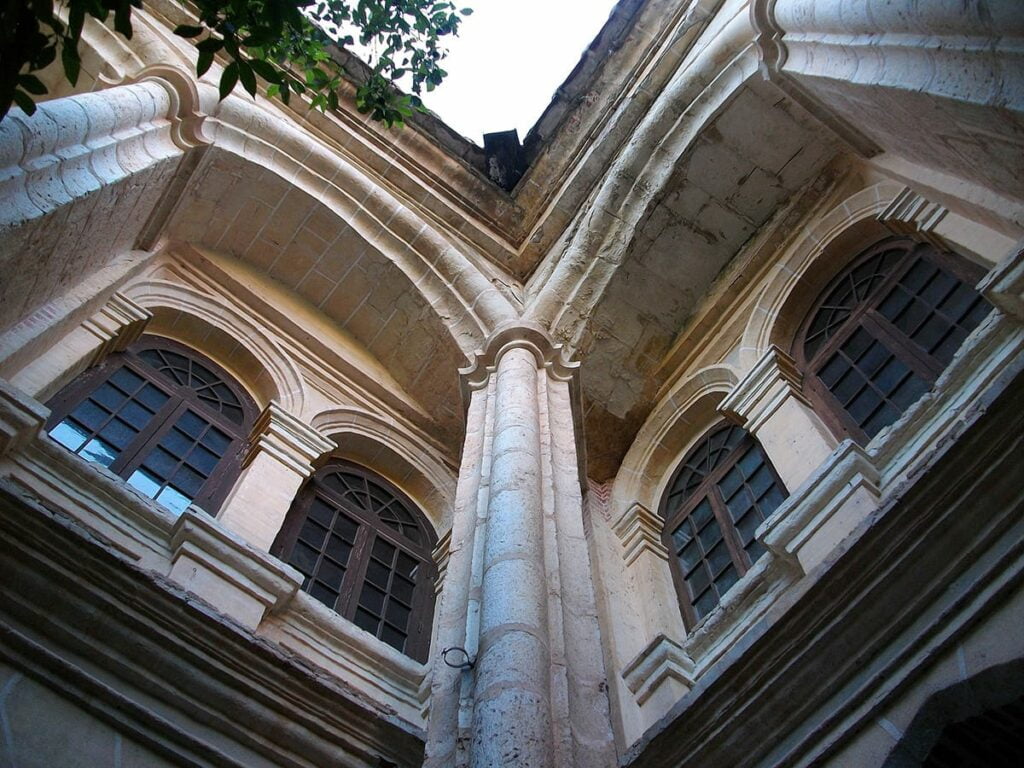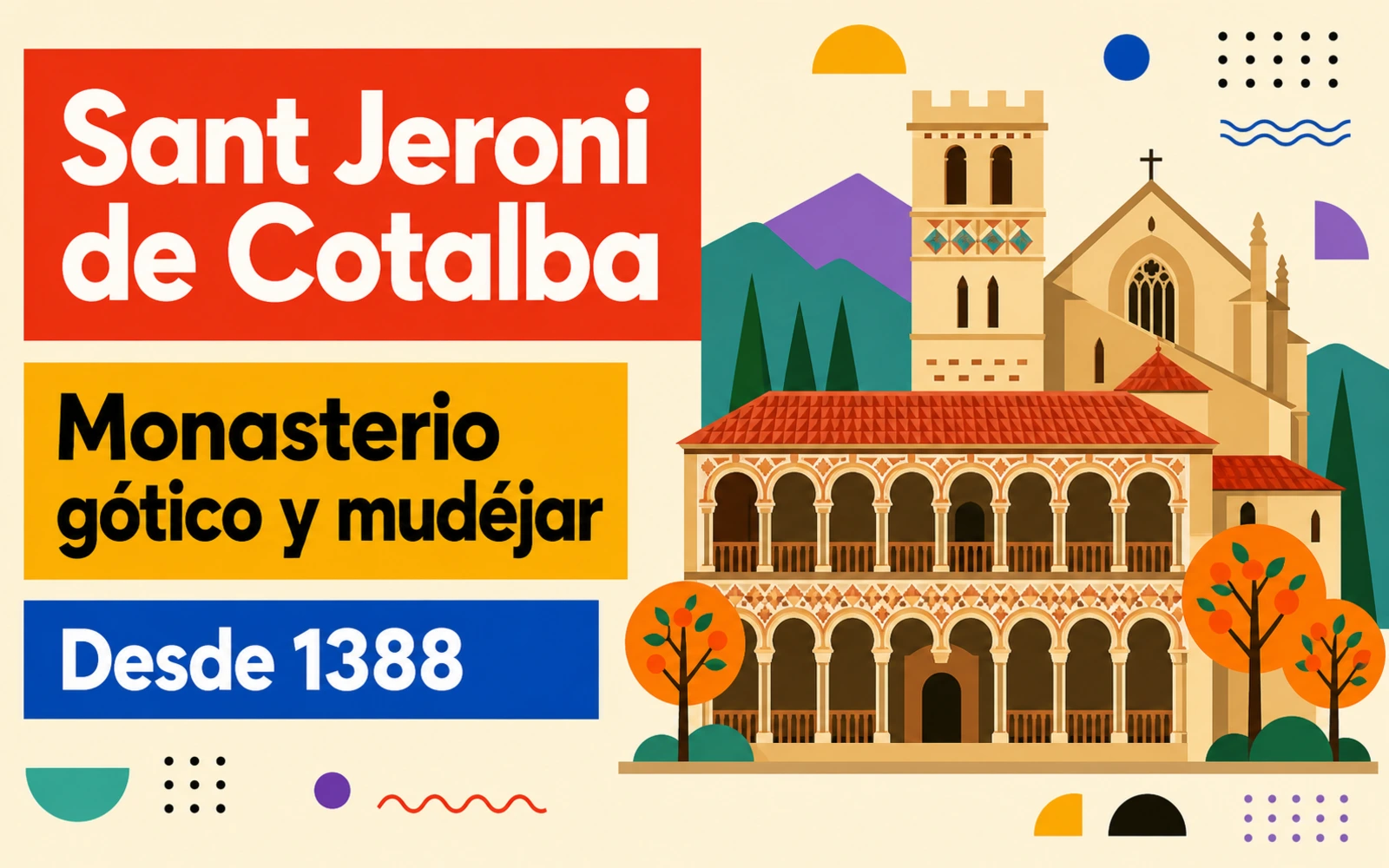
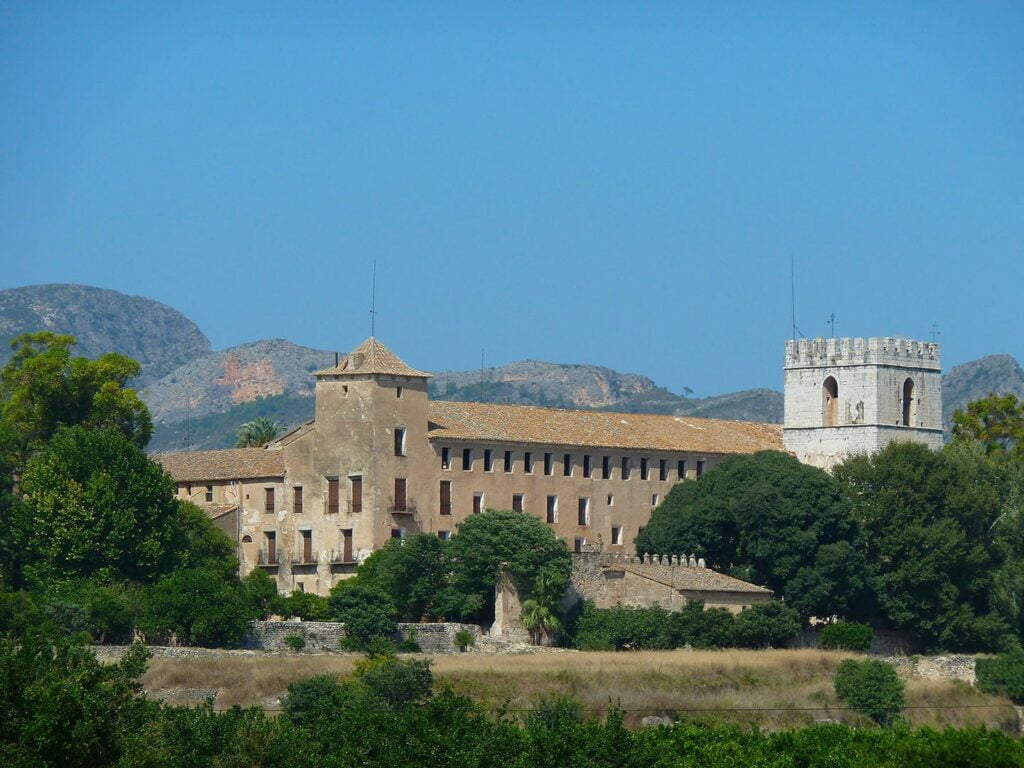
The Royal Monastery of San Jerónimo de Cotalba (in Valencian Sant Jeroni de Cotalba) is a conventual building founded in the year 1388 and constructed between the 14th and 18th centuries, located in the municipality of Alfahuir, 8 km from Gandia.
Contents
The monastery
The monastery stands on the Tossalet de Cotalba in the municipality of Alfahuir. The building of the monastery was promoted by Pere March, father of the well-known poet Ausiàs March who, as steward to the Duke of Gandia, was in charge of conceiving the construction of the monastery.
Another important literary figure who also frequently visited the monastery was the writer Joanot Martorell, who was Ausiàs March’s brother-in-law. In its time, the monastery became a spiritual and intellectual centre of the Duchy of Gandia.
Later, in the 16th century, the monastery had the protection of the Borja family, with the regent Duchess of Gandia María Enríquez de Luna, daughter-in-law of Pope Alexander VI, carrying out expansion works.
This ancient monastic construction has its roots in the year 1388, with various architectural styles being distinguishable within it, such as Gothic, Mudejar, Baroque and Neoclassical, which over time have shaped the personality of a building that today can be visited, exploring its halls steeped in history and its beautiful gardens, and which is also currently chosen by many people to organise events such as weddings, concerts or even film shoots.
Among the different areas to visit in the monastery, it is recommended not to miss the Gothic aqueduct and the Mudejar-style cloister, the old chapter house, the stables, the winepress, or the interesting rooms typical of a monastery such as the refectory, the cloister, the former kitchen of the Hieronymite monks, or the curious armoury, without forgetting the highly recommended romantic-style gardens, which reach their greatest splendour in spring. Popular legend has it that Saint Vincent Ferrer preached in the monastery cloister.
Art and Culture
In addition to historic and beautiful architectural corners, the monastery treasures a large number of works of art of different types, which are truly worth discovering.
Thus, for example, it is possible to discover everything from a piece of gold and silversmithing known by the name of «La Custodia», to polychrome Gothic-style sculptures in the cloister area, as well as works of great artistic value such as a large 16th-century altarpiece by Fray Nicolás Borrás, composed of fourteen parts divided into panel paintings.
Not forgetting, in the Chapter House, an impressive Gothic-style medieval sarcophagus belonging to the Infantes Doña Blanca and Don Juan of Aragon. It is also worth highlighting the presence of beautiful Valencian ceramic tiling from various periods, between the 14th and 18th centuries.
Visits
Those who wish to tour the Hieronymite monastery can sign up for one of the different guided tours available, which range from the traditional visit to more specialised ones if, for example, visiting as a family, with specific activities for children, and even night visits ideal for summer.
Nor should you forget a curious dramatised tour recommended for those who want a complete immersion in the monastic era, or joint tours that add the equally recommended Ducal Palace alongside Sant Jeroni.
The various tours are planned to cover the most interesting points of the monastery, such as the entrance courtyard and its beautiful Gothic-style tower, the recommended church with Baroque chapel, the oil mill where olive oil was obtained, and the genuine courtyard of the orange trees.
Location of the Monastery of Sant Jeroni de Cotalba (map)
Opening times and tickets
Guided tours, the only way to explore the monastery, take place on the following days
| Thursdays | 11:30 |
| Saturdays | 10:00 |
| Sundays | 11:30 |
- Groups: Every day of the week with prior booking.
Tickets for guided tours can be purchased on their website cotalba.es
Photos of the monastery