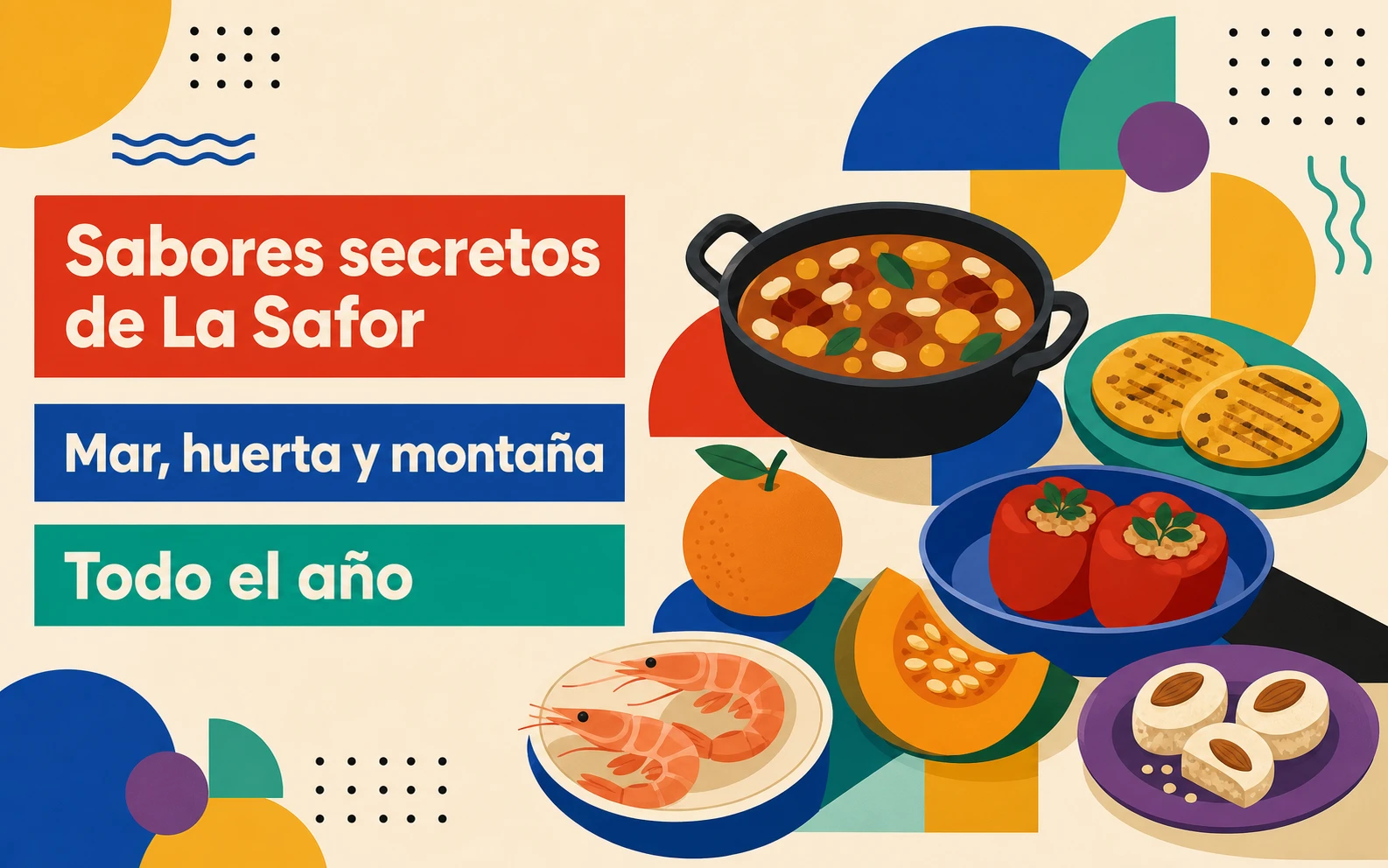
The cuisine of Gandia and La Safor is best understood through three landscapes: the sea at the Grau, the market gardens surrounding the town and the inland mountains. Between them survives a repertoire of stews, tapas, flatbreads and sweets that deserves just as much attention as the coast’s better-known dishes.
Contents
This guide brings together ten lesser-known traditional dishes from Gandia and La Safor, along with the pastries and local produce that explain their flavour. Not all of them appear on menus every day: some belong to the mid-morning esmorzaret, others need long, slow cooking and several follow the festive calendar. Asking for them, ordering ahead or visiting the villages across the comarca is all part of the discovery.
A cuisine between the sea, the market gardens and the mountains
The Grau de Gandia supplies fish, shellfish and small rockfish for stocks and stews. Just a few kilometres inland, the market gardens add Swiss chard, peppers, pumpkin, sweet potato, citrus fruit and nuts. Further into the valleys, cold days call for slow-cooked pots of wheat, pulses, vegetables and cured pork. The connection between landscapes produces recipes that combine ingredients which, at first glance, seem to belong to different worlds.
Many preparations survive in family kitchens, butcher’s shops, traditional bakeries and neighbourhood tapas bars rather than on tourist menus. For that reason, it helps to look for them under their Valencian names and to bear in mind that every household and village has its own version. During 2026, the Destapa’t tapas route brings together bars and restaurants in Gandia, the Grau and the Platja on Thursdays.
Ten traditional dishes from Gandia and La Safor worth knowing
1. Figatell, the signature bite of the esmorzaret
The figatell is a small patty made from lean pork, jowl and pork liver, seasoned with spices and wrapped in caul fat. Cooked on a hotplate or over embers, it turns golden on the outside while staying juicy inside. It is especially characteristic of Gandia, Oliva and neighbouring towns across the comarca.
It can be served as a tapa, inside a roll or alongside vegetables. As a first introduction, it works wonderfully for a Valencian mid-morning lunch: bread, pickles, peanuts and a drink complete a unhurried local ritual.
2. Gamba amb bleda, where marshland meets market garden
Gamba amb bleda pairs small freshwater prawns from the Oliva-Pego marshland with Swiss chard, garlic, sweet paprika and a touch of chilli. The result is a humble, deeply savoury stew closely tied to Oliva and Pego, in which the prawn juices permeate the greens.
It is also used as a filling for savoury turnovers or coques de dacsa. Few recipes express so directly the close relationship between the wetlands, the market gardens and the coastal cooking of southern La Safor.
3. Coques de dacsa, a simple flatbread with many fillings
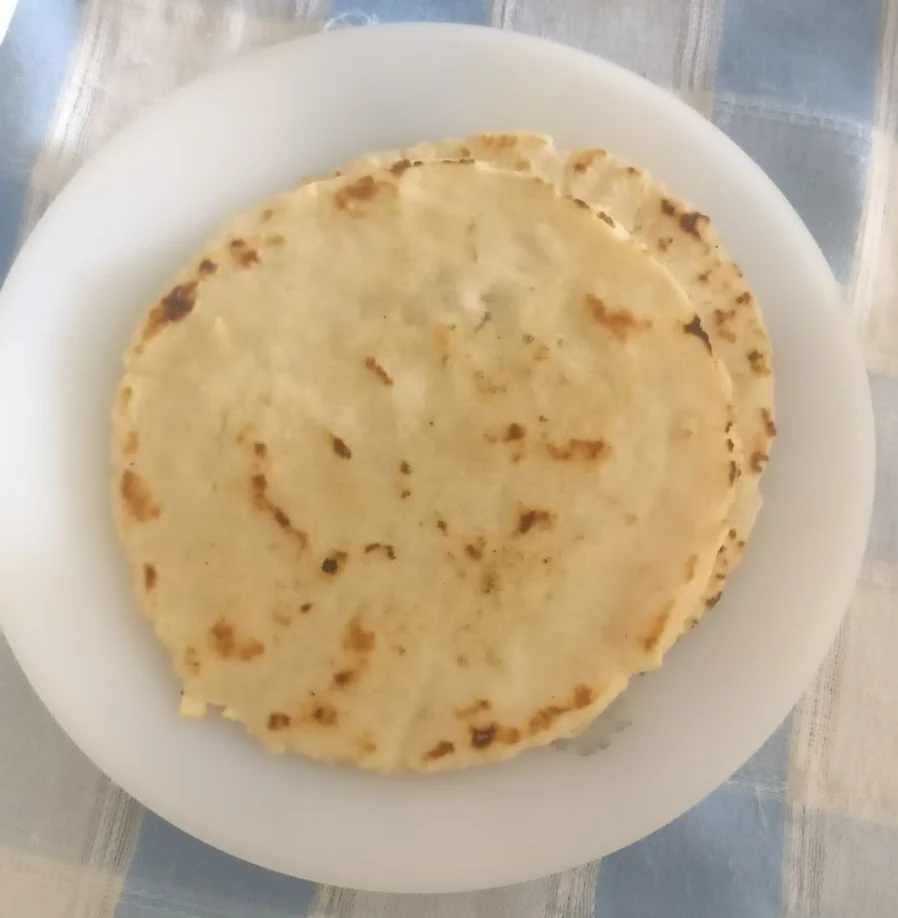
Coques de dacsa are round flatbreads made with scalded maize flour, water, oil and salt. They are served hot and eaten folded in half, almost always around a juicy filling. Among the classics are esgarraet (roasted red pepper and salted cod), tuna with tomato and boiled egg, or gamba amb bleda itself.
They are typical of Gandia, Ròtova and Oliva, although the exact recipe and thickness vary from one kitchen to another. Their appeal lies in the contrast: a soft, lightly toasted flatbread that soaks up the oil and flavour of the filling without overpowering it.
4. Olleta de blat picat, the inland winter stew
In olleta de blat picat, cracked wheat takes the place usually reserved for rice in other Valencian stews. It simmers slowly with white beans, Swiss chard or cardoon stems, turnip, parsnip, pumpkin, potato and pork cuts such as ribs, belly, white sausage (blanquet) or onion blood sausage (botifarra de ceba).
It is a thick, comforting winter dish associated with the inland villages. Villalonga keeps it alive as part of its culinary tradition. Because it takes hours to prepare and is not always on the daily menu, it is wise to order it in advance or check availability beforehand.
5. Bossa de polp, Miramar’s patient speciality
Bossa de polp is a dish closely associated with Miramar. The octopus hood is stuffed with rice, chopped tentacles, pine nuts, garlic, parsley and a hint of cinnamon. It is then simmered gently with white beans and potatoes until the flavour of the sea merges with the texture of a spoon stew.
It is neither quick to cook nor easy to find on the spur of the moment. For that very reason, it captures the home cooking of the comarca: resourcefulness, patience and a combination of ingredients handed down from generation to generation.
6. Sang amb ceba, a bold traditional tapa
Sang amb ceba starts with set blood cut into cubes and sautéed with plenty of slowly softened onion. Garlic, sweet paprika and thyme round off a deeply flavoured tapa rooted in the popular cooking of La Safor.
It is one of those dishes that can divide opinion before the first forkful and win diners over afterwards through its texture and the sweetness of the onion. You are more likely to find it in traditional bars and family dining rooms than in seafront restaurants.
7. Pebres farcits, rice baked inside the pepper
Pebres farcits are bell peppers stuffed with rice, a tomato sofrito and, depending on the household, minced pork or salted tuna. Pine nuts and a pinch of cinnamon give them their unmistakable aroma. They are baked slowly, often in an earthenware dish, until the rice absorbs the juices of the pepper.
The recipe is shared with neighbouring central Valencian comarcas, with a strong presence in La Safor. Traditional bakeries are a good place to ask for them, especially if you are looking for prepared food to take away.
8. Llandeta, cruet and suquet de peix
Under the names llandeta, cruet or suquet de peix come several fishermen’s stews made with fish, potato, onion, tomato and a mortar paste of garlic, almonds and saffron. Llandeta refers to the metal baking tray; cruet comes from the habit of arranging the ingredients raw before cooking begins.
The fish species vary according to the day’s catch and each kitchen: that flexibility reflects the essence of a cuisine born to make the most of whatever fish is available. In the Grau, asking after the fishermen’s stew of the day can uncover a local version even when those exact names do not appear on the menu.
9. Arròs amb fesols i naps, rice for cold days
Arròs amb fesols i naps is a brothy or creamy rice dish cooked with white beans, turnip —often napicol—, chard stems or cardoons and assorted cuts of pork. Slow simmering builds a rich stock before the rice goes in for the final stage.
As well as being a winter staple at home, it is cooked in large cauldrons during local festivities across several Valencian comarcas. In La Safor it retains its communal spirit: it tastes best when temperatures drop and the table is shared.
10. Putxero de Gandia, two courses from a single pot
The putxero brings together chickpeas, beef, hen, soup bones, potato and a generous range of vegetables: turnip, parsnip, chard stems, carrot, sweet potato and pumpkin. A spiced meatball wrapped in cabbage leaf (pilota) adds another of its signature elements. Traditionally, the stock soup is served first, followed by the meats, pilota, pulses and vegetables.
Its long simmering time explains why it is rarely an everyday menu item. When offered as a weekend special or cooked to order, it provides one of the finest overviews of the local larder in a single meal.
Sweets from Gandia and La Safor that follow the calendar
Traditional baking relies on ingredients that also appear in savoury stews: pumpkin, sweet potato, citrus fruit, almonds, peanuts and muscatel grapes. Some pastries are available all year round; others are closely tied to a specific feast day, such as the marzipan fruits of the mocadorà de Sant Donís, gifted every 9 October.
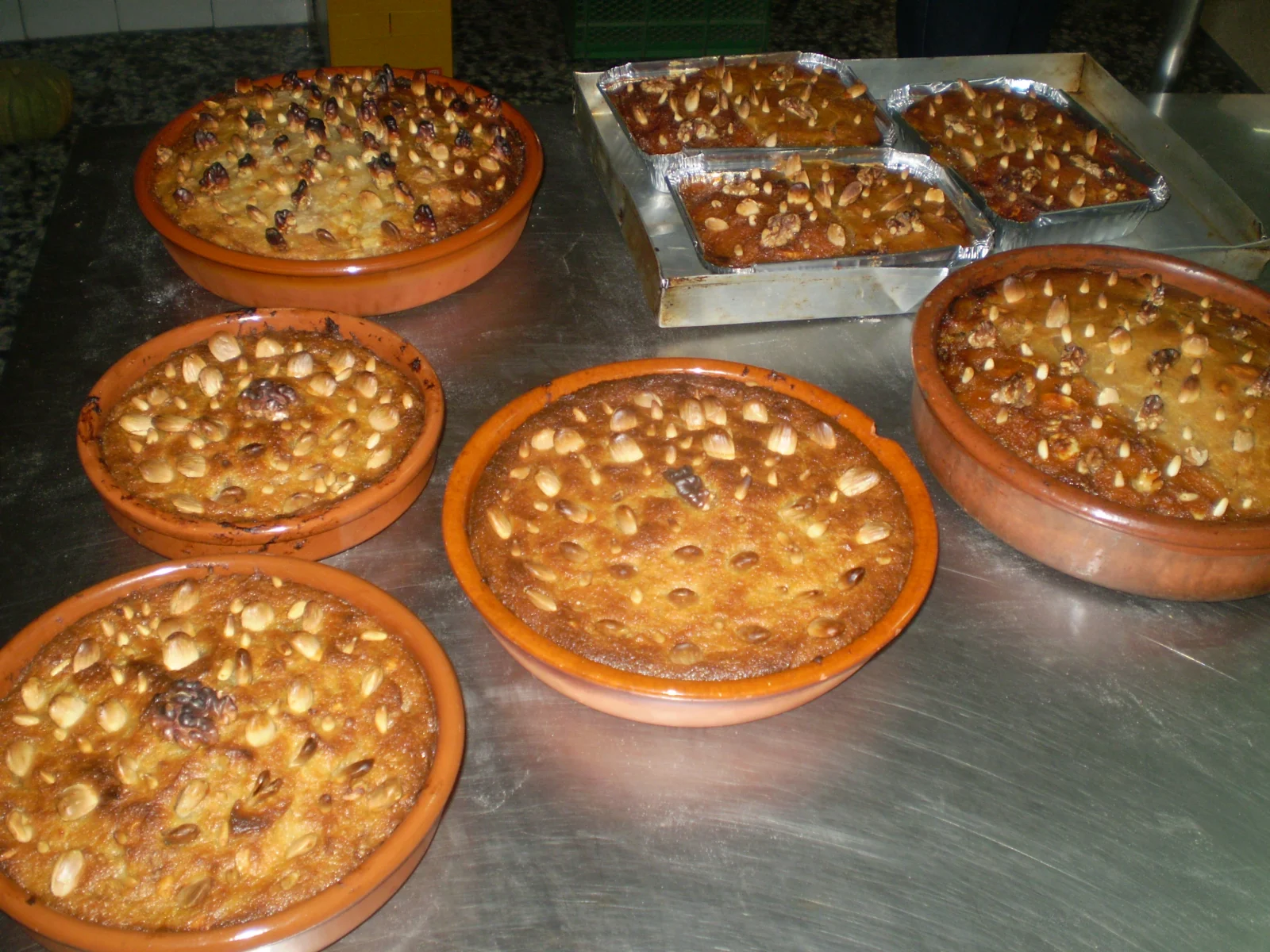
- Arnadí: a baked dessert of roasted pumpkin or sweet potato, sugar, ground almonds, egg yolk and cinnamon, studded with whole almonds and pine nuts. Although its origin is linked to Xàtiva, it is deeply rooted across the central comarcas, including La Safor, during Lent and Easter.
- La Delicà de Gandia: a creation by the Associació de Pastissers i Forners de Gandia inspired by a well-known local legend. It combines traditional sweet bread dough with almond cream, raisins, walnuts, citrus zest and flaked almonds, and is sold year-round in authorised bakeries.
- Pastissets de moniato: small sweet turnovers filled with sweet potato paste scented with cinnamon and lemon. They are especially common at Christmas.
- Bunyols de carabassa: pumpkin fritters made with flour and yeast, fried and dusted with sugar. Their peak season arrives with Fallas.
- Coca de llanda: an everyday sponge cake for breakfast or an afternoon snack, baked in a rectangular tin and scented with lemon or orange zest.
The larder behind the recipes
The orange shapes much of the agricultural landscape of La Safor, contributing juice and zest to doughs and fillings. Pumpkin and sweet potato cross effortlessly between savoury pots and pastry trays. Peanuts appear in Christmas baking, while almonds and pine nuts enrich both fish stews and desserts.
Muscatel grapes link the end of the meal to a historic farming craft in the comarca. L’escaldà, the traditional scalding process used to turn muscatel grapes into raisins, is recognised as an Intangible Asset of Cultural Interest (Bé d’Interés Cultural Immaterial). From the muscatel tradition also come mistela and other sweet wines that pair naturally with arnadí or pastissets.
Along the coast, the fish auction at the Grau explains why seafood stews change with the daily catch. Red prawns, cuttlefish, octopus, squid, mantis shrimp and rockfish supply both restaurants and fishmongers. The Gandia Tourism website offers updated information on local gastronomy and visitor resources across the town.
When to look for each speciality
- All year round: figatell, coques de dacsa, sang amb ceba, pebre farcit, La Delicà and coca de llanda are the easiest to find regularly, although availability varies from one establishment to another.
- Autumn and winter: the best season for arròs amb fesols i naps, olleta de blat picat and putxero, all of them hot, slow-cooked dishes.
- Lent and Easter: arnadí takes centre stage in traditional ovens and patisseries.
- Fallas: bunyols de carabassa fill streets, festival clubs and specialist stalls.
- Christmas: pastissets de moniato return alongside pastries made with almonds, peanuts, sweet potato and candied pumpkin strands.
Seafood specialities depend more on the day’s catch and kitchen than on a fixed date. In the Grau it is worth asking for llandeta, cruet or suquet, whereas Oliva and the marshland area are the natural places to seek out gamba amb bleda. Miramar is home to bossa de polp, while Ròtova and neighbouring villages maintain a close bond with coques de dacsa.
A food route to sample several flavours
A day’s tasting can begin with an esmorzaret in the centre of Gandia and a griddled figatell. At midday, the Grau is the place to choose a fish stew according to the market. In the afternoon, a traditional bakery brings you closer to coca de llanda or La Delicà. If your visit falls in the cooler months, it is well worth booking a slow-cooked spoon dish in town or heading inland.
Travellers keen to explore further should divide their search between Gandia and the surrounding villages. Comarca cooking is spread across the coast, the marshland and the inland valleys rather than concentrated on a single street. Checking opening hours and availability before setting off is particularly important for dishes cooked to order and seasonal pastries.
What to order first
For a balanced first tasting, start with figatell, coques de dacsa and gamba amb bleda to share; follow with a llandeta or an olleta de blat picat as a main course, depending on the season; and finish with La Delicà or arnadí. In a single route, you bring together the meat, market gardens, sea and pastry tradition of La Safor.
Beyond a closed list, these dishes are an invitation to ask questions. Every conversation in a bakery, a butcher’s shop or a family dining room can uncover a household variation, another local name or a recipe prepared only a few days a year. That curiosity is a large part of the appeal of Gandia’s lesser-known gastronomy.