The Museu Faller de Gandia reveals throughout the year how a falla is imagined, built and experienced. Its interactive displays bring together ninots, traditional dress, music, satire, pyrotechnics and audiovisual resources, making the festival accessible to visitors of all ages.
Contents
The centre interprets a tradition at the heart of Gandia’s identity and Valencian cultural heritage. In 2016, UNESCO inscribed the Fallas festivity on the Representative List of the Intangible Cultural Heritage of Humanity for its collective creativity, the transmission of crafts and knowledge, social satire and its contribution to community ties.
A year-round visit to experience the Fallas
The museum is designed as an interpretation centre. Images, sound, objects, games and reconstructions explain the festival, allowing visitors to understand the plantà, life inside the casals and the cremà even when travelling outside March. The displays connect each element with the people who keep the tradition active throughout the fallas year.
From sketch to ninot: the craft of the Fallas artist
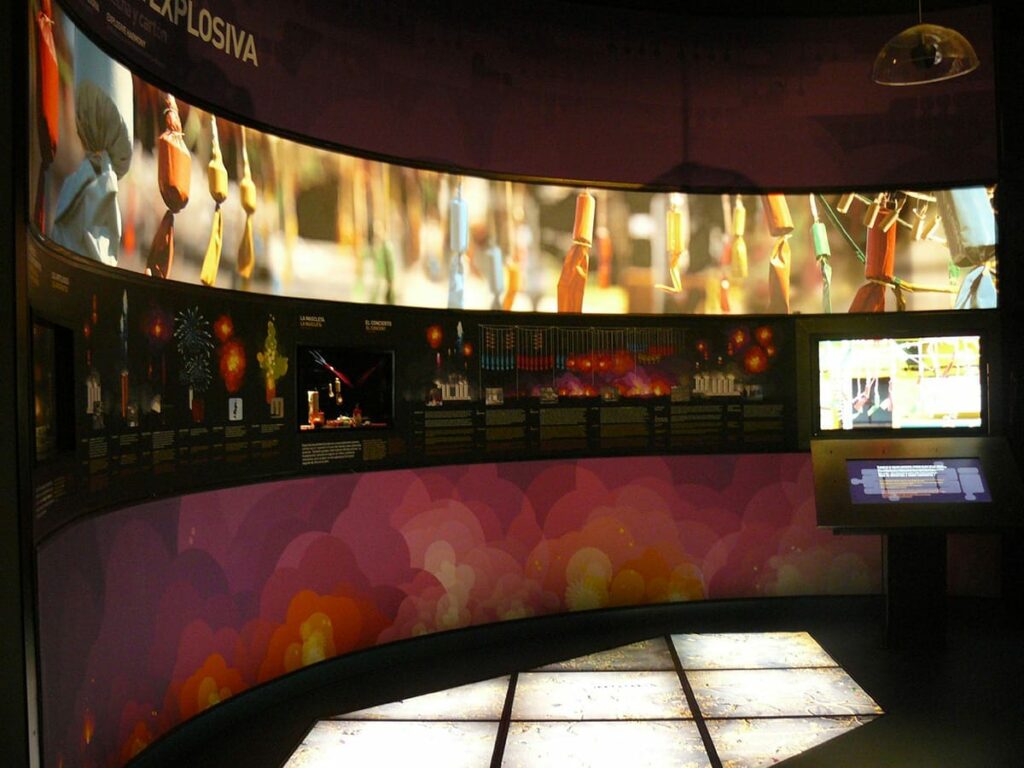
One of the most educational sections presents the process of creating a falla. Work begins with the idea and sketch, continues with modelling and construction of the pieces, and ends with finishing and painting. Techniques and materials have evolved, while ingenuity, composition and mastery of many crafts remain essential.
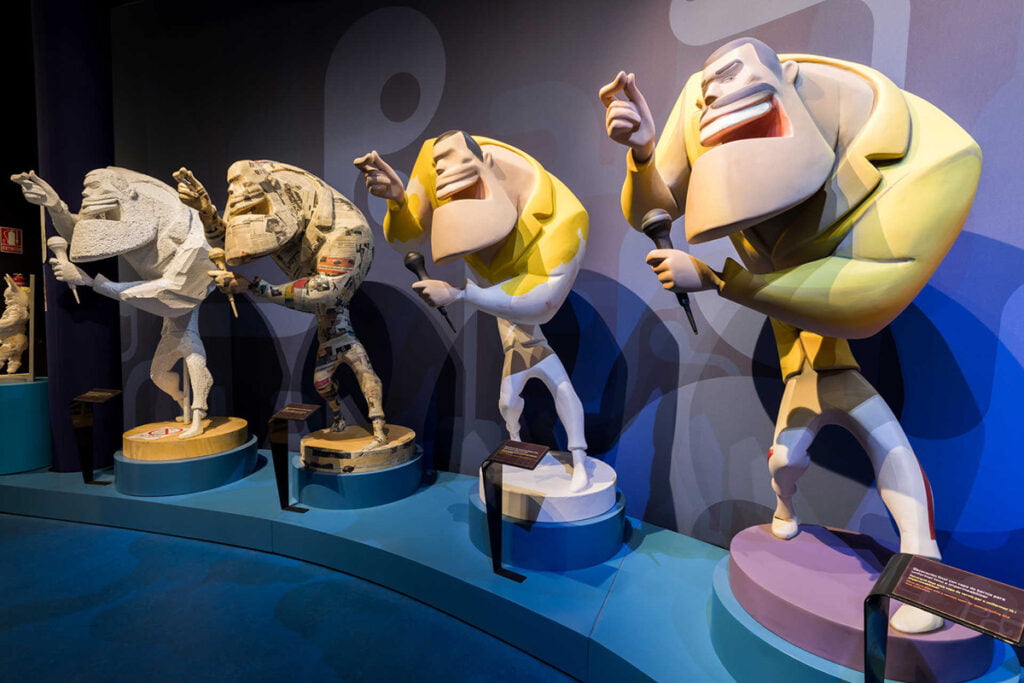
The ninots offer a close view of volumes, gestures and details that form part of much larger compositions in the street. The visit also explains the ephemeral character of a falla: it is created to occupy public space and culminate in fire, while its craft knowledge passes to new generations.
Satire, llibrets, music and pyrotechnics
A falla comments on current affairs through caricatured scenes. The llibrets develop the critique with verses and explanations, preserve Valencian as a language of creativity and leave a record of each festival year. The museum places satire and festive literature alongside the work of the commissions, life in the casals and neighbourhood participation.
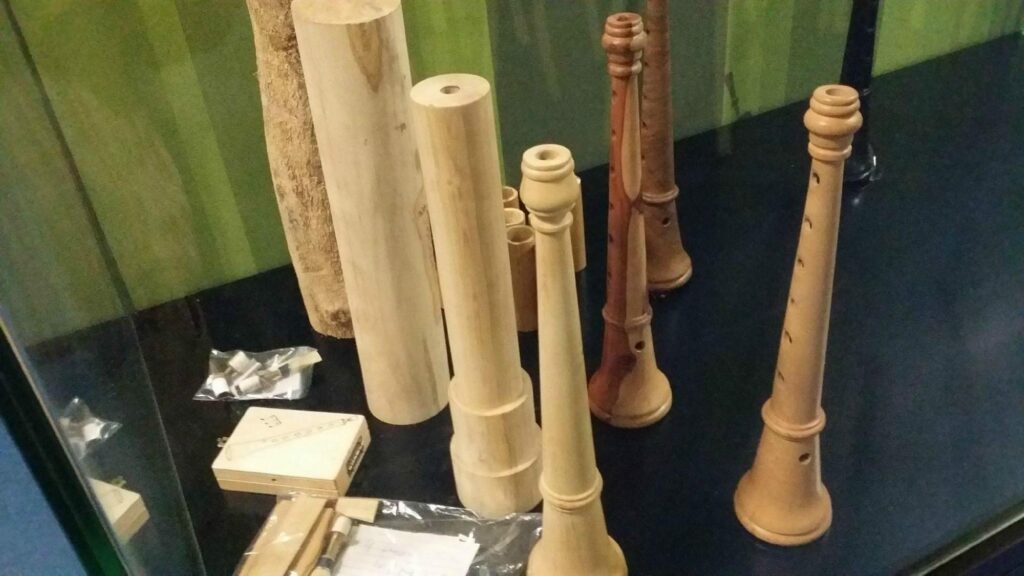
Sound has its own role in the experience. Brass-band music, the tabal, the dolçaina and cant d’estil share the galleries with pyrotechnics. A sensory space recreates the rhythm, sound and vibration of a mascletà in a controlled environment, providing a useful introduction for anyone who has never attended a street display.
Traditional dress and the memory of the festival
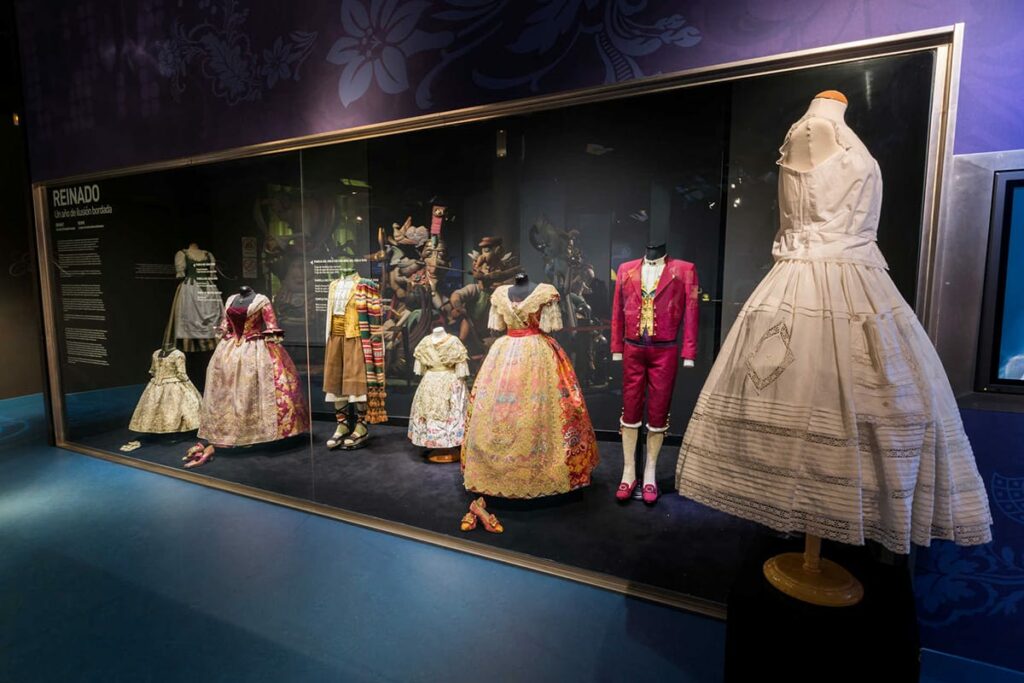
Fabrics, decorative combs, jewellery and other pieces illustrate the development of Valencian dress. The exhibition presents clothing as a craft heritage connected with silk, jewellery-making, hairstyles and festival protocol. Photographs, posters and objects from different years complete the visual memory of the Fallas in Gandia.
An engaging experience for families and groups
The interactive resources make the museum suitable for children by turning complex ideas into visual and sound-based experiences. The centre offers guided visits and educational workshops adapted to different groups, including activities based on the creative process behind a ninot. Checking availability and booking ahead is advisable for groups and visitors wishing to join an activity.
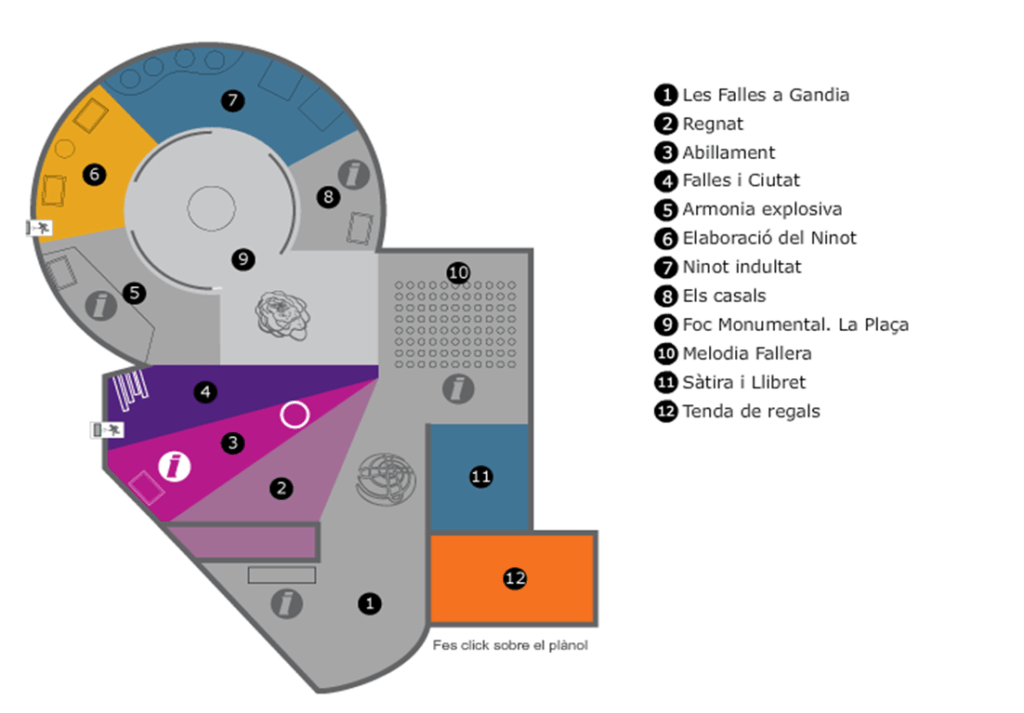
The official XEC listing states that the museum is adapted for people with reduced mobility and provides an audio guide in five languages. Accessibility, professional guidance and sensory content allow the experience to be adapted to different ages and interests.
From Gandia’s first documented falla to the museum today
The Federació de Falles dates Gandia’s first documented falla to 1876, when a newspaper report described a monument of moral satire erected in the Plaça Major. The festival became continuous from 1927, and the Junta Local Fallera was established during the 1946-1947 festival year to coordinate it. Gandia grew from eight commissions in 1947 to the 23 recorded in the organisation’s official history.
The Museu Faller building was constructed in 2008 and also houses the headquarters of the city’s fallas organisation. The centre belongs to L’ETNO’s network of ethnological museums, is a member of ICOM and holds the SICTED tourism quality distinction. Its museum role extends the work of the commissions and helps visitors understand a celebration that remains active throughout the year.
Planning your visit to the Museu Faller
- Address: Carrer Sant Martí de Porres, 29, 46702 Gandia. See the location on Google Maps.
- Official opening hours checked in August 2026: Tuesday to Saturday, 09:00 to 14:00 and 16:00 to 19:00; closed on Mondays, Sundays and public holidays.
- Bookings and enquiries: +34 960 805 585 and reserves@museufaller.org.
- Transport: L’Urbà line 4 stops at “Museu Faller”, less than two minutes away. According to XEC information, Gandia railway station is approximately 15-20 minutes away on foot.
Opening hours, admission prices, activities and booking conditions may change. Before travelling, check the official Museu Faller listing on XEC. Admission may also be included in the La Visit Gandia card; check its current conditions.
A full day of museums in Gandia
The Museu Faller offers an ethnographic and festive perspective on the city. A cultural day can continue at the Museu Arqueològic de Gandia, devoted to the prehistory of La Safor, or at the Museu de Santa Clara, which houses an important collection of religious art. The three museums present very different aspects of Gandia’s heritage.