In the heart of Gandia’s Centre Històric, the former Hospital de Sant Marc holds six centuries of charitable history and, since 1972, the Gandia Archaeological Museum (MAGa): the gateway to the prehistory and ancient history of the Safor region.
Contents
Few local museums can boast so much in so little space: engraved plaquettes from the Cova del Parpalló, traces of the oldest documented use of fire in the Valencian Community and a gallery devoted to the legacy of Al-Andalus, all inside a Gothic building that served as a hospital for more than 600 years.
Six centuries of care: the history of Sant Marc
The Hospital de Sant Marc was founded in the 14th century by Alfons el Vell, first royal Duke of Gandia, as a charitable institution for the sick, the poor and travellers. It stood at the south-eastern edge of the walled town, beside the river Serpis, and grew with the city: in the 16th century, Juana de Aragón, mother of St Francis Borgia, drove its expansion through the purchase of neighbouring buildings, and the two great halls you can visit today date from that period. In 1656, the Foundation of the Hospital of San Marcos and San Francisco de Borja was created to run the institution.
Most remarkable of all is its continuity: the hospital cared for the people of Gandia without interruption until 1973. Its second life began almost at the same time, because the museum, in the making since 1960 as the municipal store of archaeological finds, officially opened its doors in July 1972. After a long closure for renovation between 1987 and 2003, the MAGa reopened with the permanent display we see today.
A Gothic building that is an exhibit in itself
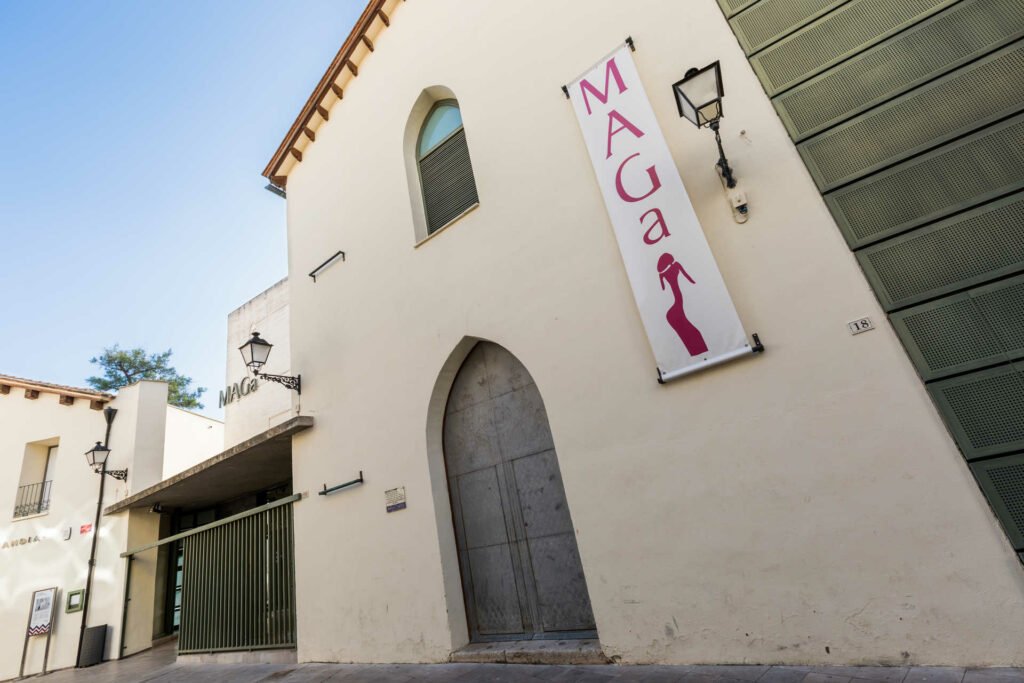
Before you look at a single display case, the building alone justifies the visit. The Sala d’Hòmens (Men’s Hall), a rectangular nave with pointed Valencian Gothic arches, today houses the collection of the Santa Clara Museum, with which the MAGa shares the Hospital de Sant Marc museum complex. The Sala de Dones (Women’s Hall) is built with diaphragm arches and a vaulted ceiling, and the trapezoidal courtyard preserves stretches of the 14th-century town wall.
Even the ground beneath has a story to tell: excavations on the site itself uncovered Bronze Age remains and an Iberian necropolis under the building.
The collection: from the Cova del Parpalló to the Metal Ages
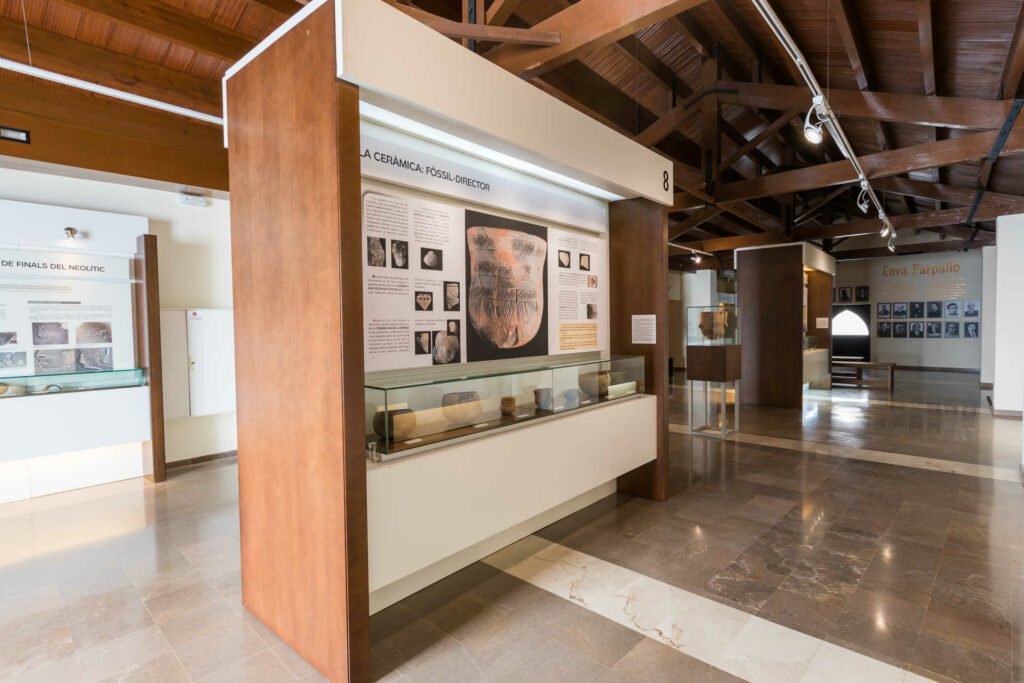
The permanent exhibition traces the region’s prehistory in chronological order, from the hunter-gatherer societies of the Palaeolithic to the Metal Ages, built around three landmark sites:
- Cova del Bolomor (Tavernes de la Valldigna): preserves evidence of the controlled use of fire dating back more than 250,000 years, among the oldest in Europe and the earliest documented in the Valencian Community.
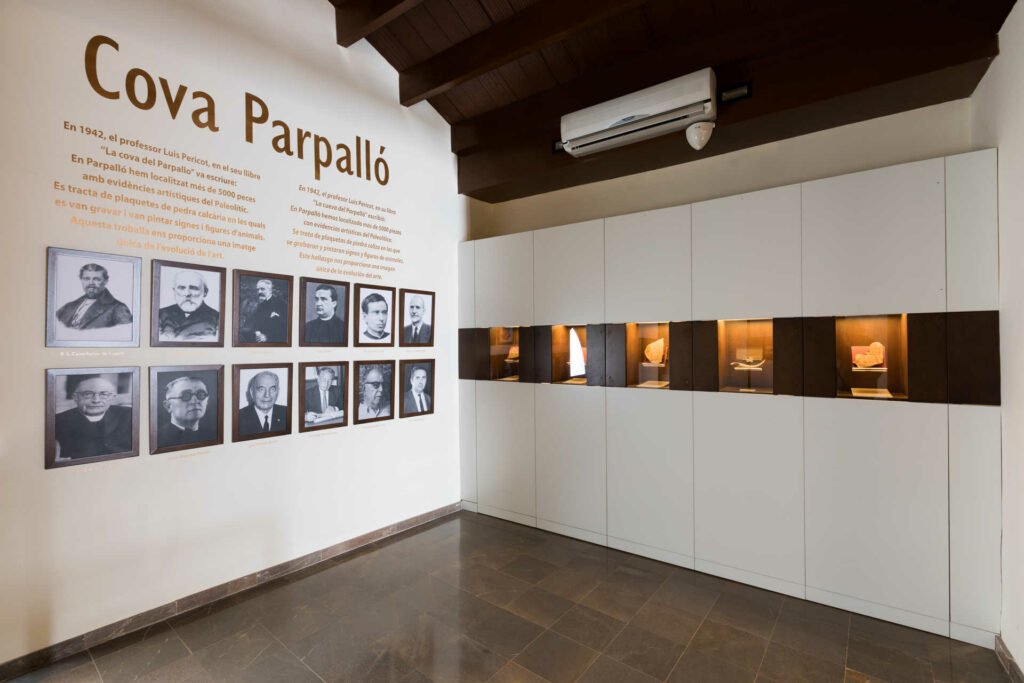
- Cova del Parpalló (Gandia): its collection of Palaeolithic portable art, with more than 5,000 engraved or painted stone plaquettes, is the most important in Europe. The MAGa displays a selection of local originals alongside replicas and interpretive resources; a large part of the plaquettes is kept at the Museu de Prehistòria de València and the National Archaeological Museum in Madrid.
- Cova de les Meravelles (Gandia): completes the story with material from the city’s immediate surroundings.
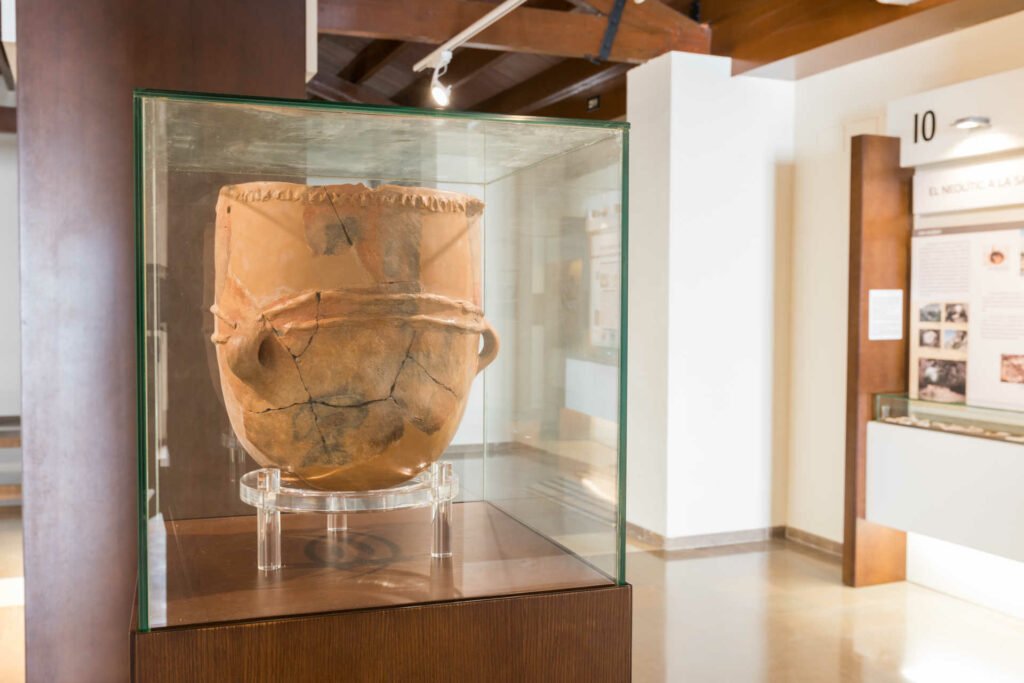
The tour is rounded off with flint tools, worked bone, decorated Neolithic pottery and Bronze Age grave goods, a collection that keeps growing thanks to active excavations across the region.
From the Ancient World to the legacy of Al-Andalus
Recent renovation has taken the museum far beyond prehistory. The Ancient World galleries cover the Iberian, Roman and Visigothic cultures of the Safor, including the municipal collection of Roman epigraphy. And since February 2023, the permanent gallery «Bairén. El llegat d’Al-Andalus» offers an interactive account of the Islamic presence in the area and the finds from Bairén Castle, the fortress that watched over the plain before Christian Gandia existed.
A museum that works for families too
The MAGa is an easy museum to visit with children: the exhibition includes interactive modules and educational resources, and the museum runs workshops throughout the year. The galleries provide adapted routes for visitors with reduced mobility. It is a short visit — an hour is enough to see it at a gentle pace — and it combines beautifully with the rest of the old town.
Practical information for your visit
- Where: Carrer de l’Hospital, 20-22, in Gandia’s Centre Històric — see it on the map. Less than 10 minutes’ walk from the Plaça Major and about 12 minutes from the railway station.
- Opening times: September to June, Tuesday to Saturday from 9:00 to 19:00 and Sundays from 10:00 to 14:00; in July and August, Tuesday to Saturday from 10:00 to 20:00 and Sundays from 10:00 to 14:00. Closed on Mondays.
- Tickets: general admission €2, reduced €1, free on Sundays and for children under 7. On Saturdays there is a guided tour for an extra €1.
- Before you go: opening times, fees and guided tours may change; check the official Gandia Town Hall website.
If you are planning a morning of museums, the La Visit Gandia card bundles admission to the municipal cultural venues, MAGa included. And just a few steps away you will find the Ducal Palace of the Borgias and the old University of Gandia, rounding off a stroll through the Borgia legacy in the old town.