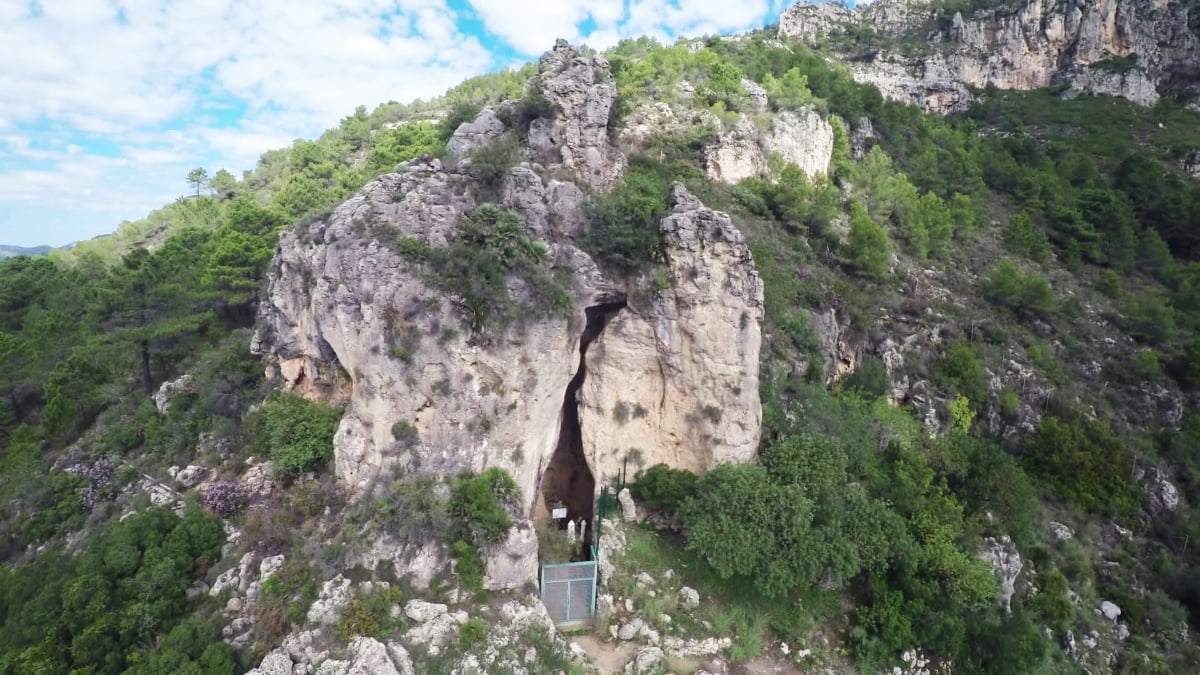
The Cova del Parpalló, in Gandia’s Paratge Natural Municipal Parpalló-Borrell, holds the most important collection of Palaeolithic portable art in the world: more than 5,000 stone plaques engraved and painted by the groups of hunters who lived here during the Upper Palaeolithic. Today it can be visited with a guide, along a mountain path that starts at the nature area’s interpretation centre.
Contents
Where the cave is and what it looks like
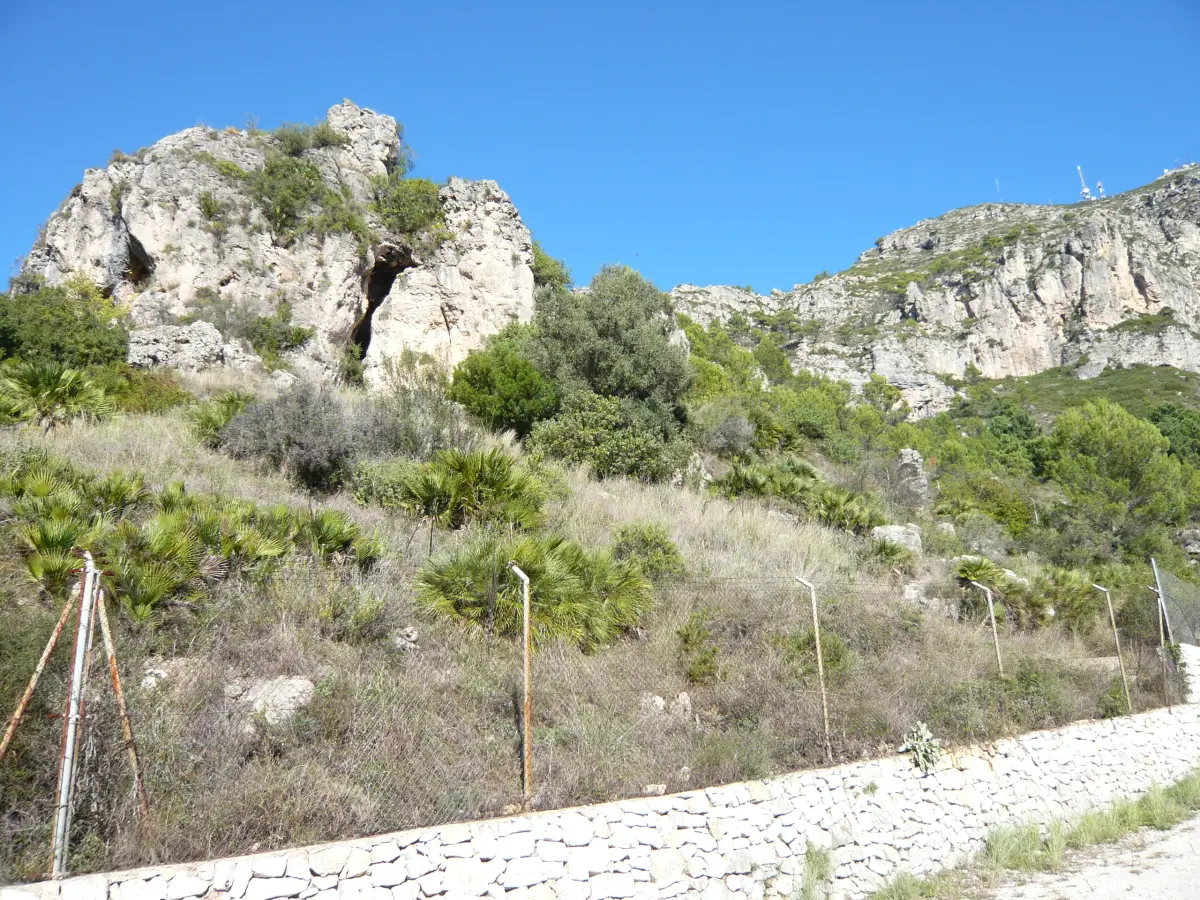
The cave lies in the Mondúver massif, within the municipality of Gandia, in the Parpalló-Borrell municipal nature area. From the path you can recognise it by its entrance: a great fissure in the limestone some 15 metres high and 4 metres wide, with a side gallery and little depth.
Before the archaeologists arrived, the cave served as a shelter for shepherds and their flocks, and the flint that abounds inside was quarried here.
A meeting place in the Upper Palaeolithic
The cave was inhabited over thousands of years of the Upper Palaeolithic. Its sediments, around 8.5 metres deep, preserve a sequence running from the Gravettian through the Solutrean to the Magdalenian, so each layer reflects a different stage in the lives of its occupants.
It was also a meeting place: several family groups from the area gathered here in autumn and winter to share knowledge, hunt, shelter from the cold and find partners outside their own group. The stone tools found, including the tanged and barbed points typical of the Mediterranean Solutrean, showed that the same Upper Palaeolithic industries existed in the Valencia region as in the rest of western Europe.
More than 5,000 plaques: the portable art of the Parpalló
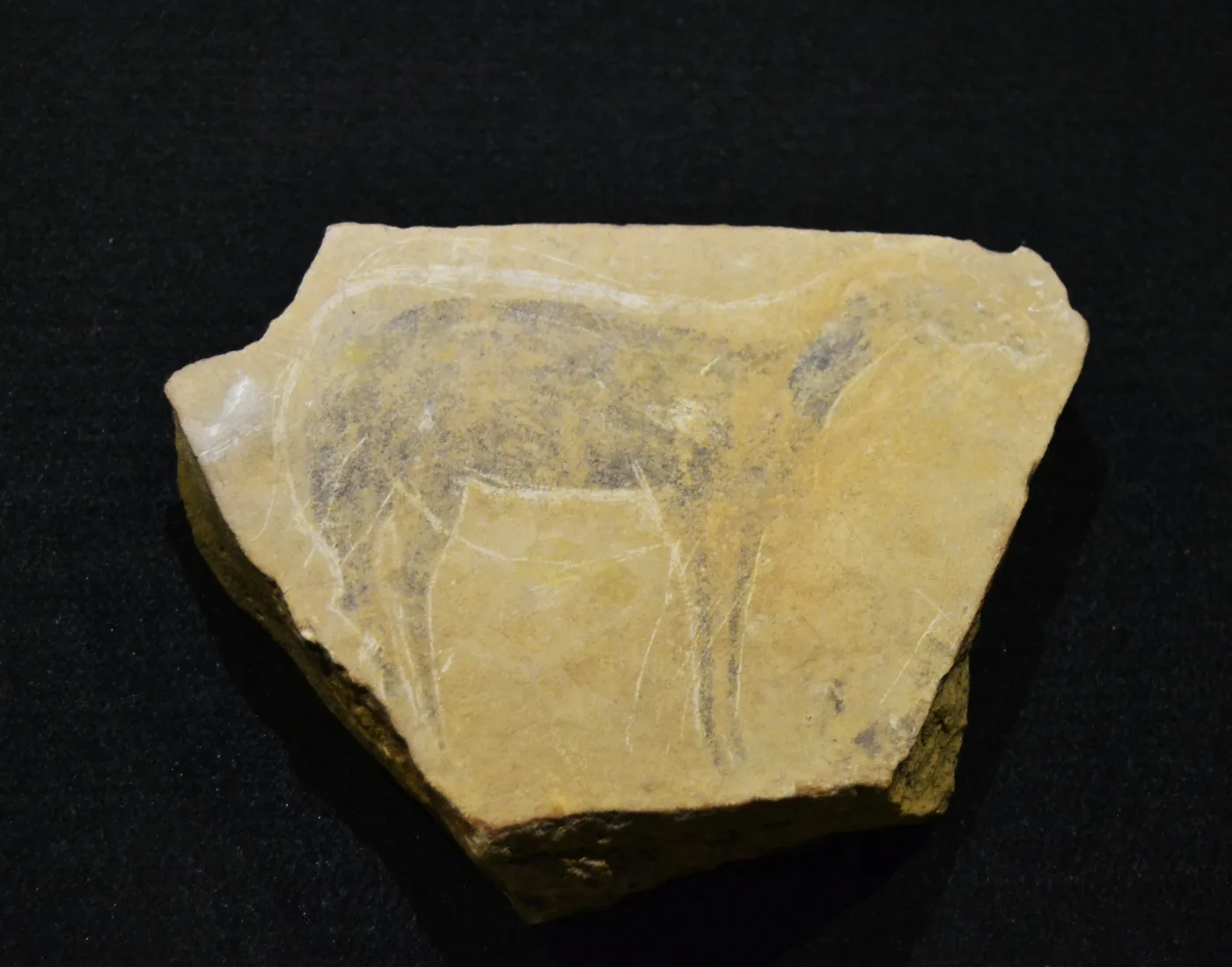
What sets the Parpalló apart is its portable art: its occupants engraved and painted small limestone plaques that could be carried from place to place. The inventory exceeds 5,000 pieces; many are decorated on both sides, and some combine engraving with painting.
Most of the decorated faces show geometric signs. Among the animals, the red deer, the horse, the Iberian ibex and the aurochs stand out, all species that lived around the Mondúver.
The original plaques are kept in the Museu de Prehistòria de València. In Gandia, the Museu Arqueològic (MAGa) devotes part of its prehistory gallery to the site, with a selection of finds, replicas and interpretive displays.
From Vilanova to Pericot: the history of the excavations
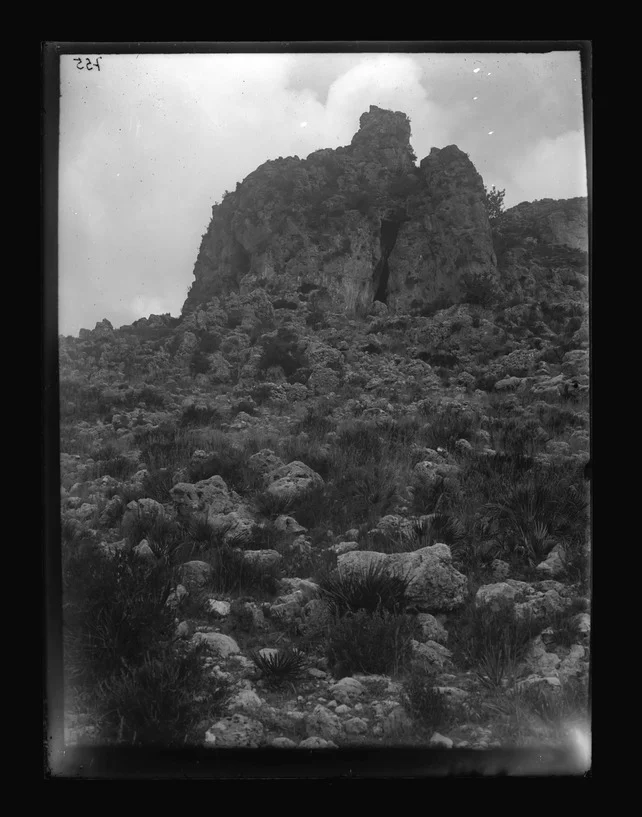
- 1872: the geologist Joan Vilanova i Piera makes the site known to the scientific world.
- 1913: Abbé Henri Breuil excavates part of the cave and finds an engraved plaque; the First World War interrupts his work in 1914.
- 1929-1931: Lluís Pericot leads three summer campaigns for the Servei d’Investigació Prehistòrica of the Diputació de València and excavates almost the entire cave.
- 1942: Pericot publishes his report on the site, a reference work for the prehistory of the western Mediterranean.
- 2014: after decades closed, the cave reopens to the public with guided tours.
The care with which the layers were recorded made Pericot’s campaigns a methodological milestone. The Parpalló thus opens the history of Gandia, many millennia before the medieval town.
The Parpalló-Borrell nature area and Marxuquera
The visit begins at the Centre d’Interpretació Parpalló-Borrell, which explains the origin of the landscape’s relief, the role of water in shaping it, the area’s plants and wildlife, forest fire prevention and, of course, the cave.
The Parpalló shares its surroundings with other places in Marxuquera that round off the day. The Cova de les Meravelles preserves Palaeolithic engravings on its walls and is visited from the Morabit de Marxuquera, a 17th-century building turned into an interpretation centre for rural life. For anyone looking for rock, the Penya Roja is Gandia’s climbing school.
How to visit the Cova del Parpalló
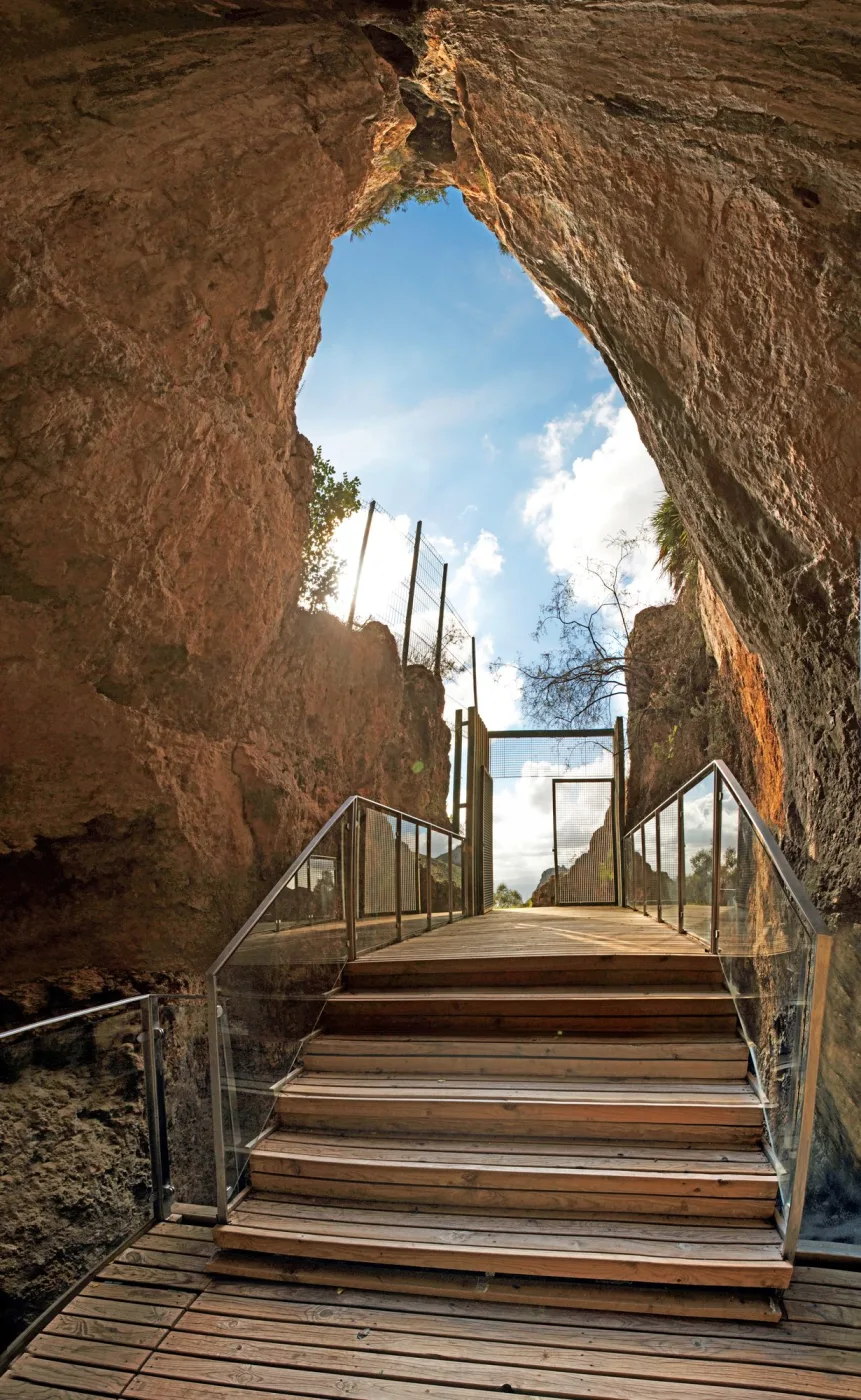
The cave is protected by a fence and can be visited with a guide, in small groups and with advance booking. Here is what you need to plan your visit:
- Getting there: take the CV-675 road to km 9; there is free parking at the Centre d’Interpretació Parpalló-Borrell.
- Times: guided tour on Sundays and public holidays at 10:00; in July and August, also on Saturdays at 19:00, at sunset.
- Duration: about 90 minutes, in groups of 10 to 25 people.
- The path: a mountain trail with loose stones and steep slopes; trainers or hiking boots are compulsory.
- Booking: on +34 96 295 95 40, at arqueologia@gandia.org or in the online booking section of the Gandia Tourism website.
- With the card: the cave is one of the ten sites included in La Visit Gandia.
Times and conditions may change with the season or the risk of forest fires. Before you go, check the official Cova del Parpalló page on the XEC Gandia website (in Spanish) and the location of the interpretation centre on Google Maps.