At the foot of the Serra Falconera, the Morabit de Marxuquera captures much of Gandia’s rural history in one small building: farming, the valley’s paths, the traditional snow trade and the surrounding prehistoric caves.
Contents
The building stands on the Pla de Marxuquera, within Gandia’s municipal area and beside one of the traditional approaches to the mountains. Its circular outline, dome and small lantern make it instantly recognisable among the fields and limestone slopes.
What is the Morabit de Marxuquera?
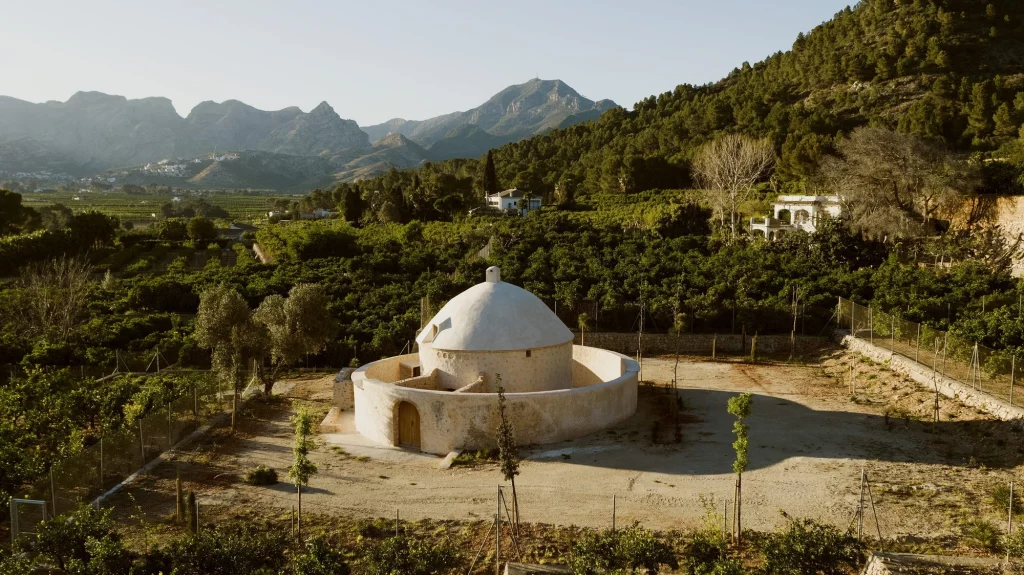
Gandia’s Xarxa d’Espais Culturals dates the building to the late 17th century. The dating is based on its typology and building materials, as no foundation document is known to provide an exact year. The monument is protected as a Bien de Interés Cultural for its architectural and ethnological significance.
The popular name also requires careful explanation. The word “morabit” recalls the marabouts of North Africa, buildings associated with Muslim holy men or hermits, although the formal resemblance provides no evidence of an Islamic origin or religious use. The name spread during the 20th century and eventually became the established name of the monument.
An unusual piece of rural architecture
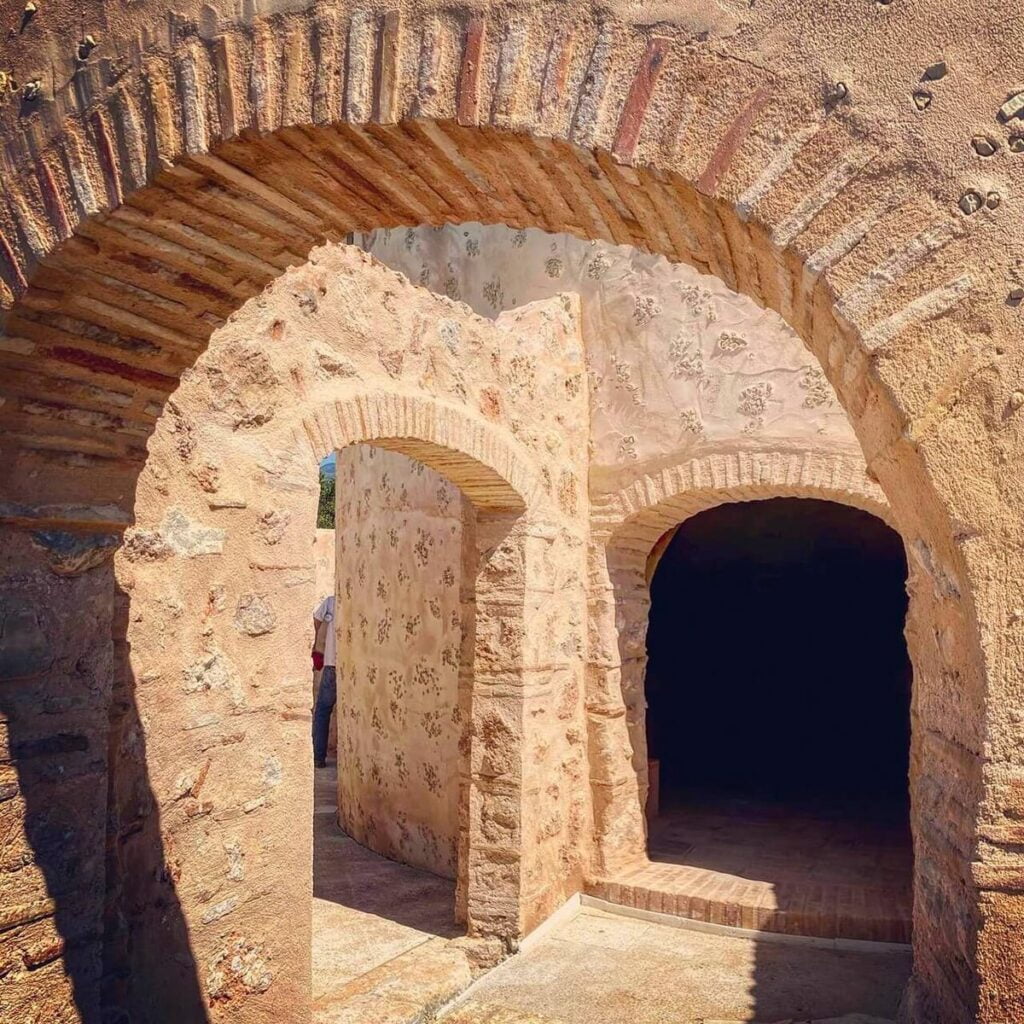
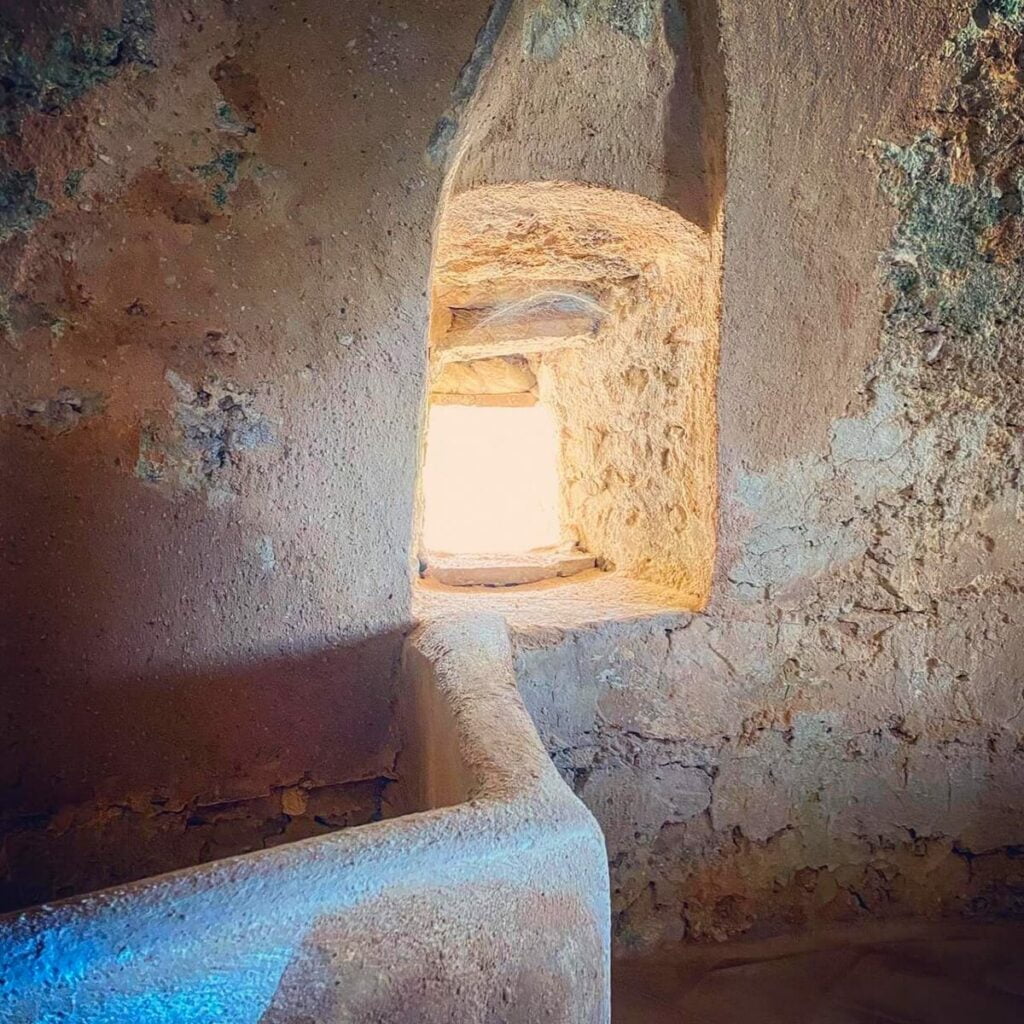
The Morabit has a circular plan, two levels and a masonry dome topped by a lantern. Its walls combine stone, mortar and brick around the openings. Narrow passages, small apertures and practical building solutions inside reflect the modest scale and practical role of a service structure.
The municipal interpretation associates it with the traditional snow trade: it may have served as a temporary store for ice brought down from mountain ice houses before continuing to Gandia. The lack of the large excavated pit found in many historic ice houses leaves its original purpose open to debate. The temporary-storage theory is therefore best understood as the official interpretation alongside other possible agricultural uses.
Its later uses are more firmly established in the heritage account: surveillance of the valley’s roads in the early 19th century, storage for farming tools and shelter connected with work in the fields. Abandonment during the 20th century damaged the structure before the municipal restoration completed in 2020.
Inside the Morabit and traces of its different uses
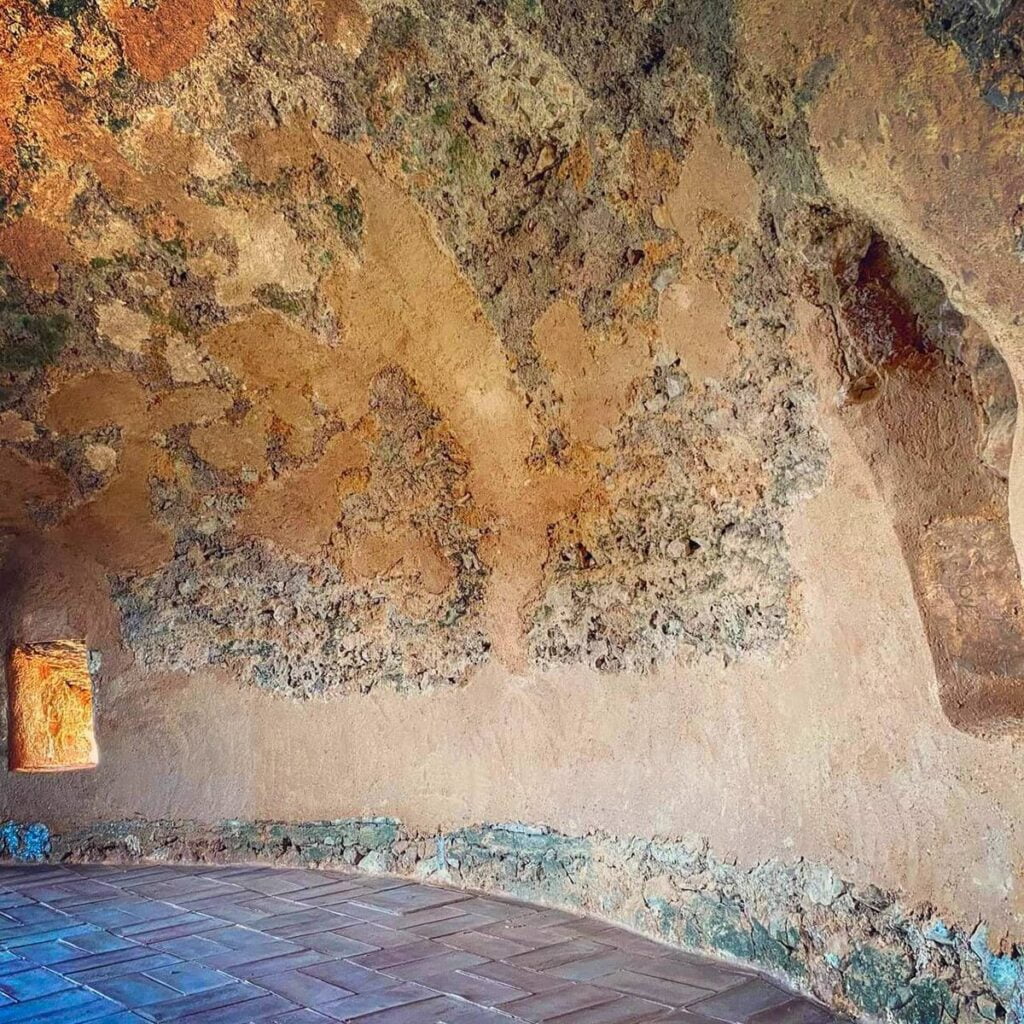
A visit reveals the dome, the changes in floor level and the openings cut through the thick walls. The narrow slits and entrances help explain how the building could be adapted to several functions over time. Restoration consolidated the structure and prepared the interior for public interpretation.
Around the monument, landscaping has reintroduced crops associated with Marxuquera, including olive, almond, carob, fig and pomegranate trees, along with vines. The setting places the building back within the agricultural landscape that gave it meaning, with the Serra Falconera enclosing the valley.
Interpretation centre and the Cova de les Meravelles
The Morabit houses an interpretation centre dedicated to rural life in Marxuquera and serves as the reception point for organised visits to the Cova de les Meravelles. Its displays connect farming, the snow trade and human occupation of the Falconera caves.
The Cova de les Meravelles preserves evidence of occupation from several periods. XEC information highlights a panel of animal rock engravings attributed to the Upper Palaeolithic. Access to the cave forms part of guided activities and is subject to the organiser’s conditions; the Morabit acts as the reception point, while entry to the archaeological site is controlled.
Visitors who would like to explore the archaeological context without leaving the town centre can visit the Gandia Archaeological Museum (MAGa). Its galleries cover the prehistory of La Safor and help place sites such as Meravelles and the Cova del Parpalló in their wider setting.
How to visit the Morabit
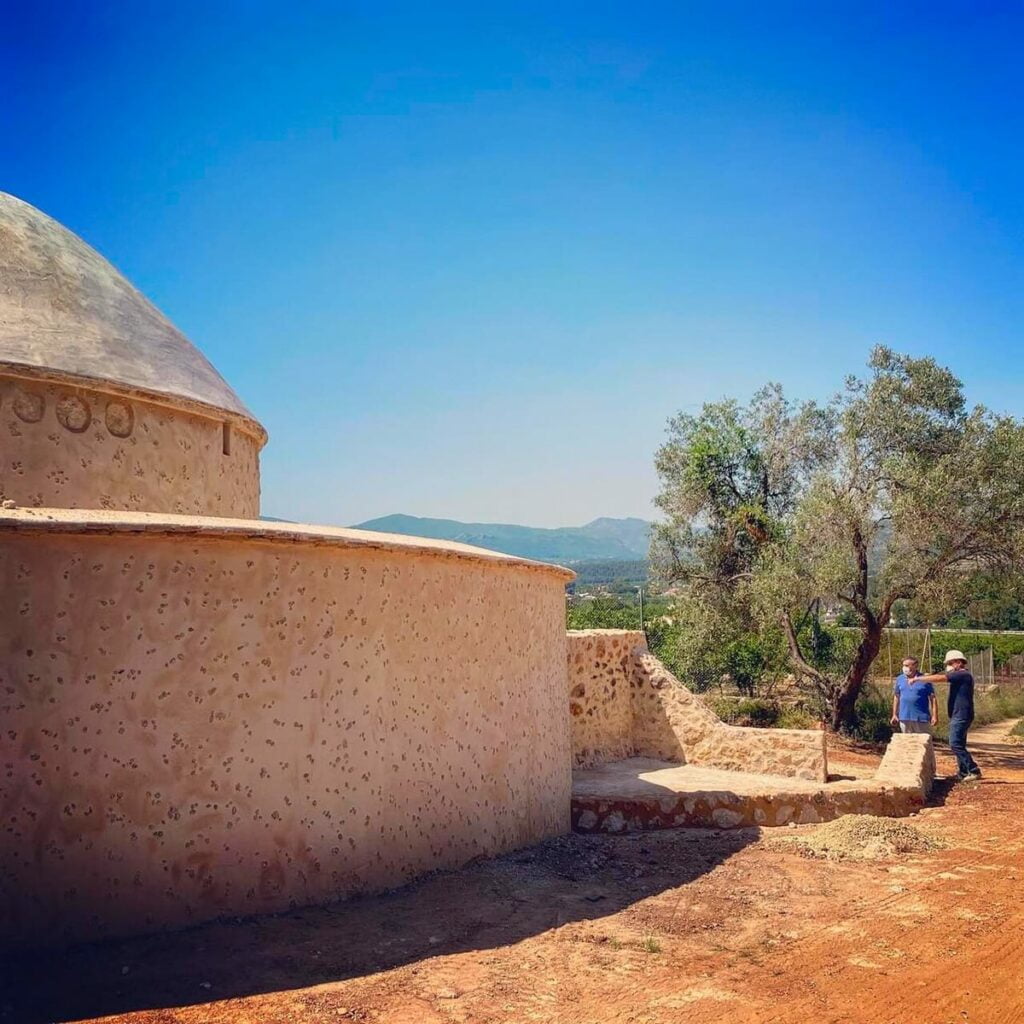
The monument is located on Camí Meravelles–Cova Negra. The final approach follows a rural track, so sports footwear is advisable and access directions should be checked beforehand. The interior can be visited on a guided tour with advance booking.
Opening times, prices and special programmes change with the municipal schedule. The official Morabit page on XEC Gandia provides the current timetable, booking telephone number, email address and directions. Check it before travelling.
Ideas for extending a visit around Marxuquera
A visit to the Morabit can be combined with several activities, depending on each person’s interests and experience:
- Heritage and archaeology: book the activity linking the interpretation centre with the Cova de les Meravelles, or complete the day at MAGa.
- Prehistory and nature: check the official visits to the Cova del Parpalló, within the Paratge Natural Municipal Parpalló-Borrell.
- Climbing: the Penya Roja de Marxuquera belongs to the same landscape and requires suitable equipment, experience and attention to the condition of the fixed gear.
- Hiking: the route to the Molló de la Creu is a separate mountain outing. Heat, water, terrain, navigation and the day’s conditions all need to be assessed before setting out.
The visit is most rewarding when enough time is allowed for both the building and its surroundings. The Morabit provides an accessible introduction to Gandia’s rural history and shows how paths, crops and caves have shaped Marxuquera over the centuries.