The medieval history of Gandia is bound to Jaume I the Conqueror and the Castell de Bairén. The agreed surrender of this fortress in 1240 marked the start of a new era, as the region’s focal point shifted from the mountains to the fertile plain where the town grew.
Contents
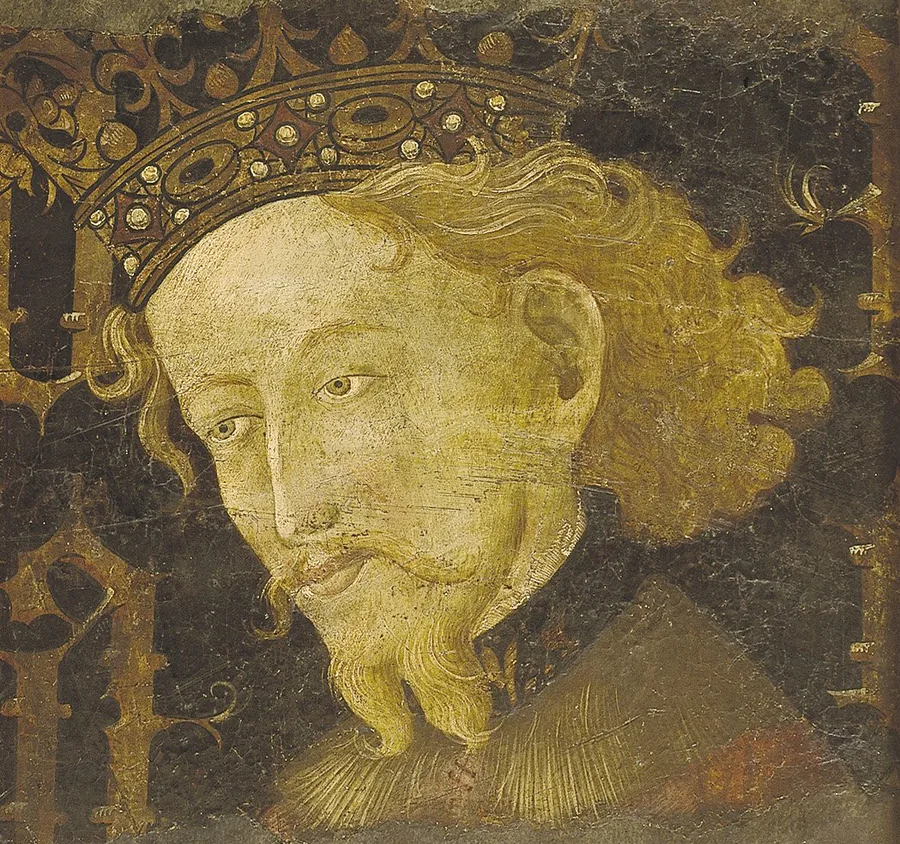
Born in Montpellier in 1208, Jaume I expanded the Crown of Aragon with the conquest of Majorca and the creation of the Kingdom of Valencia. For Gandia, the decisive turning point took place at the Castell de Bairén.
Bairén, the hub of Andalusi La Safor
Before the Christian conquest, Bairén was the main defensive and administrative enclave in this part of La Safor. Its position commanded the coast, the marshland, the fertile farmland and the inland routes. At the time, Gandia was a farmstead on the plain dependent on the fortress.
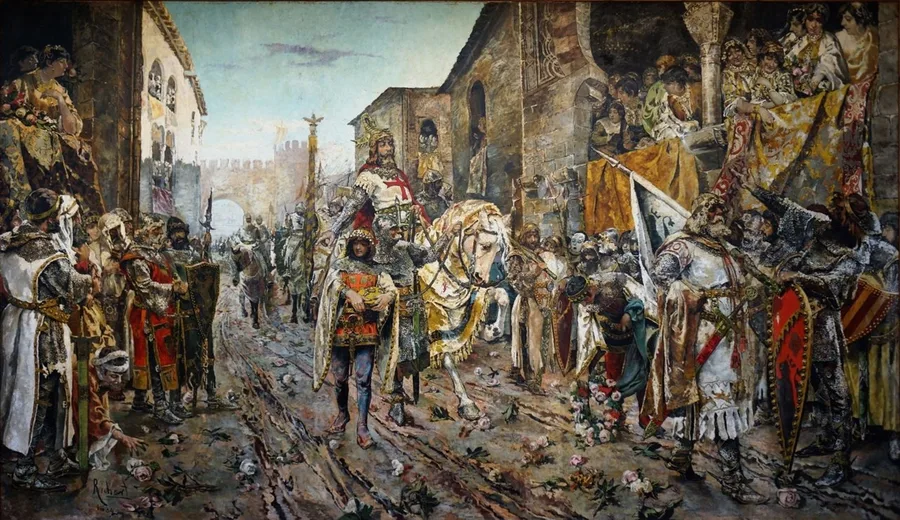
Jaume I’s advance towards the south reached the area after the surrender of Valencia. According to the account preserved in the Llibre dels Fets, the handover of Bairén was the result of negotiations with its Muslim governor, known as Abecendrell, rather than a direct assault.
A negotiated surrender between 1239 and 1240
Talks began in 1239. The agreement established a seven-month truce, the prior handover of the outer tower and guarantees to ensure compliance with the pact. Once the period had elapsed, Bairén and its territory came under the authority of Jaume I in 1240. The Jaume I Route in Gandia covers the passages from the chronicle related to this episode.
“He expressed to Us that he was grateful for our offers; but that, with that castle (Bairén) being so fine, We could well understand that it would be a villainy to hand it over straight away. —Well, if you do not wish to hand it over right away, We told him, let us both agree that you will surrender it to Us within a certain period, and give Us in the meantime some guarantee that you will not break your promise. —What guarantee do you require? he replied, —and at such words, We told him that We wanted his eldest son, and also the names of two of his nephews, whom he was to deliver to Us without delay; whereupon he begged Us to grant him time to reflect upon it.”
(Chronicle, ch. 308)
Following the handover, land grants documented in the Llibre del Repartiment began. The new settlers established themselves on the agricultural plain, spurring the growth of Gandia and the gradual loss of Bairén’s residential functions.
The farmland and the waters of the Serpis
The consolidation of the new town depended on something just as important as the land: water. In 1244, Peregrí d’Atrossillo, acting on behalf of Jaume I, set down the distribution of water and irrigation channels in the district of Bairén and the area around Gandia among the new settlers.
This record shows that the conquest was not merely a matter of occupying fortresses. It was also necessary to organise irrigation, distribute plots and adapt a hydraulic network of Andalusi origin to the new political organization. The documentary chronology can be consulted in the historical manors archive of the Universitat de València.
The Llibre dels Fets, a voice from the 13th century
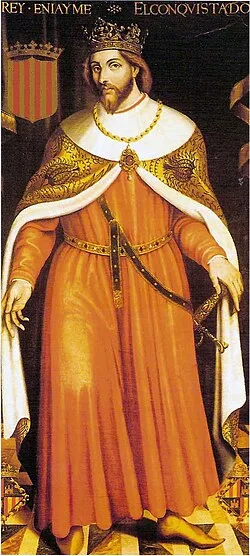
Much of what is known about the negotiations at Bairén comes from the Llibre dels Fets, the chronicle directly linked to Jaume I. Written in the royal first-person plural, it combines military campaigns, political decisions and personal memories of the monarch. The Biblioteca Virtual Miguel de Cervantes allows readers to discover its manuscript tradition and consult material on the work.
A historical landscape that can still be explored
The link between Jaume I and Gandia remains visible in the region today. The Castell de Bairén helps to explain the medieval defensive setting; the farmland highlights the importance of the irrigation channels; and the Centre Històric reflects the subsequent growth of the town on the plain. Exploring these places allows you to experience Gandia as a landscape formed by different historical layers, from its Andalusi heritage to the medieval and ducal city.
Gandia prepares for Any Jaume I
To mark the 750th anniversary of the death of Jaume I, the Ajuntament de Gandia is preparing Any Jaume I together with the Universitat de València and CEIC Alfons el Vell. Activities will begin to take place from October 2026.
The plans include exhibitions, lectures, concerts, guided and dramatised tours, heritage and literary itineraries, and educational initiatives. The detailed schedule has not yet been published; once dates, venues and times are known, the full programme will be featured in a future post.