
At the top of the Santa Anna neighbourhood, a hermitage originating between the 14th and 15th centuries brings together Gothic architecture, Baroque renovations and some of Gandia’s oldest religious traditions. The sanctuary of Santa Ana is also the starting and returning point for the patron saint festivities that connect the hill with the neighbourhood parish every July.
Contents
The climb up the Calvary leads to an open esplanade overlooking the city, the surrounding farmland and the mountains of La Safor. There stands this small sanctuary, recognised as a Bien de Relevancia Local (Asset of Local Relevance), in surroundings that preserve chapels, stations of the cross and the memory of centuries of popular devotion.
A history linked to the former patron saint of Gandia
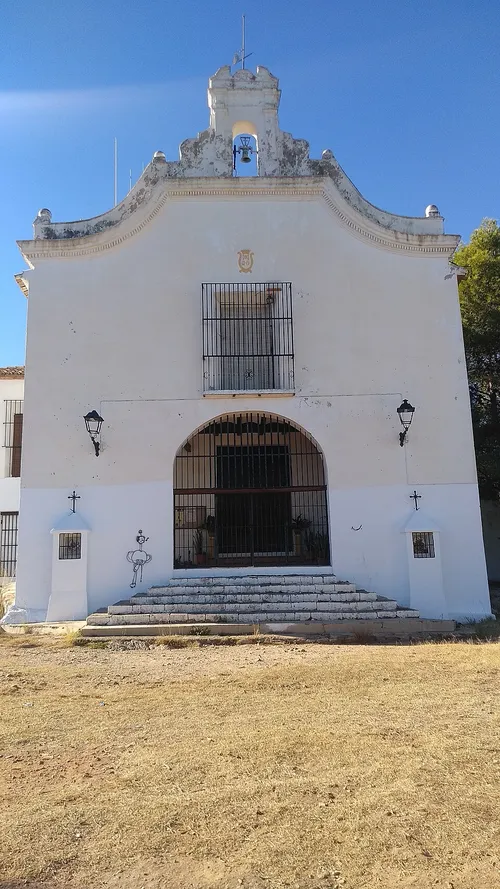
The earliest documentary references relating to the hermitage date back to 1372, and to the hill of ‘Sent Ana’ in 1380. By 1421, the custom of carrying the image down in procession to seek protection against droughts, epidemics, floods or plagues was already recorded. The carving remained in the city until the calamity passed, before returning to the sanctuary accompanied by a celebration of thanksgiving.
Santa Ana was the patron saint of Gandia until 1882. The site also fulfilled a care-giving function: the hermitage and its surroundings served as a place of refuge and isolation for sufferers of plague and leprosy. Since 1809, the Piarist Fathers have administered the site, which is municipally owned, maintaining it as a religious and cultural space.
From Gothic to popular Baroque
The building reveals its evolution at a glance. From the original construction it retains pointed brick Gothic arches, whilst the mid-18th-century extension defines much of its present-day appearance: a facade with a mixtilinear cornice, a bell gable, a barrel vault and a remarkable plinth of polychrome Valencian tiles.
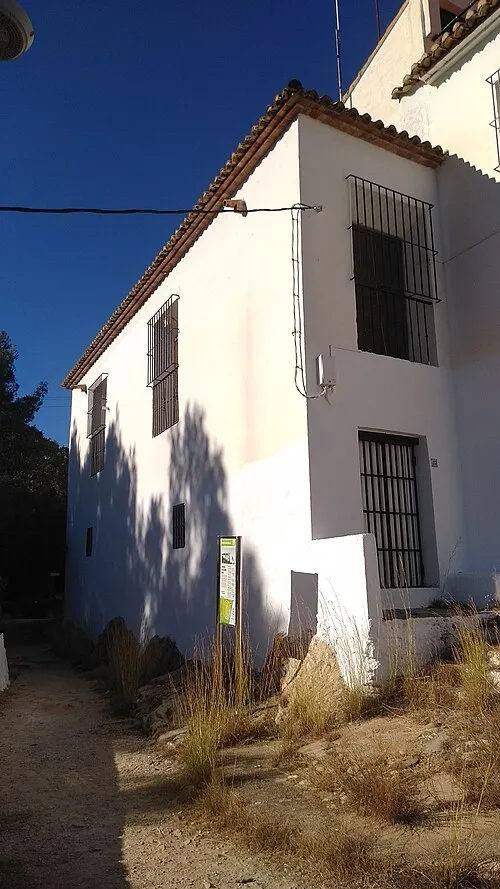
Attached to the southern wall is the former hermit’s house, set over two floors and recognisable by its white walls, tiled roof and window grilles. These rooms serve as a reminder that the site was not merely a temple, but also a space permanently inhabited and maintained.
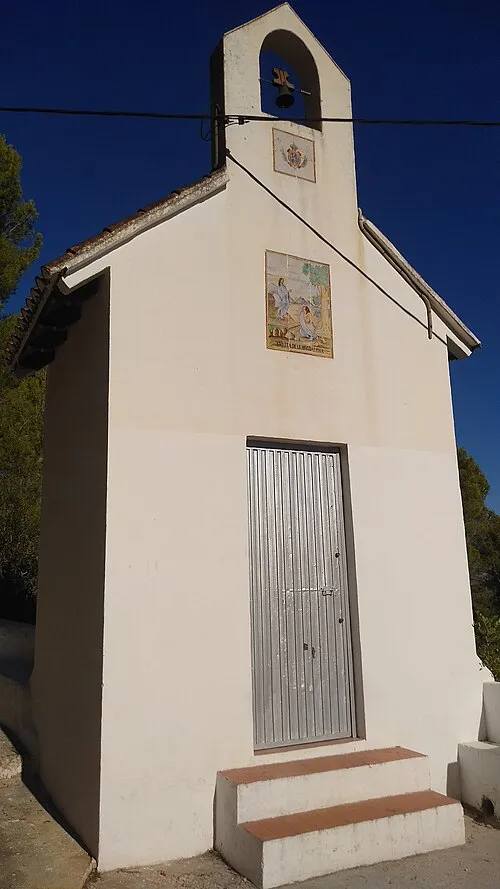
Among the pieces connected to the sanctuary, the Gothic carving of Santa Ana holding the Virgin in her arms, dating from the second half of the 14th century, stands out. The original sculpture, measuring around 65 centimetres, is kept in the Escuelas Pías for security reasons; a replica is venerated in the hermitage. The site also includes the Calvary path and, halfway up the climb, the small hermitage of Santa María Magdalena, rebuilt in 1994.
Patron saint festivities: the descent and ascent of Santa Ana
The tradition remains very much alive every summer. On 25 July, the image is carried down in procession from the hermitage to the parish church of Santa Ana; on 26 July, the saint’s feast day, it returns to the sanctuary after the religious celebration. It is a route that maintains the historical link between the hill, the neighbourhood and the former patron saint of Gandia.
How to visit the sanctuary
The experience begins at the foot of the hill and continues on foot along the Calvary path. It is advisable to wear comfortable shoes and avoid the hottest hours of the day in summer. As there are no set opening hours published for visiting the interior outside of religious services, checking opening times before walking up is recommended. You can find more historical information on the Escola Pia de Gandia website and locate the site on Google Maps.