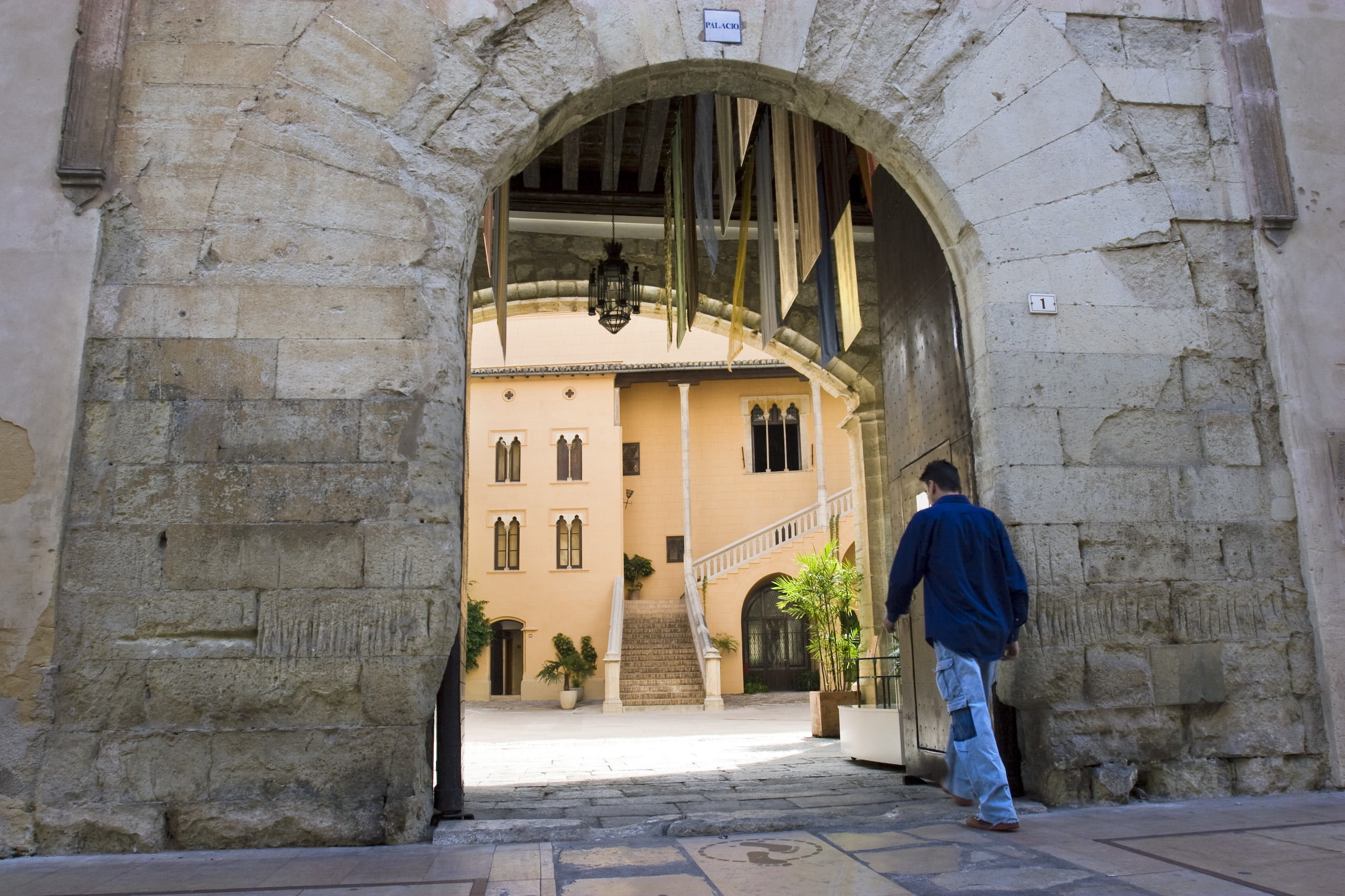
The Ducal Palace of the Borgias, known in Gandia as Palau Ducal dels Borja, offers a journey through centuries of history right in the heart of the city. Its courtyards, grand halls and ceramics explain how a medieval manorial residence transformed over time into one of the main monuments of Valencian heritage.
Contents
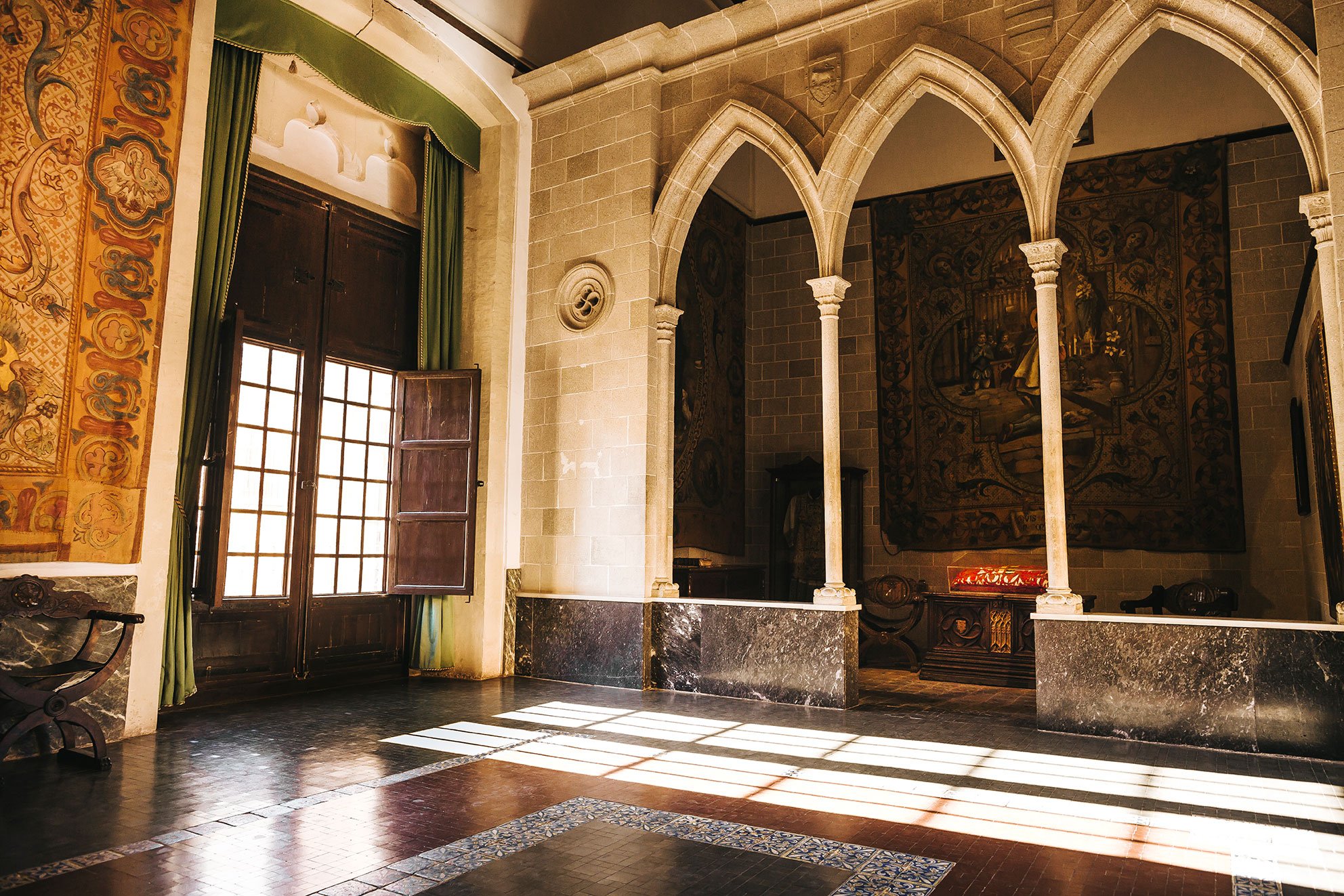
Declared a Bien de Interés Cultural in 1964, the Palau does not conform to a single style. The tour brings together Gothic remains, Renaissance additions, Baroque rooms and Neo-Gothic features, like a book of architecture built across generations.
From medieval lordship to the Borgia palace
The building’s history begins with the lordship created in 1323 and the court of the Royal Dukes of Gandia. The decisive change arrived in 1485, when Rodrigo de Borja, the future Pope Alexander VI, acquired the duchy for his family.
At the end of the 15th century, the regency of María Enríquez de Luna favoured a period of economic recovery and artistic patronage. Later on, successive dukes adapted the complex to their needs and tastes. After a long period of abandonment, the Society of Jesus bought the palace in 1888 and spearheaded its restoration.
What to see at the Palau Ducal
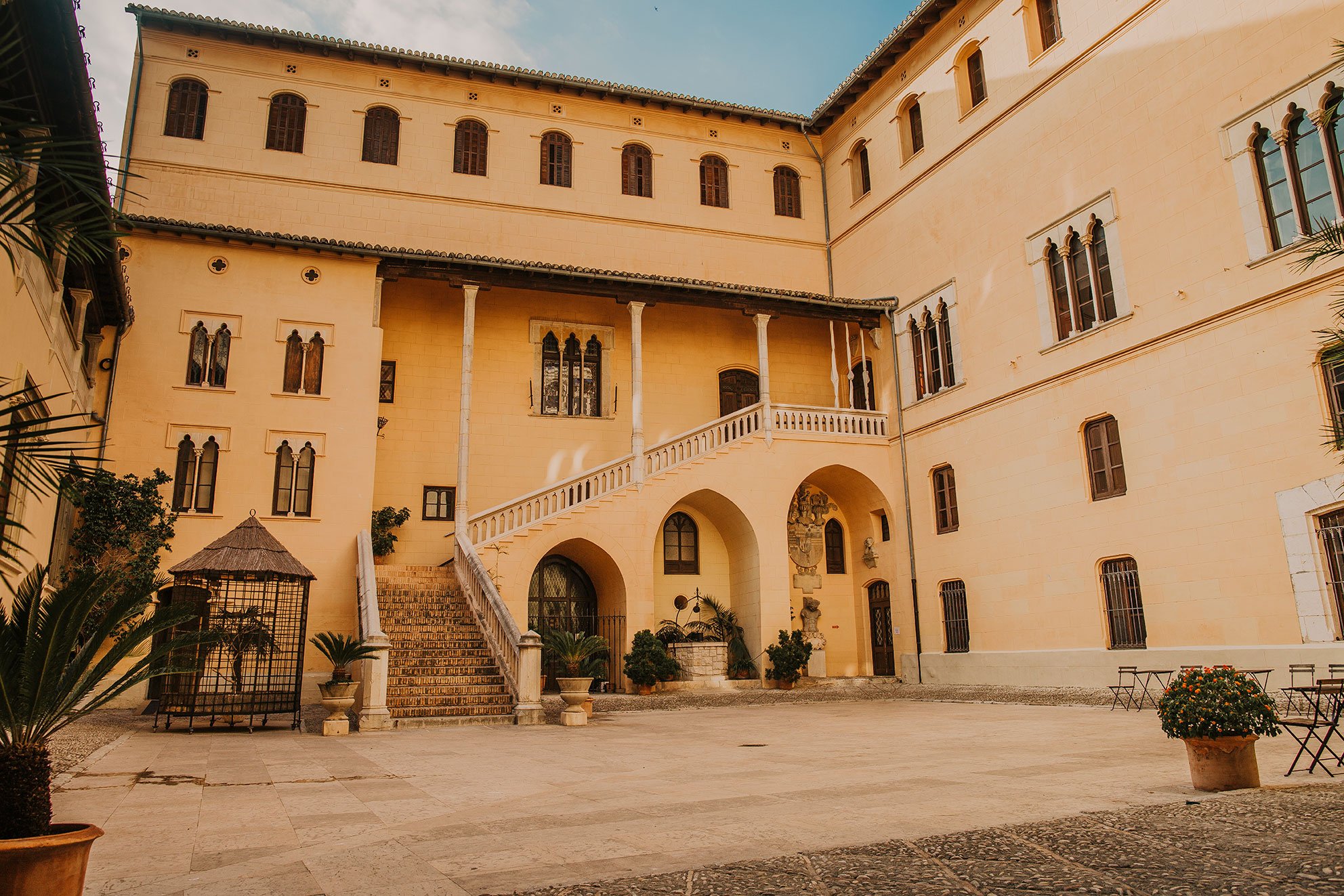
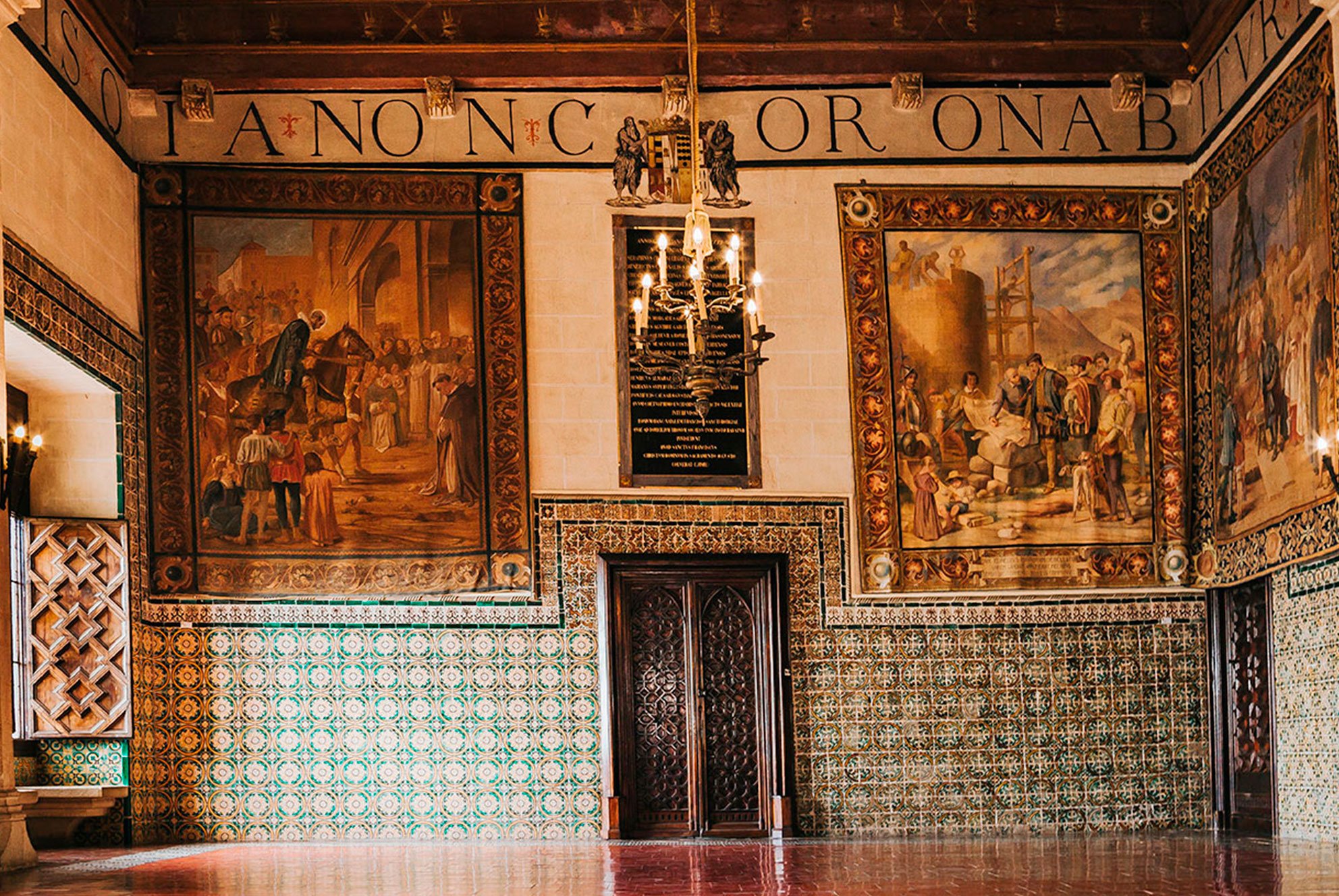
The tour begins in the Patio de Armas, where features from different eras coexist and the grand staircase opens up. On the noble floor, the Salón de Coronas preserves its coffered ceiling decorated with the double crown of the Borja family, as well as a ceramic wainscot with original 16th-century tiles and later reproductions.
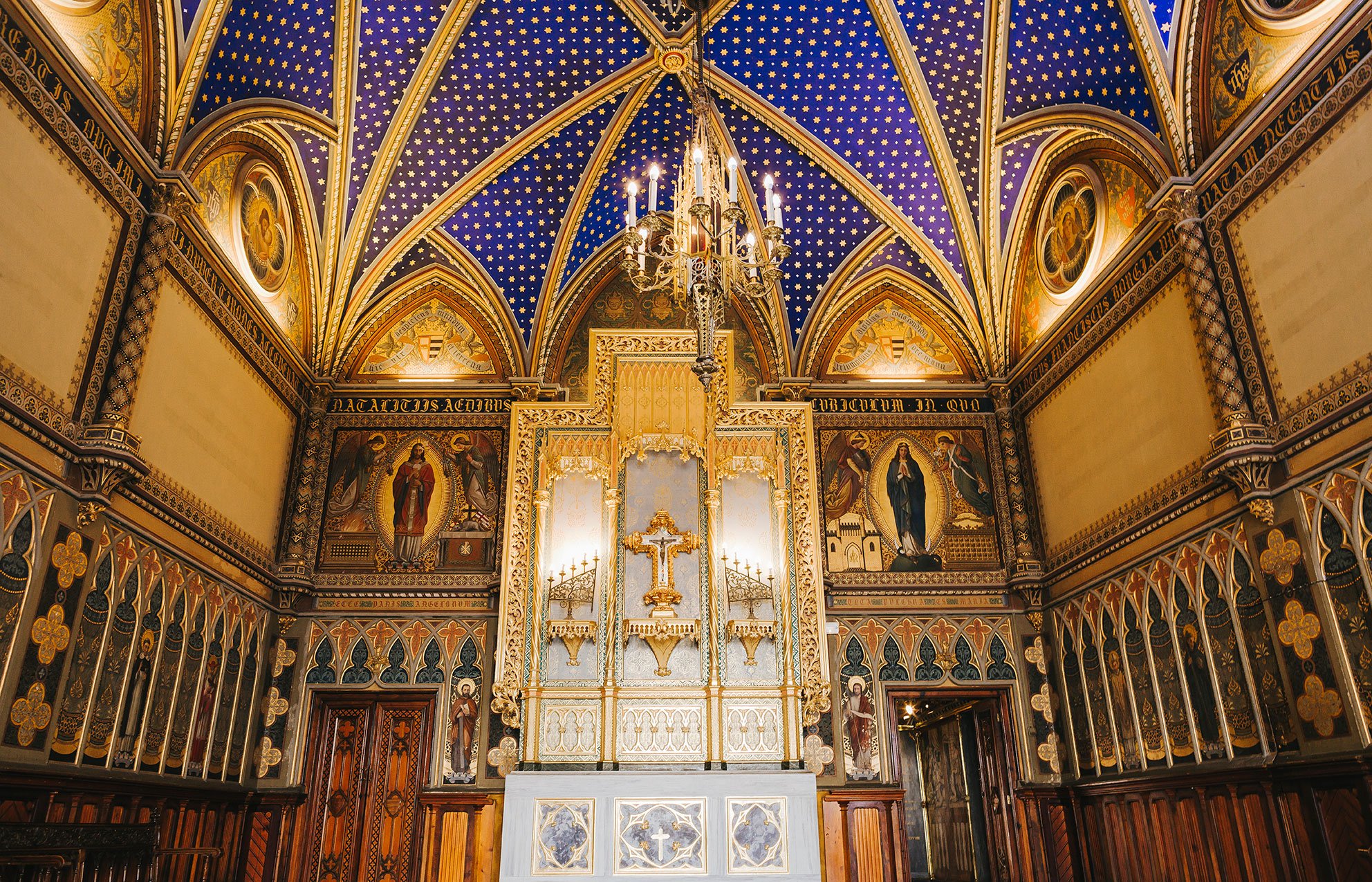
- Oratorio: small private chapel of the dukes, with Renaissance grisailles and later renovations.
- Cámara de la Duquesa: room that tradition identifies as the birthplace of Francisco de Borja, which preserves a historic ceramic floor.
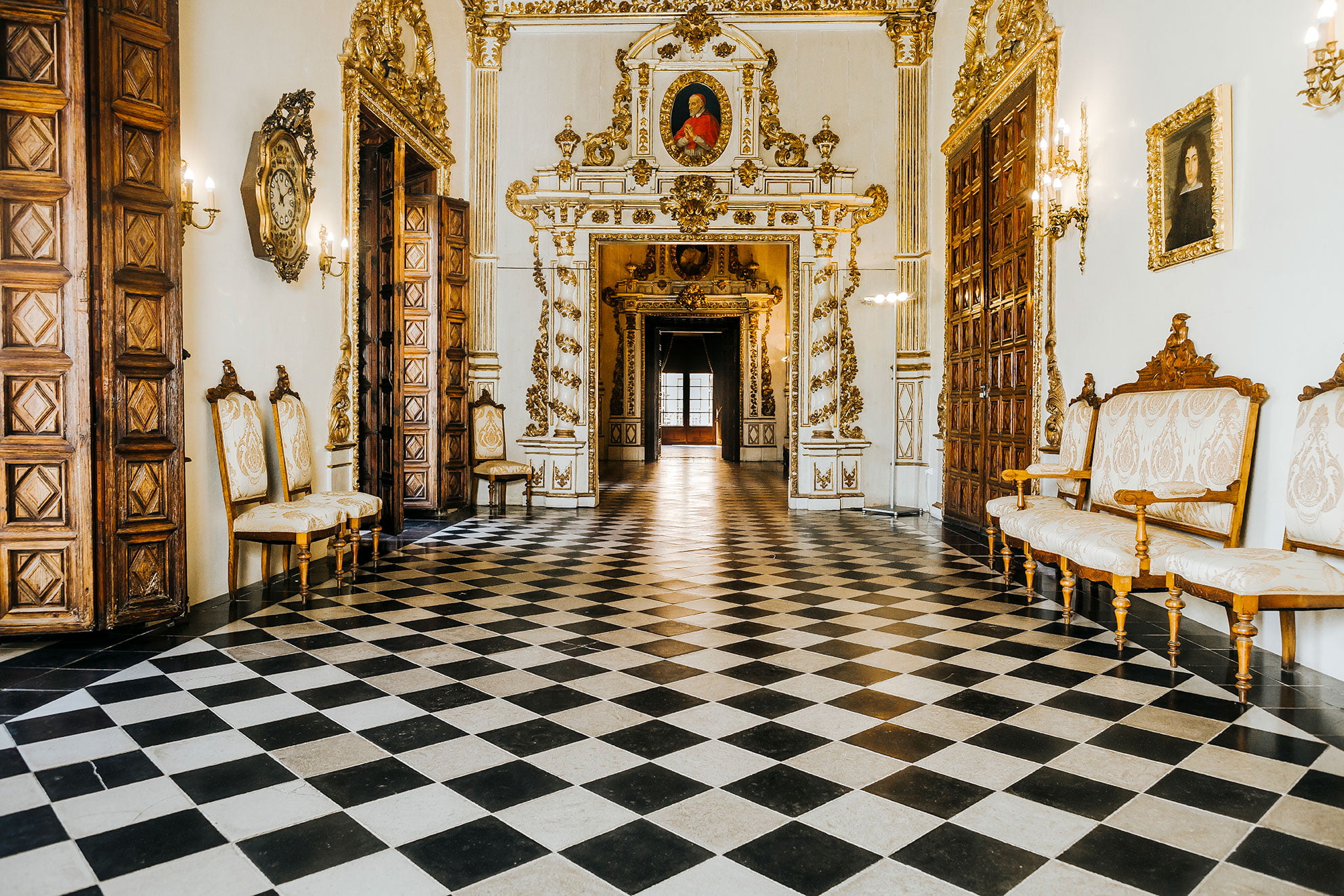
- Galería Dorada: a succession of five Baroque rooms, completed at the beginning of the 18th century to commemorate the canonisation of Francisco de Borja.
Francisco de Borja, between the duchy and the Jesuits
Francisco de Borja was born in this palace in 1510 and was the 4th Duke of Gandia. During his rule he promoted the University of Gandia and left his mark on rooms such as the Salón de Coronas. He later renounced noble life, joined the Society of Jesus and became its third Superior General. His canonisation in 1671 inspired the construction of the Galería Dorada.
The Palau is, therefore, a central piece in understanding the presence of the Borjas in Gandia. Your visit can continue at the nearby Collegiate Church of Santa María, which is also linked to the history of the family and located just a few minutes away on foot.
Ceramics: a history underfoot
The floors and wainscoting make it possible to trace the decorative evolution of the building. There are medieval and Renaissance pieces, Mudejar-style ceramics and later restorations. The best-known feature is the Four Elements floor, preserved in the last room of the Galería Dorada: a Baroque composition that organises its scheme around earth, water, air and fire.
How to plan your visit
The Palau is located at carrer Duc Alfons el Vell, 1, in Gandia’s Centre Històric. It offers various types of tour, but opening hours, prices, activities and accessible rooms may change, particularly during conservation work. Before setting off, check the tours and tickets on the official website. You can also discover more background in the official history of the Palau and check its location on the map.
Palau photo gallery