The Church of San Roque, known in Gandia as the Church of the Beato or Chapel of the Beatet, preserves right in the heart of the Centre Històric the memory of a Franciscan convent, a remarkable Baroque interior and devotion to Blessed Andrés Hibernón. Since 2022, it has also been the seat of the Diocesan Sanctuary of Blessed Andrés Hibernón.
Contents
Its various names do not contradict each other: San Roque is the historic dedication of the church; el Beato is the popular name linked to Andrés Hibernón; and diocesan sanctuary is its current ecclesiastical status. Knowing this evolution helps visitors to better read a building that brings together several stages in Gandia’s history.
From the convent of Sant Roc to the present-day church
The origin of the complex is not in the 18th century, but in 1588. That year, Carlos de Borja y de Meneses, 5th Duke of Gandia and eldest son of Saint Francis Borgia, founded the convent of Sant Roc for a community of Discalced Franciscans. The Alcantarine friars took possession in 1591.
The convent was built next to an ancient hermitage dedicated to San Roque and took advantage of part of the medieval wall surroundings. The church we see today arrived later: it is an 18th-century Baroque construction integrated into that earlier complex. This difference between convent and church helps clarify two dates that often appear mixed up.
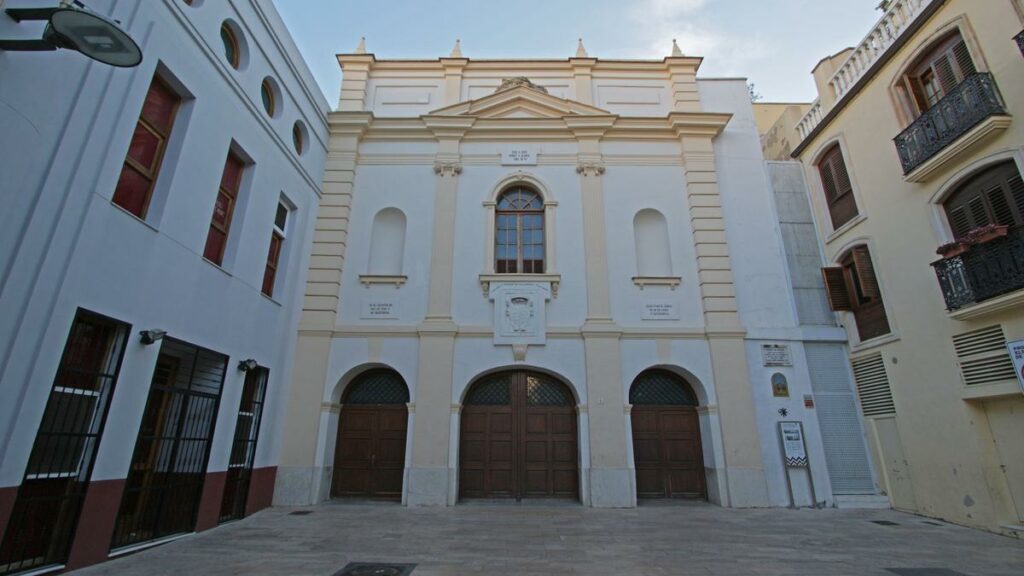
A Baroque church with a Neoclassical façade
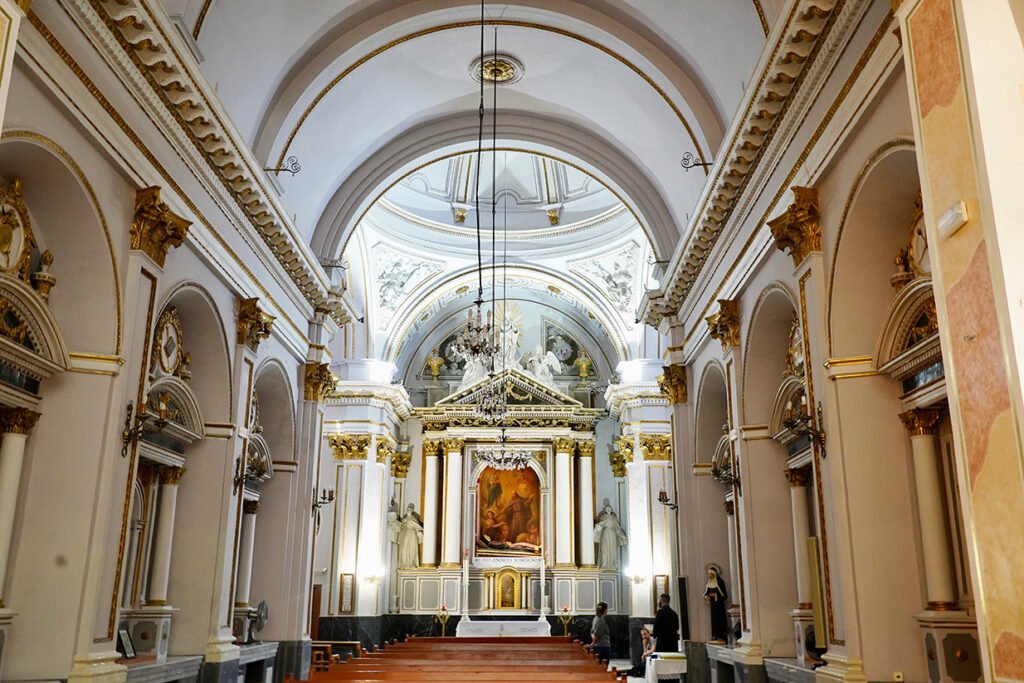
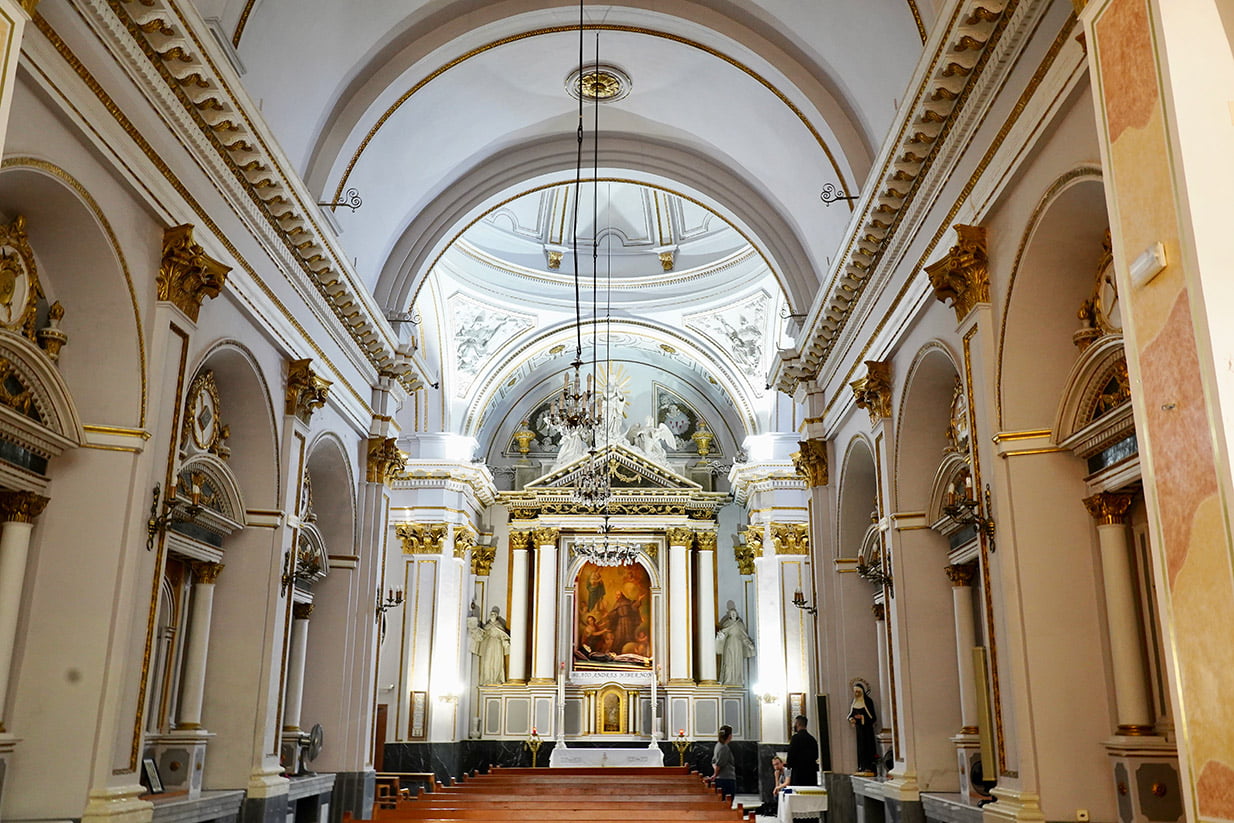
The interior reflects a Baroque style with restrained lines, featuring a single nave, barrel vault and interconnected side chapels. The official tourist guide places the addition of the Neoclassical façade and the side chapel dedicated to the Beato in 1791, coinciding with the year of his beatification.
As you approach the façade, look out for the coat of arms of the Dukes of Gandia above the entrance and the two empty niches in the upper section. Before the Spanish Civil War, they were occupied by large statues. Inside, highlights include the Baroque altarpieces, the Borgia coat of arms, the statue of Andrés Hibernón and the ceramic tiles depicting the friar.
One of the restored pieces is the canvas of Sant Roc i Sant Francesc, a Baroque work attributed to Jeroni Jacint Espinosa. It was restored as part of the municipal programme Gandia Restaura and returned to the high altar in 2022.
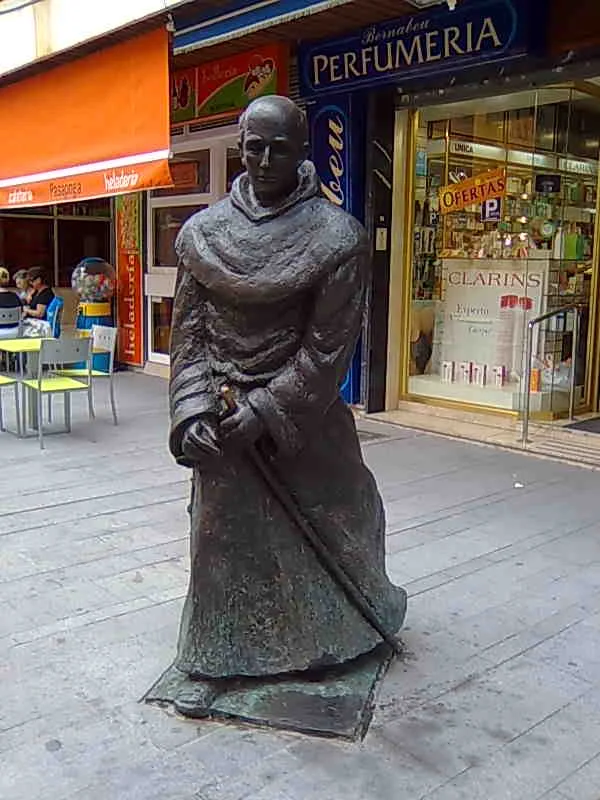
Andrés Hibernón and the memory of the Beatet
Andrés Hibernón was born in Murcia in 1534 and spent his final years in Gandia, where he died on 18 April 1602. Local tradition remembers him as el Beatet, an affectionate diminutive reflecting the devotion maintained over generations. Pope Pius VI beatified him on 22 May 1791.
For centuries, his body was venerated in the church and described as incorrupt. However, it was destroyed in 1936, so it is incorrect to state that it remains intact in the church. The sanctuary today preserves his memory through the space, the images, the tiles and the religious tradition linked to his figure.
From Franciscan convent to Central Library
Following the confiscation of church property, the former convent passed to the Town Hall and had very varied uses: it housed law courts, a prison and a charitable home. Today, its rooms form part of the cultural complex housing the Central Library and the Archives of Gandia; a small cloister is also preserved.
This transformation explains why the church is attached to a cultural space and a pedestrianised square. The location is also a stop on the Borgia Territory urban route, which connects various settings related to the ducal family.
What to look for during your visit
- The façade: Neoclassical composition, ducal coat of arms and empty upper niches.
- The nave: barrel vault and interconnected side chapels.
- The altarpieces: an unusual example of religious Baroque heritage preserved in Gandia.
- The iconography of the Beato: statue, tiles and other elements associated with local devotion.
- The convent surroundings: cloister and cultural buildings integrated into the former Franciscan complex.
How to visit the Church of the Beato
The church is located in Plaça Beato Andrés Hibernón, within a pedestrian area of the Centre Històric. It can be reached on foot from Plaça del Rei Jaume I, Carrer Major or the nearby Old University of Gandia. The walk can continue towards the Santa Clara Museum and other heritage sites in the centre.
As it is a place of worship, opening times and access conditions may change. Before travelling, check the official Gandia tourist information. You can discover more context in the history of the sanctuary published by the Archdiocese and check its location on the map.
Photos of the Church of the Beato