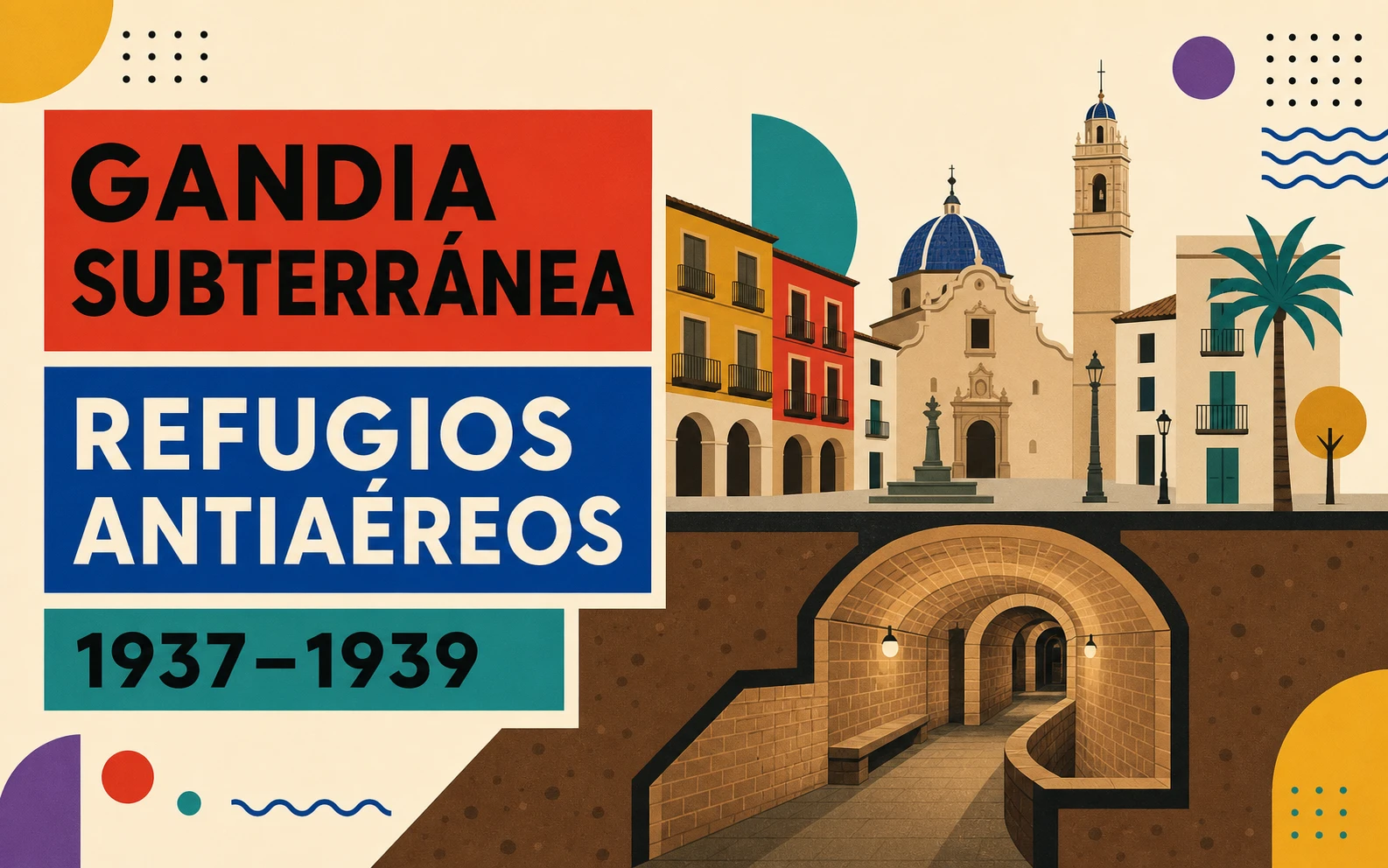
Beneath the streets of Gandia’s Centre Històric lies a network of air-raid shelters built to protect civilians during the Spanish Civil War. Three of the most significant spaces can now be explored through virtual tours of the Peixateria, Plaça del Prado and the cistern beneath the Palau Ducal.
Contents
The shelters reveal a recent chapter in the history of Gandia through discreet spaces excavated beneath squares, markets and buildings that remain part of the city’s everyday life.
Why Gandia needed a network of shelters
Gandia and the Grau were subjected to dozens of aerial and naval attacks between 1937 and 1939. The port was strategically important for citrus exports and incoming supplies, leaving the docks, railway and surrounding urban area exposed to bombing. Our guide to the history of the port and the Grau provides further maritime context for the war years.
Sirens warned of danger and residents sought protection underground. The Local Passive Defence Board coordinated surveillance, alarms and the construction of galleries at different points around the city. Later studies have documented more than thirty shelters and numerous entrances, although municipal sources do not agree on the exact total.
The network was sealed after the war. Between 1990 and 1992, the caving section of the Centre Excursionista de Gandia explored and mapped much of the underground network on behalf of the city council. The research helped to identify the galleries and guide their protection when urban works brought them to light again.
Three places to explore Gandia beneath the streets
The Peixateria shelter
The Peixateria shelter lies beneath the former market area, close to Plaça Major. The gallery reveals two very different periods of the city’s past: the modern tunnel rests against a section of the 14th-century medieval wall. The site therefore connects the defences of the old town with the protection of civilians several centuries later.
The surviving branches show how the route extended towards the Ajuntament and carrer de les Carmelites. The Peixateria virtual tour lets you examine the walls, vault and points where the gallery meets the medieval structure.
The Plaça del Prado shelter
Plaça del Prado contained one of the largest structures. The route ran beneath the perimeter of the square and had several entrances so that large numbers of people could reach it. Part of the shelter was preserved when the underground car park was built, although the original route was fragmented.
The Prado virtual tour shows its brick reinforcements, excavated ground and remains of the original electrical installation. The panoramic views convey the narrowness of the corridors and the conditions inside a shelter constructed as a matter of urgency.
The Palau Ducal cistern
The third visit leads beneath the Ducal Palace of the Borgias. The cistern, built in the 16th century during alterations commissioned by Gandia’s fifth duke, was adapted as a shelter from 1937. The gallery opens into a circular vaulted chamber and retains entrances connected to the Pati de les Canyes and the palace interior.
The cistern virtual tour explains how a Renaissance water reservoir was converted into a place of protection. The tour also helps to distinguish documented history from legends about secret Borgia passageways.
How to explore the shelters today
Gandia’s official tourism listing states that the shelters are temporarily closed to in-person visitors. The three free digital tours remain available and allow you to explore the spaces through 360-degree panoramas. Arrangements may change if openings or guided visits are scheduled, so check the latest information before travelling.
- Latest information: consult the official shelter listing.
- Historical background: Gandia’s Memòria Democràtica portal brings together documents about the underground network.
- Tourist information: contact the Gandia Tourist Office on +34 96 287 77 88.
You can continue on foot through Plaça del Prado, the Peixateria area and the Palau Ducal, where signs recall the galleries beneath the city. The nearby Gandia Archaeological Museum complements the walk with a broader account of the urban development and heritage of the Centre Històric.
Heritage that helps explain the city
The shelters preserve evidence of how civilians organised themselves in response to bombing and show how squares, markets and historic buildings acquired an unexpected purpose during the war. Digital access opens up fragile and difficult spaces while sustaining an interpretation of Gandia centred on remembrance, civilian protection and a culture of peace.