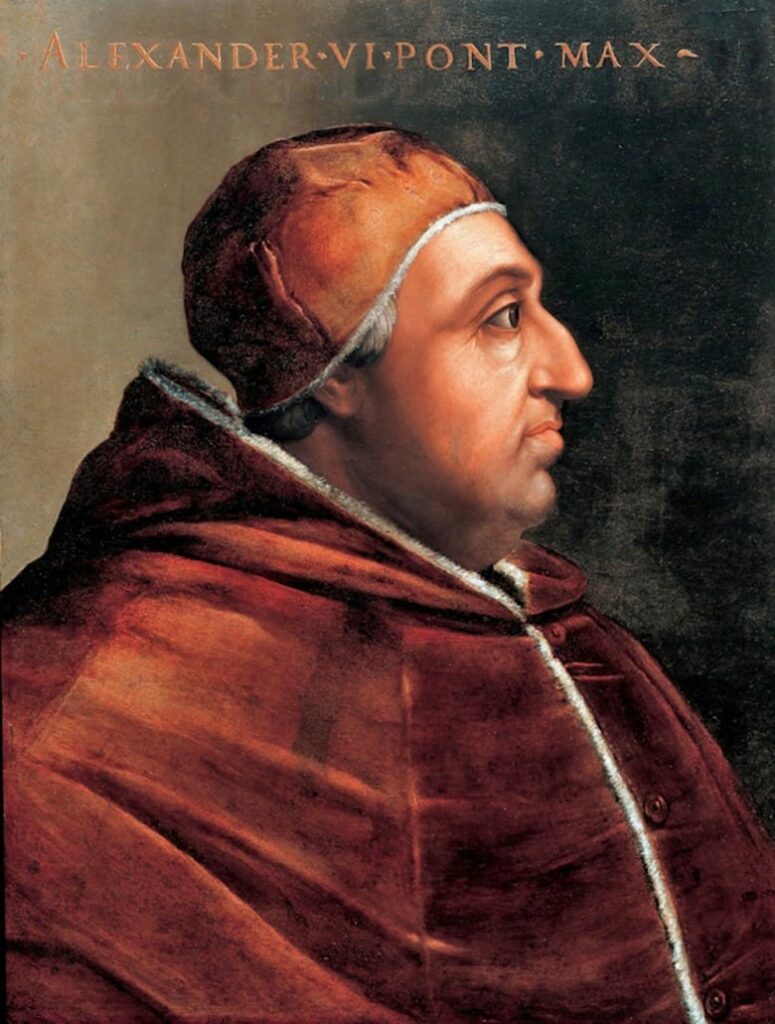
Alexander VI (Xàtiva, 1 January 1431 — Rome, 18 August 1503) was the 214th pope of the Catholic Church between 1492 and 1503. His birth name, in Valencian, was Roderic Llançol i de Borja (known in Spanish as Rodrigo de Borja and in Italian as Rodrigo Borgia). He was the great-grandfather of Saint Francis Borgia
Contents
The second pope of the Borgia family
Rodrigo was the nephew of Pope Callixtus III, which greatly facilitated his rise through the hierarchy of the Catholic Church to become a cardinal-deacon, as well as holding numerous positions of great importance, where he gained the political influence that led him to be elected pope as Alexander VI.
Papacy
As he had demonstrated during his ecclesiastical career to be a great administrator — running the affairs of the Roman chancery during the thirty-five years he served as vice-chancellor of the Church — he accumulated numerous positions and titles, consolidating himself as a figure of power and influence within the ecclesiastical hierarchy. Furthermore, from a very young age, Rodrigo Borgia was clear that his goal was to sit on the “Throne of Saint Peter” and worked from then on towards that objective.
As pope, he triggered and became involved in dozens of political situations, embroiled in intrigues and in a multitude of relationships among international powers in order to consolidate himself within the Italian nobility alongside his children, Juan, César, Lucrecia and Jofre, who served his machinations.
Alexander VI was the one who granted Isabella and Ferdinand the title of Catholic Monarchs in a bull dated 4 May 1493, taking the Hispanic Monarchy as his most powerful ally.
Alexander VI’s ambition was to bring about his family’s dominance over the entire Italian peninsula, aiming to achieve this through alliances and political marriages between his family and Italian dynasties, which, together with the papacy, would give him control over the entire peninsula.
In Italy, the rise of a Spanish pope generated a certain degree of disdain and placed the Borgia family in the sights of many powerful enemies. For this reason, the intrigues and power dynamics that brought the Borgia family to the top ensured the beginning of their decline, as all the power the Borgias had obtained revolved around Alexander VI being the pope; consequently, the network of territories that the Borgias had brought to their feet collapsed upon his death.
Patron of the Arts
Alexander VI was known for his patronage of and passion for the arts. He asked Pinturicchio to lavishly paint a suite of rooms in the Apostolic Palace in the Vatican, which today are known as the Borgia Apartments.
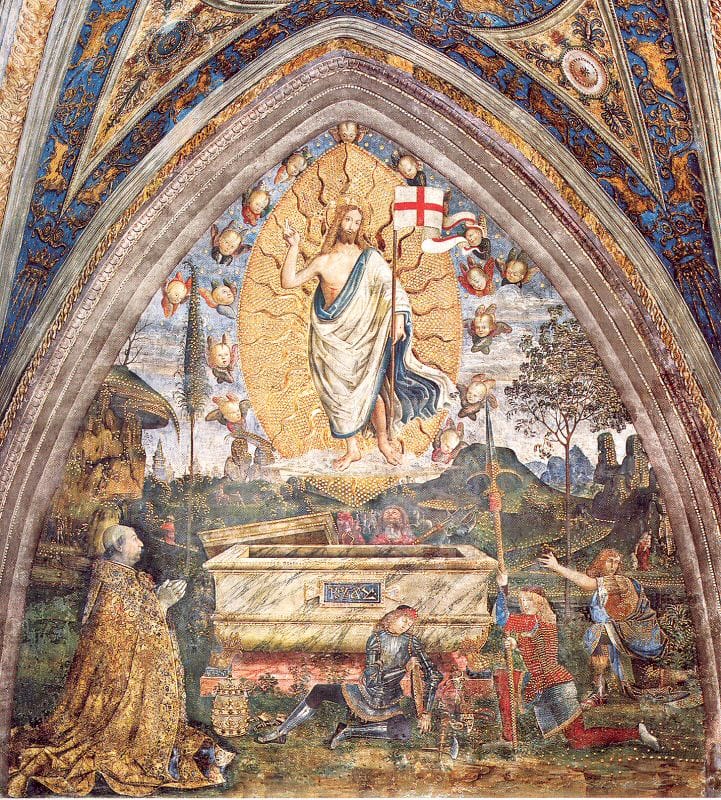
In addition to the arts, he also encouraged the development of education. In 1495, he issued a papal bull approving the creation of the University of Aberdeen, and, at the request of the Archbishop of Valencia, issued the bull establishing the University of Valencia in 1501.
Duchy of Gandia
Created by the Catholic Monarchs on 20 December 1485 in favour of Pedro Luis de Borja — the same year the duchy was acquired by Rodrigo de Borja after paying a debt the king had with Valencia, where Gandia was the pledge — it was one of Spain’s most important nobility titles, and was granted First Class Grandeeship in 1520 by Emperor Charles V.
Alexander VI named his son Juan de Borja y Cattenei Duke of Gandia, as Pedro Luis died aged just 23, and Juan married María Enríquez de Luna, who acted as regent of the duchy with great success. They are the grandparents of Francis Borgia, patron saint of Gandia, whose jubilee year is being celebrated this year, 2021.
He was the one who elevated the Church of Santa María de Gandia to the category of Collegiate Church at the request of María Enríquez de Luna
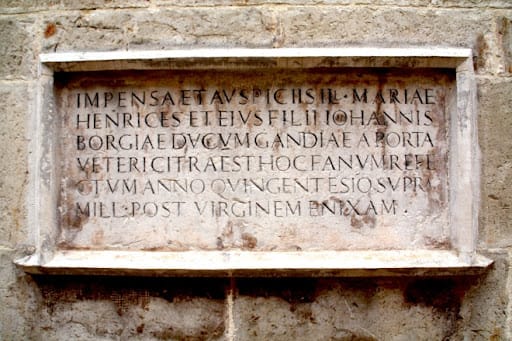
Death of Alexander VI
On 6 August 1503, Alexander VI and his son César Borgia held a banquet at the residence of a cardinal; all the diners fell gravely ill days later. César was able to overcome the illness, but Pope Alexander passed away at 72 years of age
He was buried, alongside Callixtus III, his uncle, in St Peter’s Basilica in Rome. Years later, he was transferred to the Church of Santa María de Montserrat de los Españoles in Rome.