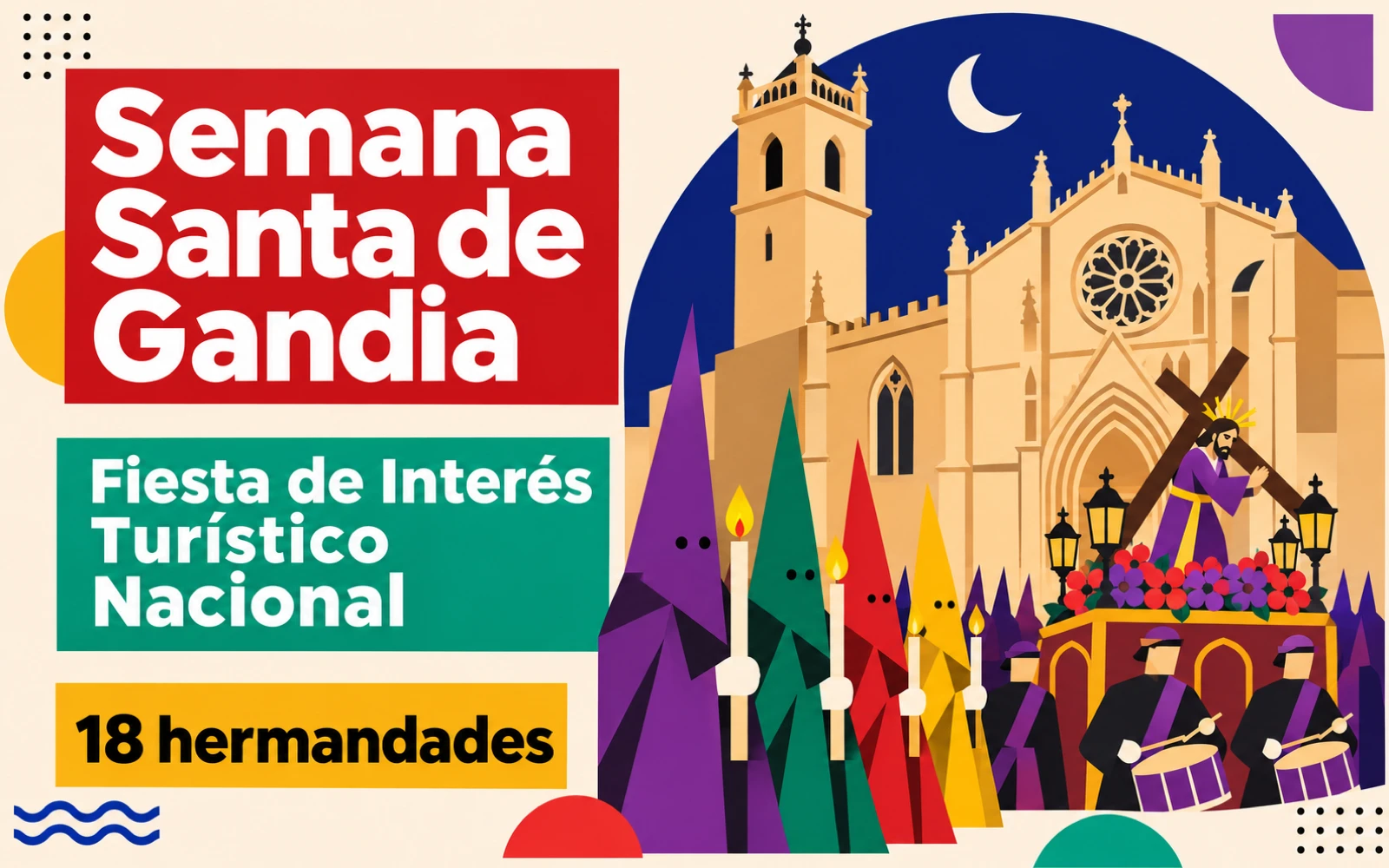
Holy Week in Gandia, a Festival of National Tourist Interest since 2019, brings eighteen brotherhoods onto the streets of the Centre Històric, El Raval, Beniopa, Santa Anna and El Grau from the Friday of Sorrows to Easter Sunday.
Contents
For more than a week, drums, candles and processional floats fill the squares of the town centre and its neighbourhoods. The celebration brings together medieval roots, a sixteenth-century liturgical drama linked to the Borgias and brotherhoods born in parishes, schools and trade guilds.
From medieval processions to the Borgia drama
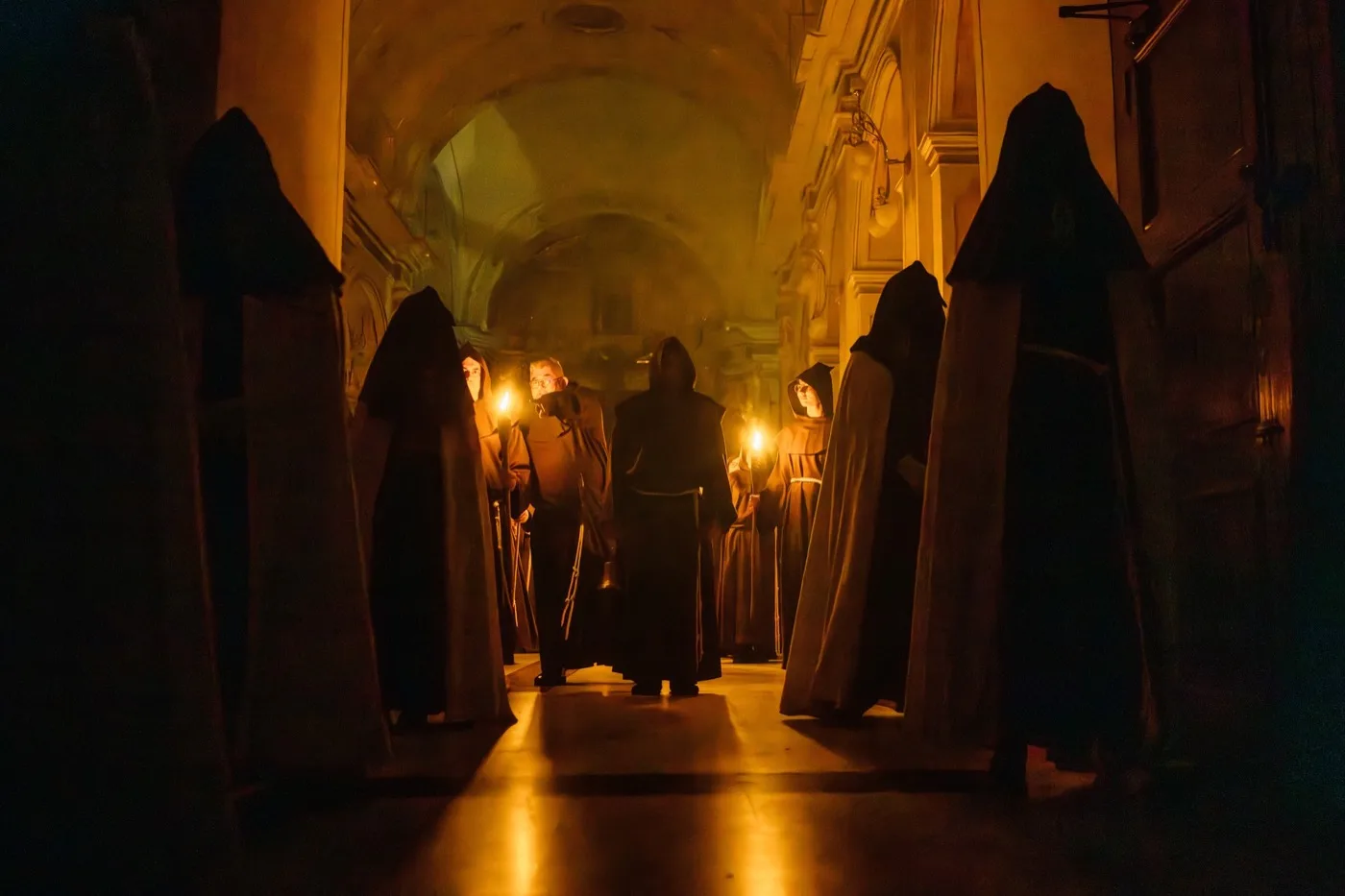
The Junta Mayor de Hermandades, the body that brings the brotherhoods together, traces the origins of the festival to the fourteenth century, when Franciscan friars introduced the Stations of the Cross and penitential processions to the town. The main setting of the celebration, the Collegiate Church of Santa María, was raised to collegiate status at the end of the fifteenth century by a bull of Pope Alexander VI.
The great documented milestone is dated 4 August 1550. Francis Borgia, 4th Duke of Gandia and a future saint, formalised with the chapter of the Collegiate Church the agreement that underpins the Visitatio Sepulchri, in the same year he left Gandia to follow his Jesuit vocation. It is a liturgical drama in Latin that tells of the burial of Christ in Gregorian chant and of the visit of the three Marys to the tomb in Renaissance polyphony. The Archbishopric of Valencia banned it in 1865, and 133 years passed before it returned in full, in 1998. Today it is performed every Holy Saturday in the Collegiate Church; the full story and the details for attending are in our guide to the Visitatio Sepulchri.
From the nineteenth century to post-war reconstruction
Today’s brotherhoods began to take shape in the second half of the nineteenth century, around neighbourhoods, parishes and schools: the Ecce Homo in El Raval or the Santísima Cruz at the Escuelas Pías school. In August 1936, during the Spanish Civil War, the Collegiate Church was set on fire and altarpieces, images and historic floats were lost.
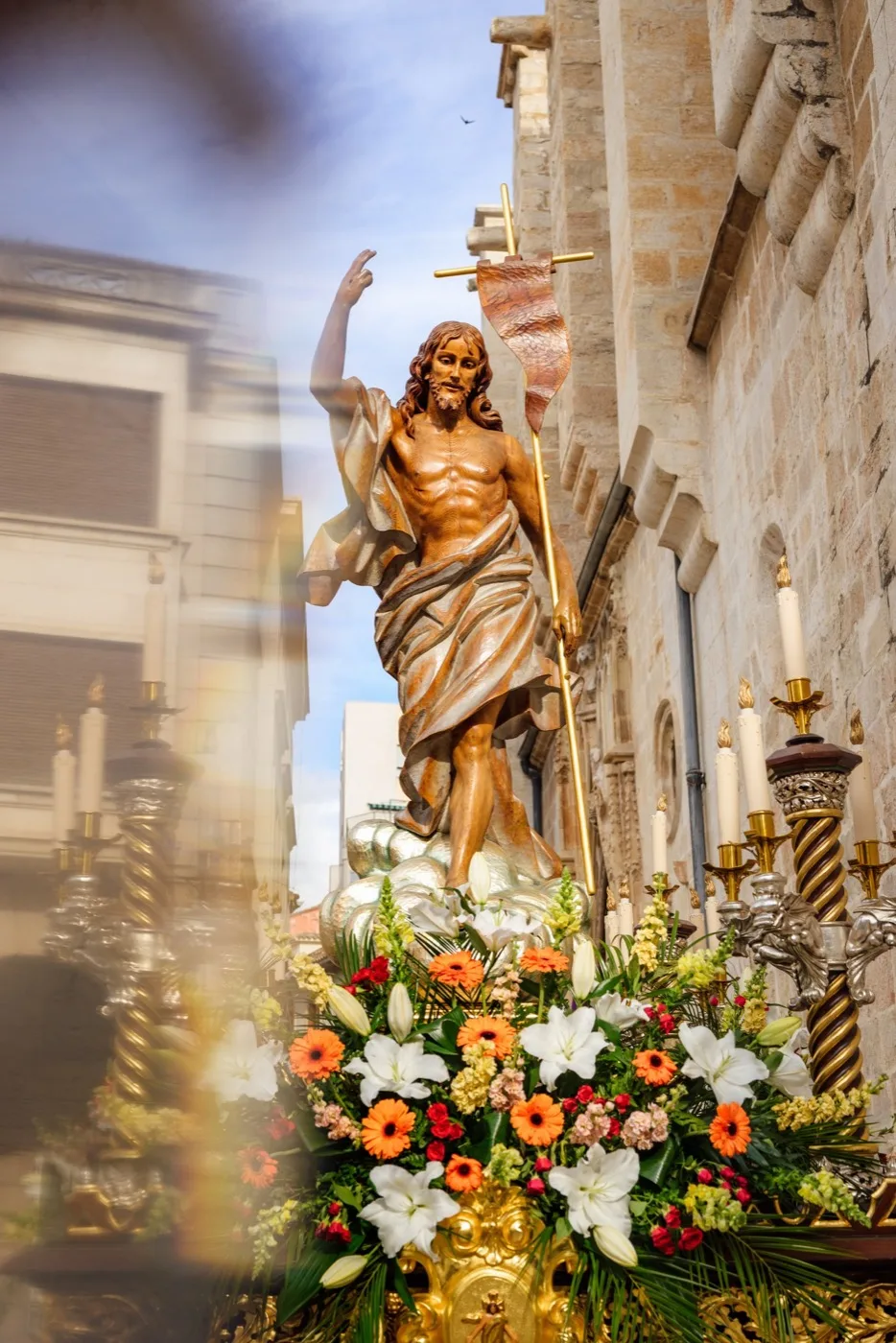
The processions resumed in 1951 with seven brotherhoods, and in 1955 the statutes were approved for the Junta Mayor de Hermandades, which coordinates the festival. The images had to be carved anew, and a good many came from the workshop of the sculptor Antonio Sanjuán Villalba, who made the Cristo Resucitado, the Cristo del Silencio, the Flagelación group and the Virgen de la Soledad. Brotherhoods founded later in neighbourhoods such as Santa Anna and Beniopa brought the total to eighteen, and in October 2019 the festival was declared a Festival of National Tourist Interest.
Brotherhoods with a character of their own
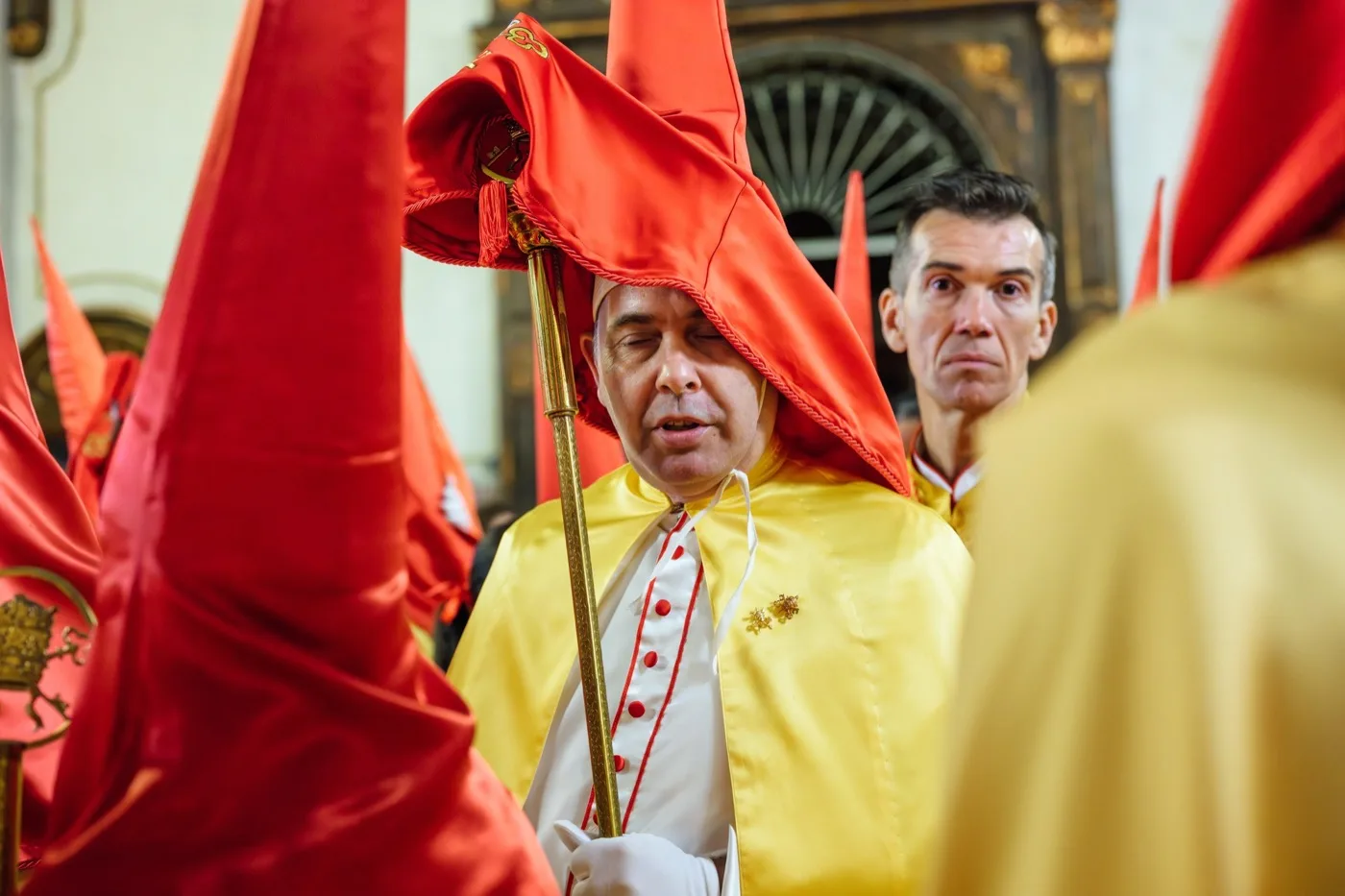
The brotherhoods parade in the order of the Passion, from the Entrada de Jesús en Jerusalén to the Virgen de la Soledad. Several have instantly recognisable scenes:
- Santa Cena Viviente (Santa Anna): thirteen flesh-and-blood members play Jesus and the apostles on the float, with real food and drink.
- Ecce Homo (El Raval): alongside its float goes the Ecciamet, an eighteenth-century carving one metre tall that the residents of Carrer Algepseria hid in 1936 to save it from being burnt. On Holy Tuesday it is carried through the neighbourhood in a Way of the Cross.
- Oración de Jesús en el Huerto: the popular pas dels llauradors (the farmers’ float) carries a praying Christ from the school of Salzillo, dating from the eighteenth century, and a real olive tree that is placed on the float every year.
- Santa Faz: promoted in 1954 by people working in the textile trade, it rounds off its Holy Tuesday procession with the traditional Floreá in Plaça de les Escoles Pies.
- El Descendimiento (El Grau): founded by sailors, dockers and shipping agents, it processes through the streets of the seafaring district and is based at the church of San Nicolás de Bari, where the float can be visited all year round.
- Cristo Yacente en la Crucifixión: the image has no float because it is carried on the shoulders of soldiers of the Spanish Legion. Its canonical seat is the church of the Palau Ducal.
- Cristo del Silencio: its members take their vow of silence before leaving the convent of Santa Clara on the night of Holy Wednesday.
The week, day by day
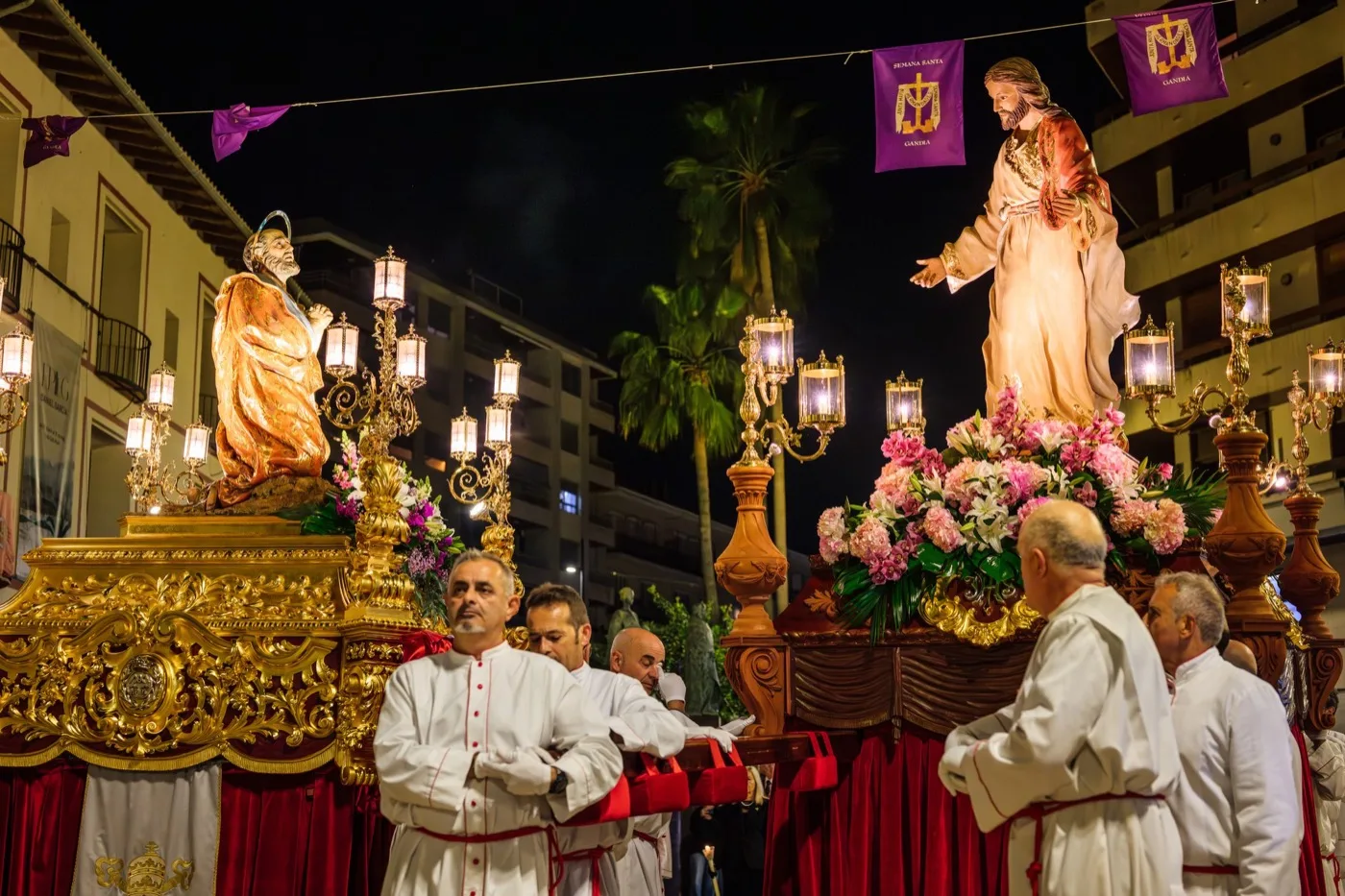
The calendar begins before Palm Sunday with the opening proclamation, a drum parade and the first processions on the Friday of Sorrows and Passion Saturday. The main days unfold as follows:
- Palm Sunday: blessing of palms and branches in Plaça de les Escoles Pies and procession to the Collegiate Church, with separate celebrations in El Grau and Santa Anna.
- Holy Monday, Tuesday and Wednesday: night-time processions and Ways of the Cross by each brotherhood through the centre and the neighbourhoods.
- Maundy Thursday: one procession after another until the early hours, with the Cristo Yacente and its legionnaires, the Dolorosa and the Nazareno.
- Good Friday: in the morning, a penitential Way of the Cross with an encounter in Plaça Major; in the afternoon, the parade of bands and the Procesión General del Santo Entierro (General Procession of the Holy Burial), which brings together all eighteen brotherhoods between the Escuelas Pías and the Collegiate Church.
- Holy Saturday: Visitatio Sepulchri in the Collegiate Church and, at night, the Procession of Silence of the Virgen de la Soledad from the Palau Ducal.
- Easter Sunday: the Glorioso Encuentro (Glorious Encounter) in Plaça Major between the Cristo Resucitado, which leaves from the Collegiate Church, and the Virgen de la Soledad, which arrives from the Palau Ducal.
Tips for making the most of it
Most routes pass through Plaça Major, Plaça de les Escoles Pies, Carrer Major and Passeig de les Germanies, so the easiest option is to get around on foot and leave the car outside the centre during procession hours. The mild spring weather makes it possible to spend the morning at the beach or in El Grau and keep the afternoon for the Centre Històric.
Times and routes change every year. Before each edition the Junta Mayor de Hermandades publishes the procession guide and the magazine Passio; it is worth confirming the programme on its official website.