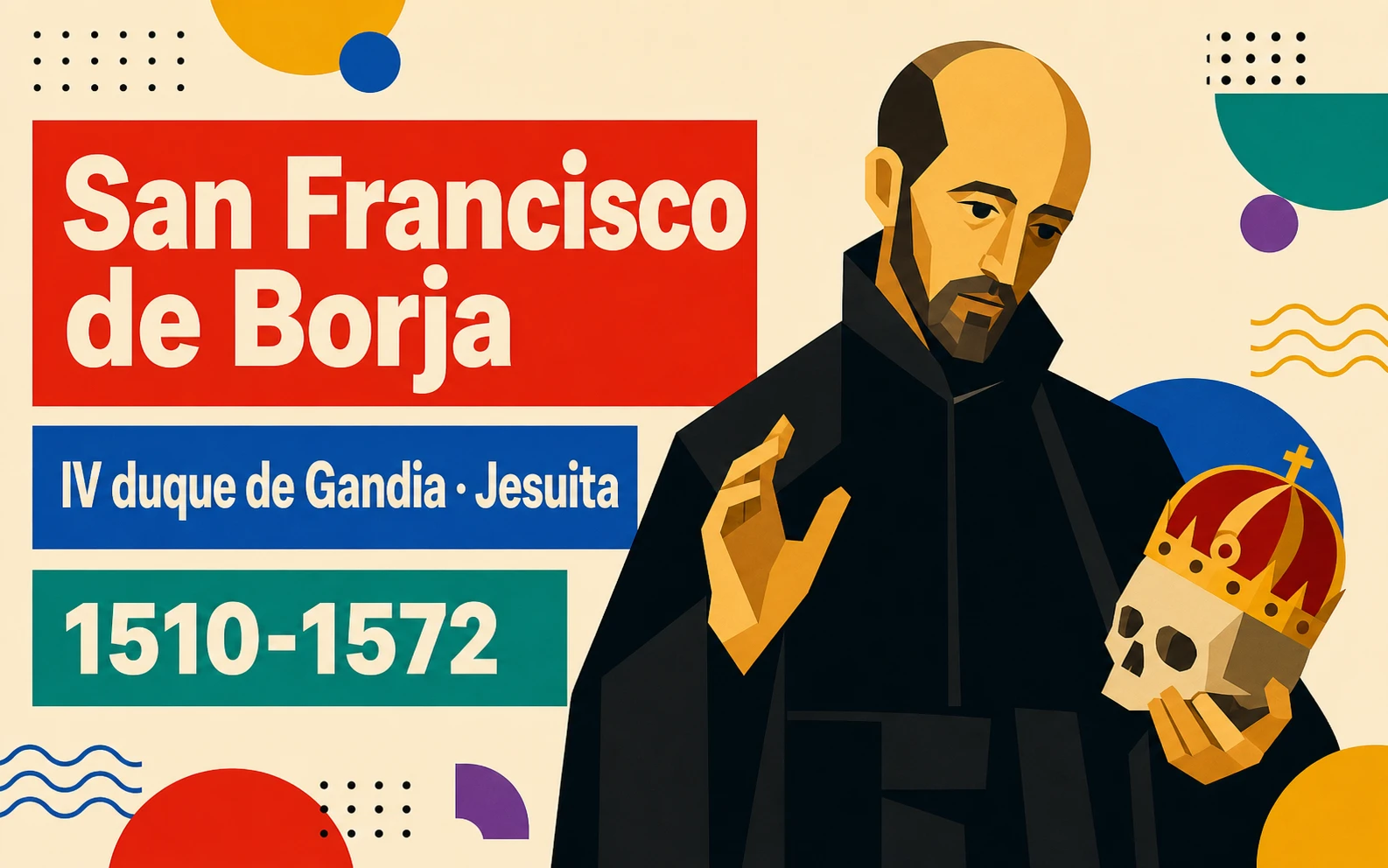
Francisco de Borja (Gandia, 1510–Rome, 1572) was a courtier, Viceroy of Catalonia, 4th Duke of Gandia and, later, third Superior General of the Society of Jesus. His life offers an understanding of how noble power, religious reform and the cultural development of 16th-century Gandia intertwined.
Contents
Far from a biography reduced to a sudden conversion, his journey was a gradual transformation. Before entering the Society of Jesus, he governed territories, raised a family and established institutions that still form part of Gandia’s urban landscape today.
From Gandia to the court of Charles V
Francisco was born on 28 October 1510 in the Palau Ducal. He was the son of the 3rd Duke of Gandia and the paternal great-grandson of Pope Alexander VI. The Revolt of the Germanies marked his childhood and led to his move to Zaragoza, where he continued his education.
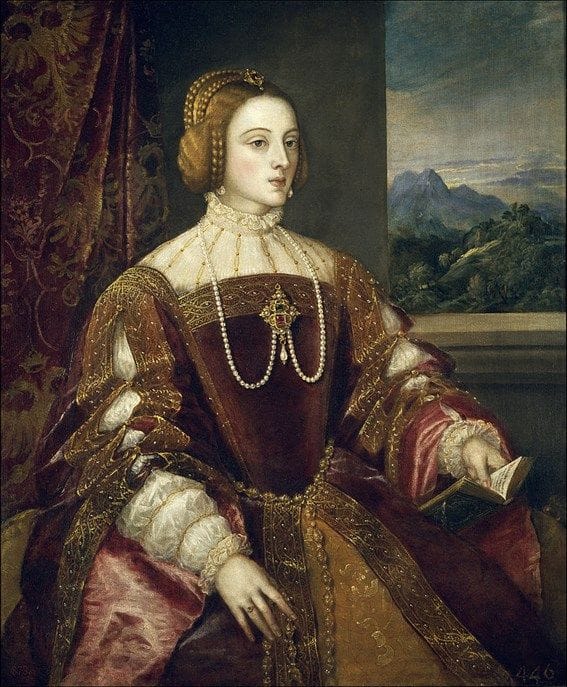
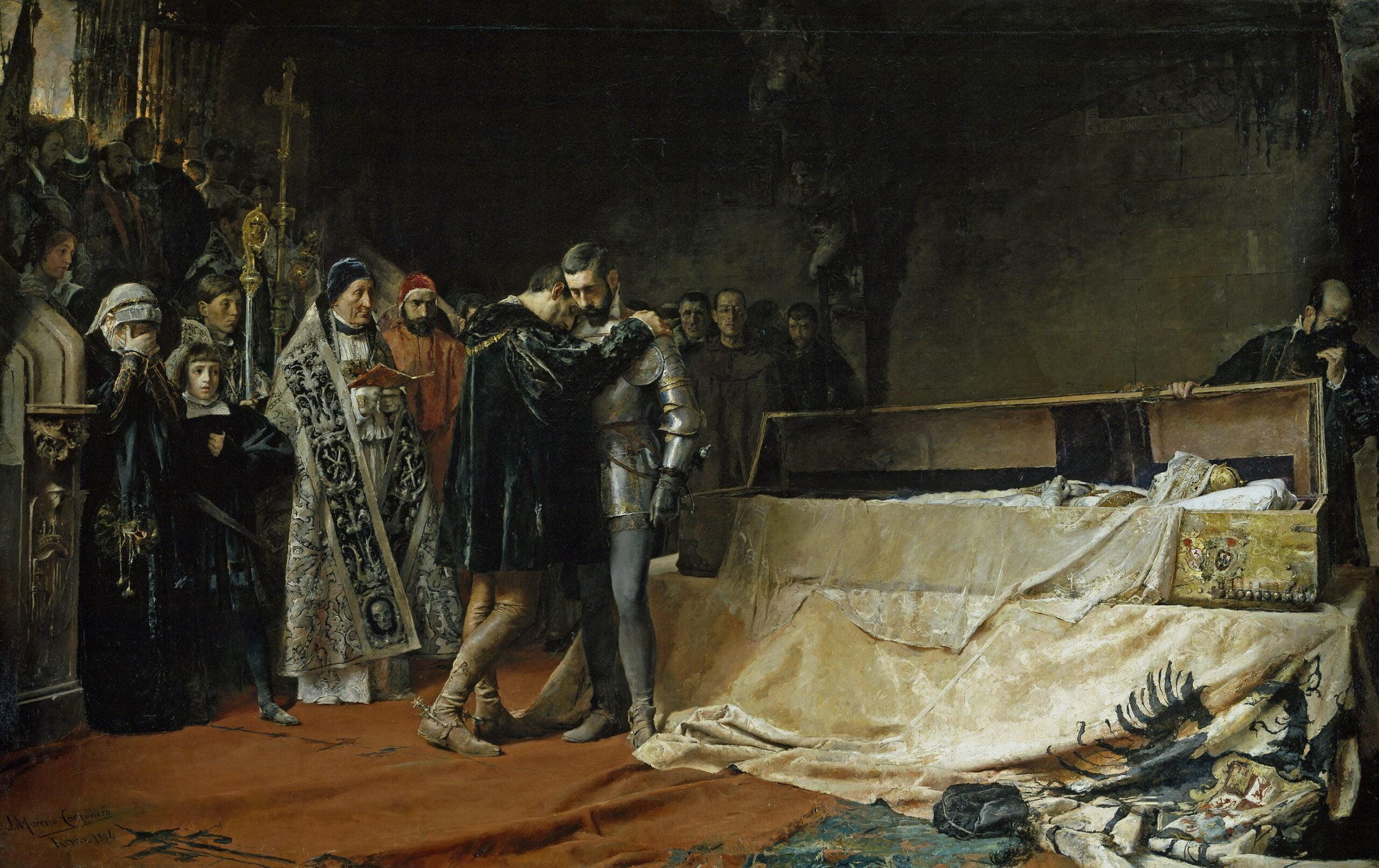
In 1529, he married Leonor de Castro, lady-in-waiting to Empress Isabella of Portugal. They had eight children and lived near the imperial court. The death of Isabella in 1539 left a profound mark on Francisco and was later remembered as a moment of reflection on the fragility of power. The phrase traditionally attributed to him before her coffin cannot be treated as a reliable transcript; his religious evolution unfolded over the following years.
That same year he was appointed Viceroy of Catalonia. He held the post until 1543, when he inherited the duchy following his father’s death and returned to Gandia.
Francisco de Borja as 4th Duke of Gandia
As duke, he administered his estates and promoted initiatives throughout the city. The official history of the Ducal Palace of the Borgias credits him with expanding the city walls, renovating the old Hospital de Sant Marc and promoting the college that gave rise to the University of Gandia.
The old University of Gandia — authorised by a bull of Paul III in 1547 and operating from 1549 — was the first university run by the Society of Jesus. That project permanently linked the name of Francisco de Borja with education and left an identifiable mark on the present-day Escuelas Pías complex.
From duke to Jesuit
Following the death of Leonor in 1546, Francisco informed Ignatius of Loyola of his desire to enter the Society. The process was handled with care: he needed to ensure family continuity, arrange his responsibilities and complete his training. He took his vows in 1548, obtained a doctorate in theology in 1550 and renounced the duchy in favour of his son Carlos. In 1551, he was ordained as a priest.
Within the order, he took on increasing responsibilities. He served as Commissary General for Spain from 1554, and in 1565 was elected third Superior General, following Ignatius of Loyola and Diego Laínez. During his seven years at the head of the Society, he worked on its organisation, education and the expansion of a still-young order. He died in Rome on 30 September 1572.
Canonisation and artistic legacy
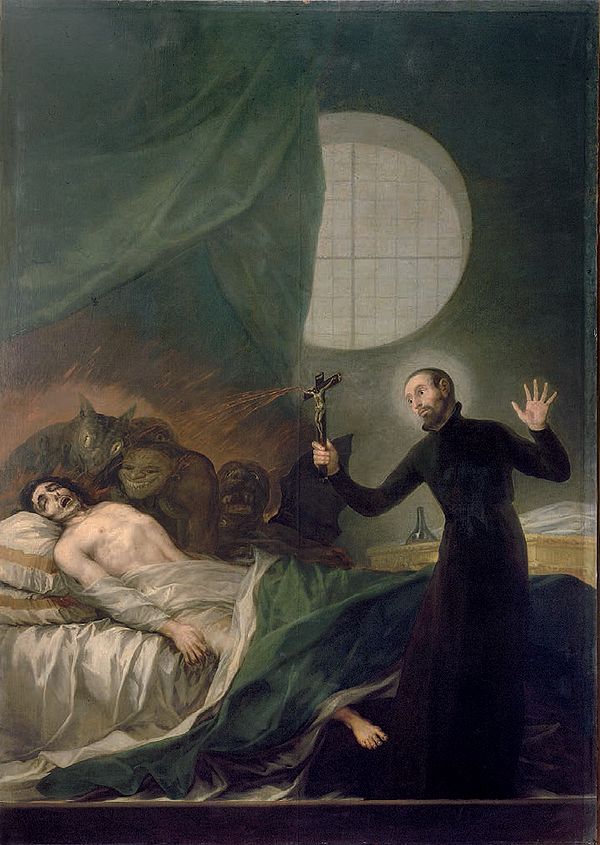
Francisco de Borja was beatified in 1624 and canonised by Clement X in 1671. His image was popularised through paintings and sculptures that highlighted different aspects of his legacy: his renunciation of power, his pastoral work or his status as a Jesuit saint. These works are later interpretations rather than direct contemporary records of the events depicted.
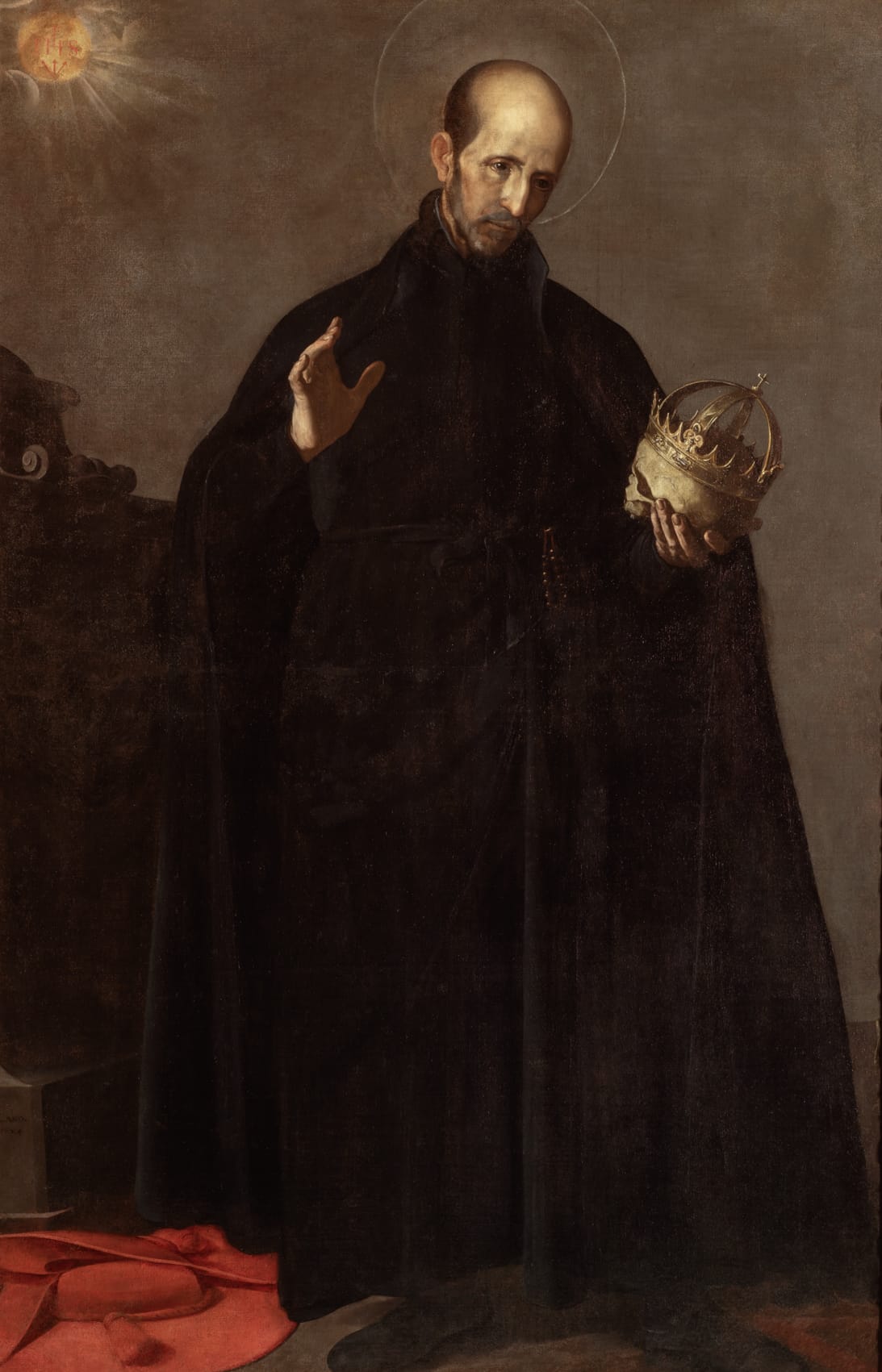
Little-known facts about Saint Francis Borgia
A few episodes recorded by his biographers and by the Real Academia de la Historia complete the portrait:
- Papal and royal blood. Great-grandson of Alexander VI on his father’s side and of Ferdinand the Catholic on his mother’s (his mother, Juana de Aragón, was the daughter of an illegitimate son of the king), grandson of the regent duchess María Enríquez de Luna and second cousin of Charles V.
- Eight children. Carlos, Isabel, Juan, Álvaro, Juana, Fernando, Dorotea and Alonso. Carlos inherited the Duchy of Gandia when his father renounced it in 1550.
- The Empress’s funeral procession. In May 1539 he escorted the body of Isabella of Portugal from Toledo to Granada, the episode tradition links to his resolve never again to serve a lord who could die.
- A first Mass for the crowds. Ordained at Oñate in 1551, he celebrated his first public Mass in Vergara in the open air before a huge crowd, with a plenary indulgence granted by Julius III to those attending.
- He refused to be a cardinal. In 1552 Charles V and Julius III wanted to give him the red hat; to avoid it he took the solemn vows of the Society, which forbid accepting ecclesiastical dignities.
- The Roman plague. Newly elected Superior General, during the epidemic of 1566 he sent Jesuits out in pairs to collect alms and care for the sick.
- From gout to fasting. At court he was very stout and suffered from gout; according to his biographer Pedro de Ribadeneira, his table had a semicircular notch cut to fit his belly. After his conversion, fasting left him very thin.
- Patron saint of Gandia. Since 1673, two years after his canonisation. His feast falls on 3 October (for the Jesuits and for Gandia; the Roman calendar set it on 10 October until 1969), and the Fira i Festes, opened by the Tío de la Porra, revolves around that date.
Where to trace his footsteps in Gandia
- Palau Ducal dels Borja: his birthplace and the main venue for learning about his period as duke.
- Old University: the Escuelas Pías architectural complex commemorates the educational project he promoted.
- Collegiate Church of Santa María: a visit to the Collegiate Church includes the memory of the place where he was baptised.
- Hospital de Sant Marc y Santa Clara: the present-day Santa Clara Museum, housed in part of the old hospital, helps expand the artistic and religious context of the Borgias.
To read more about his biography, you can consult the official profile by the Society of Jesus and the Palau Ducal fact sheet.