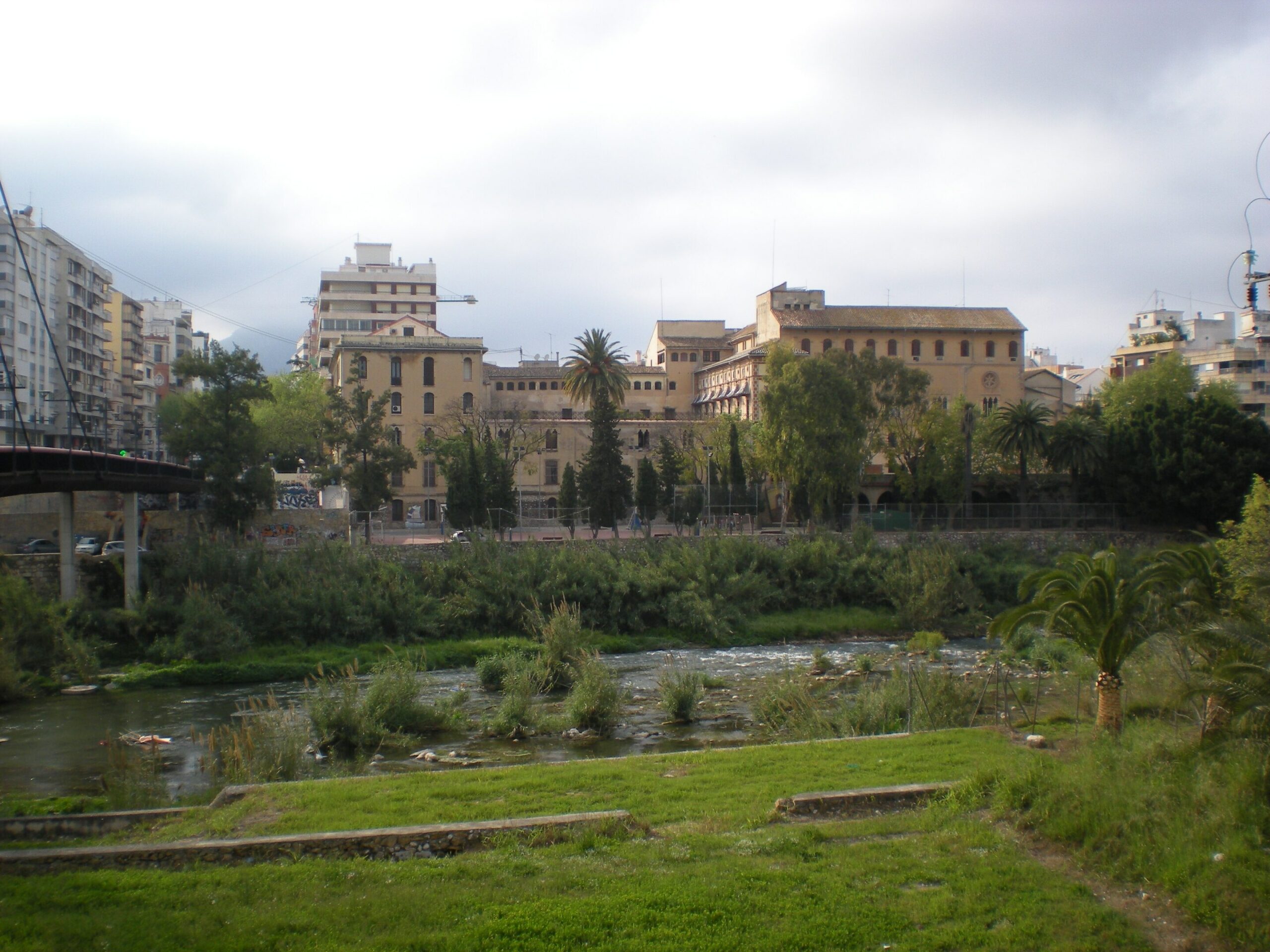
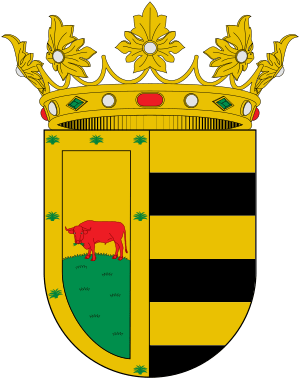
The Duchy of Gandia is the title that made the town the seigneurial capital of La Safor and the centre of Borgia power in the Iberian Peninsula. Created as a royal duchy in 1399 and granted to the House of Borgia by Ferdinand the Catholic on 20 December 1485, its history explains much of what visitors see in Gandia today: the Palau Ducal, the Collegiate Church, the old University and the fortified farmhouses of the huerta.
Contents
Before the Borgias: the royal duchy of 1399
Before the Borgias, Gandia was a lordship of the royal house of Aragon. In 1323 James II granted it to his son Peter of Aragon, Count of Ribagorza, and in 1399 King Martin the Humane raised it to a duchy for Alfons el Vell, the duke who had founded the Monastery of Sant Jeroni de Cotalba in 1388. His successor, Alfons el Jove, died in 1425 without legitimate issue and the duchy reverted to the Crown. For decades it remained pledged to the city of Valencia as security for the monarchy’s debts.
1485: Cardinal Rodrigo Borgia buys a duchy for his son
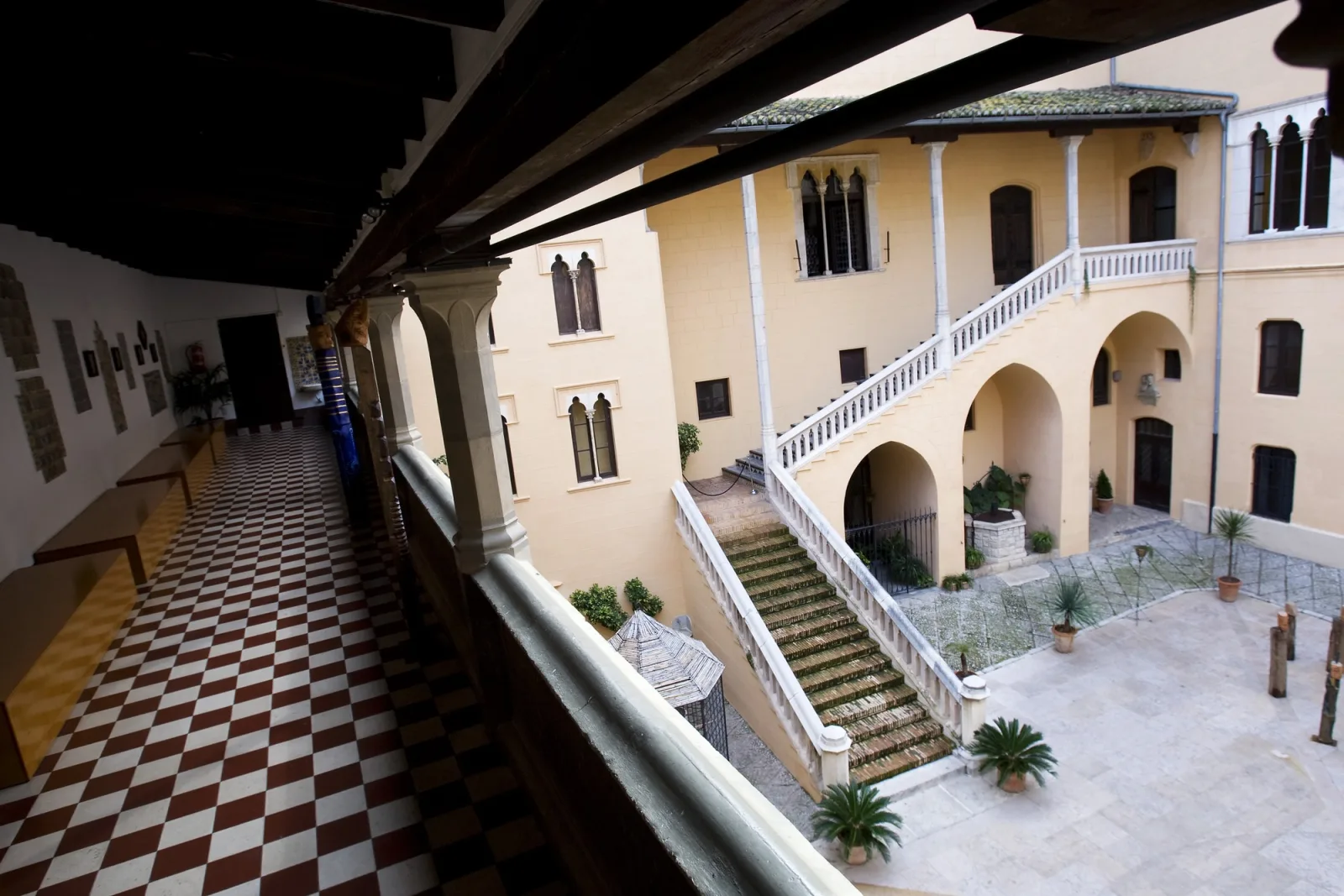
Cardinal Rodrigo Borgia, the future Pope Alexander VI, settled the debt the Crown owed to Valencia and, in return, Ferdinand the Catholic created the hereditary Duchy of Gandia for his son Pere Lluís de Borja, first Borgia duke, on 20 December 1485. Pere Lluís died in Rome in 1488 without heirs and the title passed to his brother Joan de Borja, second duke, who in 1493 married María Enríquez de Luna.
Joan de Borja was murdered in Rome on 14 June 1497. His widow took over the government of the Gandia estates during her son’s minority and, between 1497 and 1511, put the accounts in order, enlarged the Palau Ducal, drove the Gothic extension of the Collegiate Church of Santa Maria and protected the convent of Santa Clara.
The Borgia dukes of Gandia
Eleven dukes of the House of Borgia ruled Gandia between 1485 and 1740. These are they, with their years at the head of the duchy:
- Pere Lluís de Borja (1485-1488), first Borgia duke.
- Joan de Borja (1488-1497), murdered in Rome; regency of María Enríquez until 1511.
- Joan de Borja y Enríquez (1511-1543); in 1520 Charles V granted the duchy the Grandeeship of Spain.
- Francis Borgia (1543-1550), born in Gandia in 1510; he founded the University of Gandia in 1549, renounced the duchy in favour of his eldest son in 1550-1551 and joined the Society of Jesus.
- Carlos de Borja y Castro (1551-1592), married to Magdalena Centelles, Countess of Oliva, which temporarily united both sugar-producing estates.
- Francisco Tomás de Borja (1592-1595).
- Carlos Francisco de Borja-Centelles (1595-1632), duke at the time of the expulsion of the Moriscos in 1609.
- Francisco Diego Pascual de Borja-Centelles (1632-1664).
- Francisco Carlos de Borja-Centelles (1664-1665).
- Pascual Francisco de Borja-Centelles (1665-1707), who promoted the Palau’s Golden Gallery after the canonisation of Francis Borgia in 1671.
- Luis Ignacio de Borja-Centelles (1707-1740), last male of the line; with his death the Gandia branch of the Borgias died out.
The duchy’s territory: La Safor, land of sugar
The duchy had Gandia as its capital, with the Grau as its outlet to the sea, and grouped towns and villages of La Safor such as Beniopa, Benipeixcar, Benirredrà, Almoines, Bellreguard, Miramar, Daimús, Guardamar, el Real de Gandia, Xeresa and Xeraco. In the huerta irrigated by the Serpis, the great business of the house grew between the 15th and 16th centuries: sugar cane, milled in the trapigs controlled by the dukes.
Those who grew the cane were overwhelmingly Mudéjars and, later, Moriscos: the duchy was one of the lordships with the largest Morisco population in the Crown of Aragon. The expulsion of 1609 decreed by Philip III emptied farmsteads and valleys, ruined the crop and opened a decline from which the ducal house never recovered. The walls of the Vilanova, the University and the extension of the Collegiate Church are the work of ducal patronage in the years of plenty.
From the Borgias to Osuna: the succession dispute and the title today
When the 11th duke died without direct issue in 1740, a long lawsuit opened between the related lineages, ending in 1755 with the award of titles and estates to the House of Benavente. In the late 18th century, the marriage of María Josefa Pimentel, Countess-Duchess of Benavente, to Pedro de Alcántara Téllez-Girón, Duke of Osuna, brought Gandia into the House of Osuna. The lavish life of Mariano Téllez-Girón ended in bankruptcy: in 1889 the Palau Ducal went to public auction and was bought by the Society of Jesus, which restored it and still runs it.
The title lives on. Since 2016 it has been held by Ángela María de Ulloa y Solís-Beaumont, 20th Duchess of Gandia and Grandee of Spain, by Royal Letter of Succession following the death of her grandmother.
What to see of the duchy in Gandia and around today
The duchy can be explored on foot through the Centre Històric and on two short trips into the huerta and the hills:
- Palau Ducal dels Borja: residence of the dukes and birthplace of Francis Borgia, with the Saló de Corones and the Galeria Daurada. Opening times and tickets on the Palau Ducal website.
- Collegiate Church of Santa Maria: the Gothic church enlarged by María Enríquez. Visits on the Collegiate Church website.
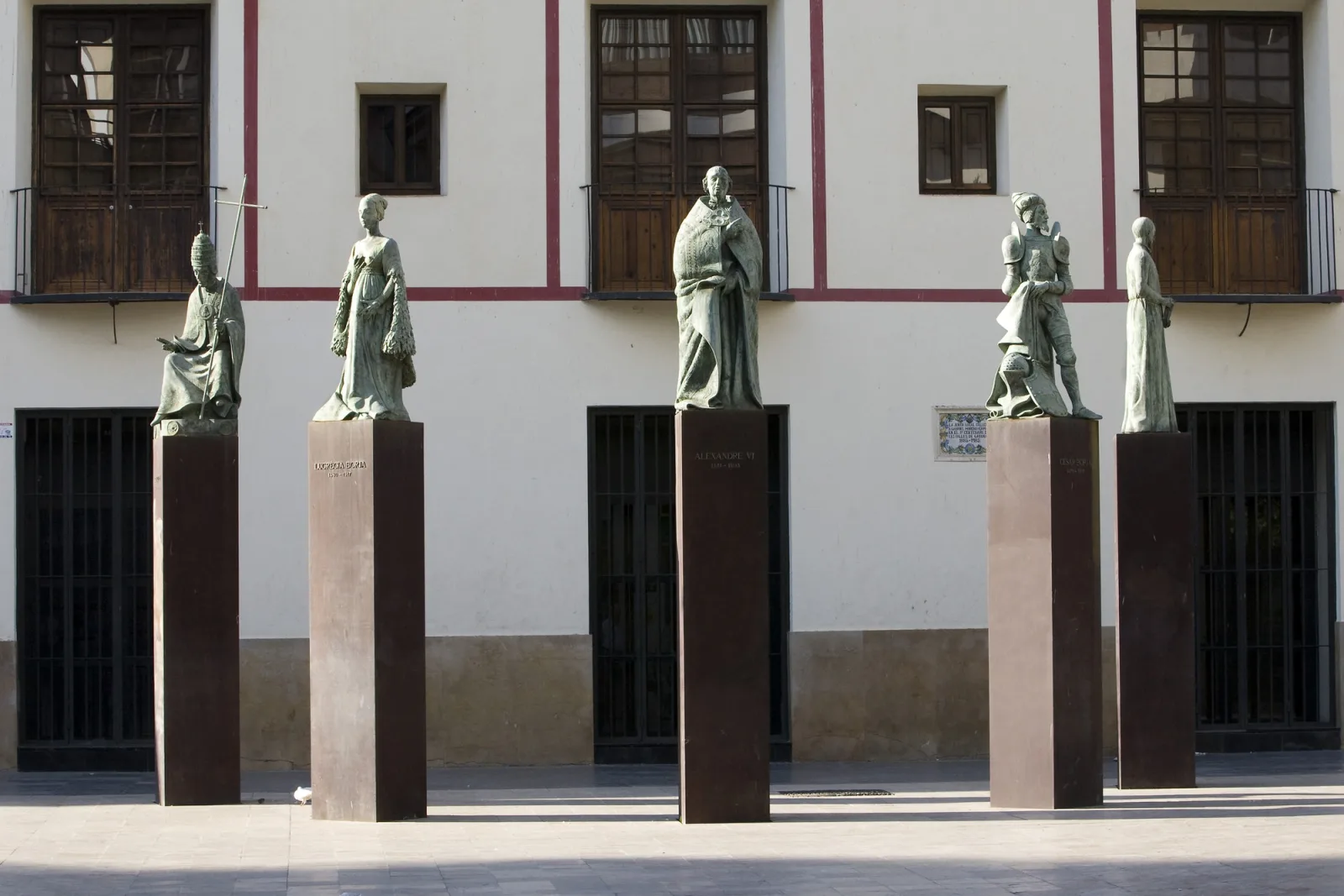
- Old University and, in front of it, the Borgia sculpture group by Manuel Boix (1998), with Callixtus III, Alexander VI, Cesare, Lucrezia and Francis Borgia.
- Alqueria del Duc: fortified farmhouse of the ducal house beside the marsh, and Torre dels Pares, the Jesuit farmhouse that supported the University (scheduled visits; XEC Gandia page).
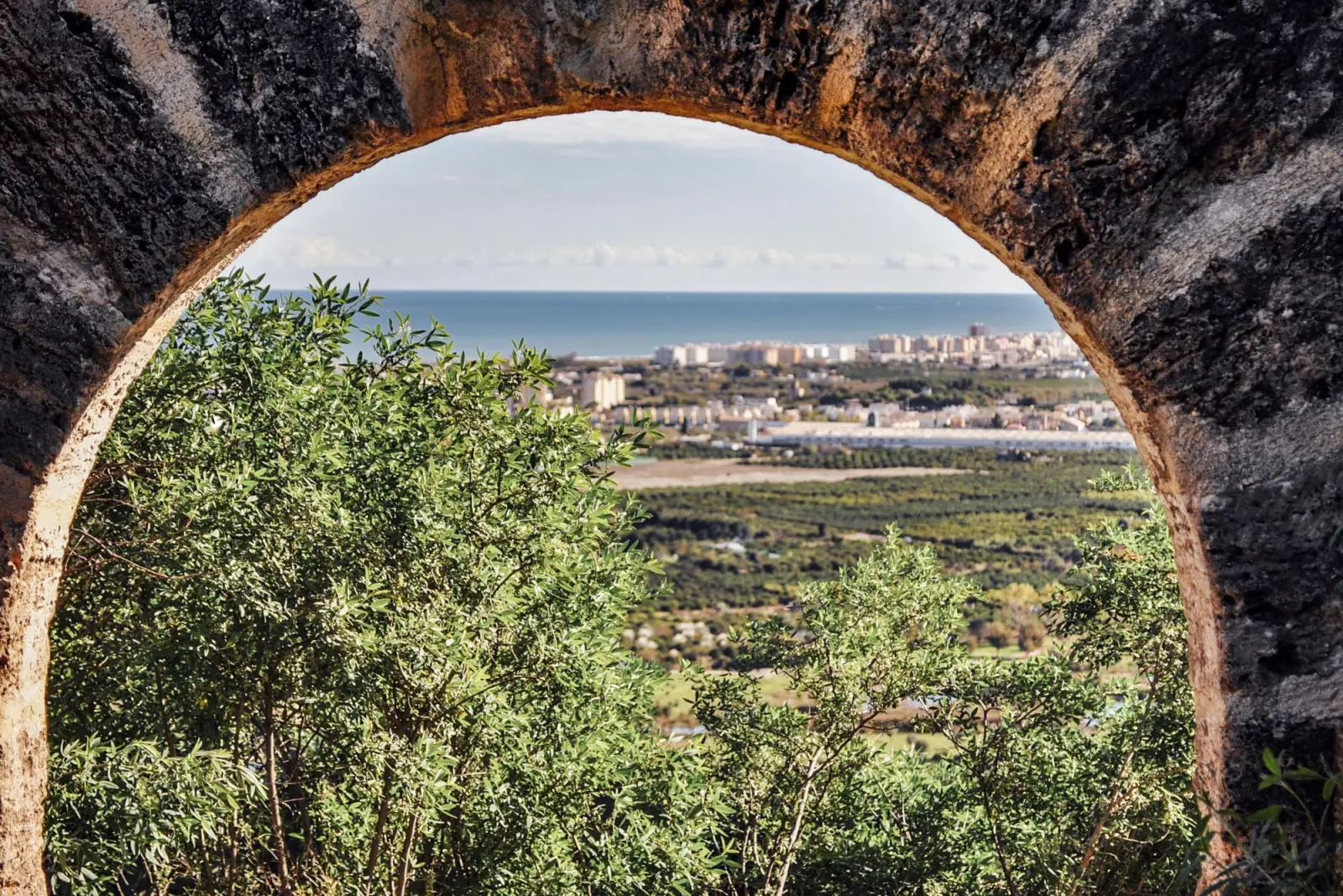
- Bairén Castle: heart of the lordship before the town grew on the plain, with the best views over the huerta.
- Sant Jeroni de Cotalba, in Alfauir, about 8 km away: Alfons el Vell’s monastery, later protected by the Borgias (visits on the monastery website).
To follow the thread, the “Borgia Territory” urban route links the sites in the town, and the Borgia Route through the province leads on to Xàtiva and Valencia; the context of each period is in our history of Gandia.